Metaverse at Work: 2025 Platform Comparison & US Business Impact
Anúncios
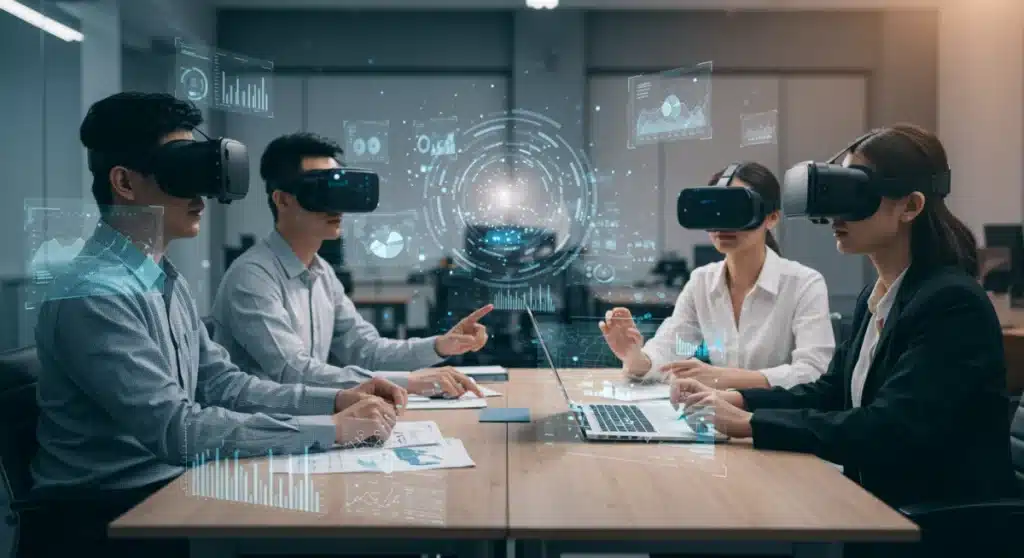
The metaverse at work is set to redefine enterprise operations by 2025, with platforms like Meta Horizon Workrooms, Microsoft Mesh, and Nvidia Omniverse offering immersive environments that significantly influence US business culture through enhanced collaboration and innovation.
The Metaverse at Work: A 2025 Comparison of 3 Emerging Platforms and Their Cultural Impact on US Businesses is no longer a futuristic fantasy but a rapidly approaching reality, fundamentally altering how companies operate, collaborate, and innovate. As we edge closer to 2025, leading tech giants are rolling out sophisticated platforms designed to integrate virtual and augmented realities into daily business functions. This shift promises not just new tools, but a profound cultural transformation within American enterprises, demanding adaptability and strategic foresight from leaders and employees alike.
Anúncios
Understanding the Enterprise Metaverse Landscape
The enterprise metaverse represents a significant evolution beyond simple video conferencing, offering persistent, shared, and immersive virtual spaces where professional activities can unfold. Unlike consumer-focused metaverse applications, the enterprise metaverse is built with specific business objectives in mind, from virtual meetings and collaborative design to employee training and customer engagement. This burgeoning landscape is characterized by a blend of virtual reality (VR), augmented reality (AR), and artificial intelligence (AI), creating environments that blur the lines between physical and digital work.
The drive towards these immersive digital workplaces is fueled by several factors, including the increasing distributed nature of global teams, the demand for more engaging and effective remote work solutions, and the potential for cost savings in travel and physical infrastructure. Companies are eager to leverage these platforms to foster a stronger sense of presence and connection among employees, regardless of their geographical location. The cultural implications are vast, touching upon everything from team dynamics and employee onboarding to corporate identity and innovation processes. Early adopters are already reporting enhanced productivity and engagement.
Anúncios
Key Components of the Enterprise Metaverse
- Immersive Collaboration: Virtual meeting rooms, persistent digital workspaces, and shared project environments.
- Digital Twin Technology: Replicating physical assets or processes in a virtual space for simulation and optimization.
- AI-Powered Avatars: Personalized digital representations that enhance presence and interaction.
- Cross-Platform Interoperability: The ability for different metaverse platforms to connect and share data.
The enterprise metaverse is not merely a collection of technologies; it is a paradigm shift in how work is conceptualized and executed. It demands a re-evaluation of traditional business practices and opens up new avenues for creativity and problem-solving. For US businesses, understanding this evolving landscape is critical to maintaining a competitive edge and preparing for the future of work.
Meta Horizon Workrooms: Bridging Virtual Meetings and Real Collaboration
Meta Horizon Workrooms stands as a prominent contender in the enterprise metaverse space, leveraging Meta’s extensive investment in VR technology. Launched with the promise of transforming remote collaboration, Workrooms offers an immersive virtual meeting experience designed to make remote interactions feel more like in-person ones. Users, represented by customizable avatars, can join meetings, brainstorm on virtual whiteboards, and share screens in a shared 3D environment.
The platform’s strength lies in its ability to foster a sense of shared space and presence, which often gets lost in traditional video calls. This is particularly impactful for US businesses with geographically dispersed teams, where maintaining team cohesion and a strong corporate culture can be challenging. Workrooms aims to counteract ‘Zoom fatigue’ by providing a more engaging and less draining alternative for prolonged virtual interactions. Its integration with existing Meta Quest hardware makes it readily accessible to many organizations already invested in VR. However, the platform is still evolving, with ongoing efforts to improve avatar realism and reduce hardware dependency.
Cultural Impact on US Businesses
- Enhanced Team Cohesion: The feeling of shared presence can strengthen bonds among remote team members.
- Improved Brainstorming: Virtual whiteboards and spatial audio facilitate more dynamic and creative problem-solving sessions.
- Onboarding and Training: New employees can experience virtual office tours and participate in interactive training modules.
- Reduced Travel Needs: Companies can significantly cut down on business travel expenses for meetings and conferences.
While Meta Horizon Workrooms offers compelling advantages, its adoption also presents cultural shifts. There’s a learning curve for employees adapting to VR interfaces, and concerns around data privacy and digital identity in a Meta-controlled environment remain considerations for businesses. Nevertheless, its potential to revolutionize how US businesses conduct meetings and foster collaboration is undeniable.
Microsoft Mesh: A Seamless Blend of Physical and Digital Worlds
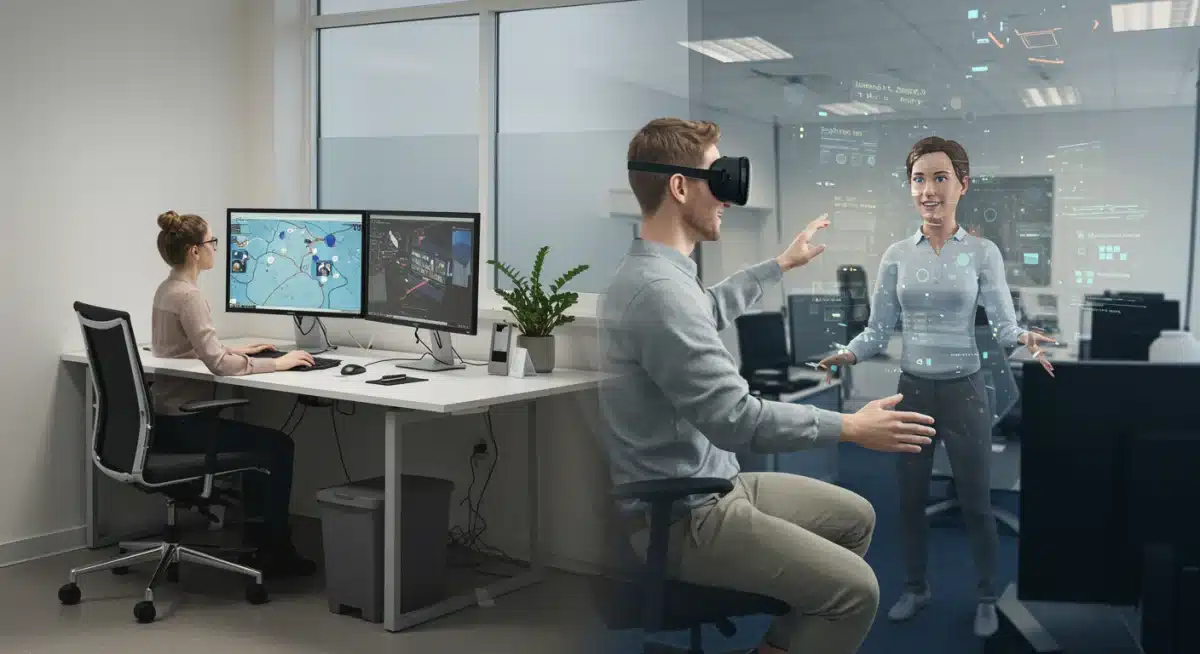
Microsoft Mesh distinguishes itself by focusing on mixed reality (MR), aiming to seamlessly blend the physical and digital worlds rather than fully immersing users in a virtual one. Mesh allows individuals to collaborate in shared holographic experiences across various devices, including VR headsets, AR glasses like HoloLens, and even traditional PCs and smartphones. This multi-device approach broadens its accessibility and potential for integration into diverse work environments within US businesses.
The platform’s strength lies in its versatility and Microsoft’s extensive ecosystem of enterprise tools. Mesh integrates with Microsoft Teams, allowing users to transition effortlessly between 2D video calls and immersive 3D experiences. This flexibility is crucial for companies seeking to adopt metaverse technologies without completely overhauling their existing infrastructure. For instance, engineers can collaborate on 3D models of products as if they were in the same room, or educators can lead virtual field trips that combine real-world environments with holographic overlays. The emphasis on MR allows for a more gradual and less disruptive entry into the metaverse for many organizations.
Transforming US Business Operations
Microsoft Mesh’s impact on US business culture is characterized by its ability to augment existing workflows rather than replace them entirely. It promotes a more fluid and intuitive interaction with digital content in physical spaces, fostering innovation in fields such as manufacturing, healthcare, and education.
- Enhanced Training: Realistic simulations for complex procedures, reducing risks and costs associated with physical training.
- Remote Assistance: Experts can provide real-time holographic guidance to on-site technicians, improving efficiency and problem-solving.
- Product Design and Prototyping: Teams can collaboratively review and iterate on 3D designs as if they were physically present.
The cultural shift here involves a greater acceptance of mixed reality as an integral part of daily operations, fostering a workforce that is comfortable navigating between physical and digital realities. Microsoft Mesh positions itself as a practical, scalable solution for enterprises looking to leverage immersive technologies without fully committing to a purely virtual existence.
Nvidia Omniverse: Industrial-Scale Simulation and Digital Twins
Nvidia Omniverse stands apart with its focus on industrial-scale simulation and the creation of highly accurate digital twins. Unlike platforms primarily designed for meetings or social interaction, Omniverse is an open platform built for virtual collaboration and physically accurate simulation, enabling creators, designers, and engineers to collaborate in real time on complex 3D projects. It leverages Nvidia’s powerful GPU technology to render incredibly detailed and realistic virtual environments, making it ideal for industries requiring high fidelity in their digital models.
For US businesses in sectors like automotive, architecture, engineering, construction (AEC), and manufacturing, Omniverse offers unprecedented capabilities. Companies can build digital twins of their factories, products, or entire cities, then simulate various scenarios, test designs, and optimize processes before committing to physical production. This reduces costs, accelerates innovation, and minimizes errors. The platform’s open-source Universal Scene Description (USD) framework ensures interoperability, allowing different software applications and assets to coexist and interact within the Omniverse ecosystem.
Reshaping Industrial Culture
The cultural impact of Nvidia Omniverse on US businesses is profound, particularly in industries traditionally reliant on physical prototyping and sequential workflows. It fosters a culture of iterative design, real-time collaboration, and data-driven decision-making.
- Accelerated Product Development: Teams can collaborate globally on complex designs, reducing time-to-market.
- Optimized Operations: Digital twins of factories allow for predictive maintenance and process optimization, enhancing efficiency.
- Reduced Waste and Costs: Simulations minimize the need for expensive physical prototypes and rework.
- Enhanced Safety: Training in hazardous environments can be conducted safely and effectively in a virtual replica.
Nvidia Omniverse promotes a highly technical and collaborative culture, where engineers and designers work hand-in-hand in a shared virtual space, breaking down traditional silos. Its emphasis on realism and precision makes it an indispensable tool for enterprises pushing the boundaries of what’s possible in design, simulation, and industrial operations.
Comparing Platforms: Features, Accessibility, and Target Industries
When comparing Meta Horizon Workrooms, Microsoft Mesh, and Nvidia Omniverse, it becomes clear that each platform caters to distinct needs within the enterprise metaverse. While all aim to enhance collaboration, their approaches, underlying technologies, and target audiences vary significantly. Understanding these differences is crucial for US businesses deciding which platform, or combination of platforms, best aligns with their strategic objectives and existing infrastructure.
Meta Horizon Workrooms excels in creating immersive meeting and collaboration spaces, ideal for general office work, brainstorming, and virtual team-building activities. Its strength lies in its accessibility via Meta Quest headsets and its focus on fostering a sense of shared presence for remote teams. Microsoft Mesh, on the other hand, offers a more flexible mixed-reality approach, integrating digital elements into the physical world. This makes it highly versatile for applications requiring interaction with physical environments, such as remote assistance, interactive training, and blended learning scenarios. Nvidia Omniverse targets the high-end industrial and creative sectors, providing unparalleled capabilities for real-time 3D design, simulation, and the creation of hyper-realistic digital twins. Its power lies in its ability to handle complex data and render physically accurate virtual environments.
Key Differentiators
- Primary Use Case: Workrooms for virtual meetings, Mesh for mixed reality collaboration, Omniverse for industrial simulation and design.
- Required Hardware: Workrooms primarily VR headsets, Mesh across VR/AR/PC/mobile, Omniverse often high-end GPUs and workstations.
- Integration: Workrooms within Meta ecosystem, Mesh deeply integrated with Microsoft 365, Omniverse open-source USD for broad compatibility.
- Cultural Shift Focus: Workrooms on remote team bonding, Mesh on augmenting physical work, Omniverse on data-driven industrial innovation.
Ultimately, the choice of platform will depend on a company’s specific needs, budget, and existing technological ecosystem. Some businesses may find value in adopting elements from multiple platforms, creating a hybrid metaverse strategy that caters to different departments or functions. The landscape is dynamic, and continuous evaluation will be key to successful implementation.
Cultural Impact on US Businesses: A Broader Perspective
The adoption of metaverse technologies in the workplace extends far beyond mere technological upgrades; it signifies a profound cultural shift for US businesses. These platforms are not just tools; they are new environments that shape how employees interact, learn, and perceive their work. The transition requires more than just hardware and software; it demands a re-evaluation of corporate norms, communication strategies, and even the definition of ‘presence’ in a professional context.
One significant impact is on inclusivity and accessibility. While the initial investment in VR/AR hardware can be a barrier, these platforms can ultimately level the playing field for employees with physical disabilities, allowing them to participate fully in activities that might otherwise be challenging in a physical environment. Furthermore, the metaverse fosters a globalized work culture, enabling seamless collaboration across time zones and national borders, potentially leading to more diverse teams and broader perspectives on problem-solving. However, challenges such as digital fatigue, the need for robust cybersecurity, and ensuring equitable access to technology must be addressed to fully realize these cultural benefits.
Adapting to the New Work Paradigm
- Redefining Work-Life Balance: The immersive nature of the metaverse might blur the lines between work and personal life, requiring new boundaries.
- Skill Development: Employees will need new digital literacy skills, including navigating virtual environments and managing digital avatars.
- Leadership and Management: Leaders must adapt to managing virtual teams, fostering engagement, and building trust in digital spaces.
- Corporate Identity: Businesses may develop a dual identity, with both a physical and a digital presence that reflects their brand values.
The cultural transformation brought about by the metaverse is an ongoing process. Businesses that embrace flexibility, invest in employee training, and prioritize digital well-being will be better positioned to harness the full potential of these emerging platforms. The goal is not just to operate in the metaverse, but to thrive within its evolving cultural context.
Challenges and Opportunities for 2025 and Beyond
As US businesses increasingly explore and adopt metaverse platforms, they will encounter a range of challenges alongside significant opportunities. By 2025, many of these challenges will be actively addressed, but some fundamental hurdles will persist, requiring strategic foresight and continuous adaptation from organizations.
One primary challenge is the interoperability between different metaverse platforms. While initiatives like Nvidia’s USD aim to standardize some aspects, a fully seamless, open metaverse where assets and identities can freely move between platforms is still a distant goal. This fragmentation can lead to vendor lock-in and limit the broader utility of metaverse investments. Another significant concern is cybersecurity and data privacy. Operating in persistent virtual environments creates new vectors for cyber threats and raises complex questions about the ownership and protection of digital assets and personal data. Businesses must implement robust security protocols and adhere to evolving regulatory frameworks.
Navigating the Future of Work
Despite these challenges, the opportunities presented by the metaverse are compelling, ranging from new revenue streams to unparalleled efficiencies.
- New Business Models: Creation of virtual products, services, and experiences, opening up entirely new markets.
- Global Talent Pool: Access to a wider range of talent, unrestricted by geographical limitations.
- Enhanced Customer Engagement: Immersive brand experiences and virtual showrooms can revolutionize customer interaction.
- Sustainability: Reduced need for physical travel and infrastructure can contribute to environmental goals.
The metaverse is not a fleeting trend but a foundational shift. For US businesses, success in this new frontier will depend on their ability to proactively address the challenges while strategically capitalizing on the vast opportunities it presents. This includes investing in the right technology, fostering a culture of innovation, and prioritizing the well-being and development of their workforce in this evolving digital landscape.
| Platform | Key Focus & Impact |
|---|---|
| Meta Horizon Workrooms | Immersive virtual meetings, enhanced remote collaboration, team cohesion. |
| Microsoft Mesh | Mixed reality, blending physical and digital, versatile training & remote assistance. |
| Nvidia Omniverse | Industrial simulation, digital twins, real-time 3D design for complex projects. |
| Cultural Shift | Redefining collaboration, enhancing inclusivity, fostering innovation, adapting leadership. |
Frequently Asked Questions About the Metaverse at Work
The primary benefit lies in enhancing collaboration and innovation through immersive virtual and mixed-reality environments. It allows geographically dispersed teams to interact more effectively, conduct realistic training, and develop products with greater efficiency, ultimately fostering a more connected and productive workforce.
They foster more inclusive, flexible, and globally connected work cultures. These platforms encourage new forms of interaction, blur traditional work boundaries, and demand adaptive leadership. They also promote skill development in digital literacy and redefine employee engagement in virtual spaces.
Meta Horizon Workrooms focuses on VR-powered virtual meetings, Microsoft Mesh emphasizes mixed reality for blending digital and physical worlds, and Nvidia Omniverse specializes in industrial-scale 3D simulation and digital twins for complex design and engineering tasks.
Yes, challenges include ensuring interoperability between platforms, addressing robust cybersecurity and data privacy concerns, managing the initial hardware investment, and overcoming the learning curve for employees adapting to new immersive interfaces and work paradigms.
Businesses should invest in pilot programs, prioritize employee training in digital literacy, develop clear policies for virtual conduct and data security, and foster a culture of adaptability and innovation. Strategic planning and continuous evaluation of emerging platforms will be crucial for successful integration.
Conclusion
The trajectory towards a metaverse-integrated workplace by 2025 is undeniable, with platforms like Meta Horizon Workrooms, Microsoft Mesh, and Nvidia Omniverse leading the charge in redefining how US businesses operate. Each offers unique strengths, from enhancing remote collaboration to enabling industrial-scale simulations, collectively pushing the boundaries of productivity and innovation. While the journey presents challenges related to technology, security, and cultural adaptation, the overarching opportunities for increased efficiency, global talent access, and novel business models are immense. US companies that strategically embrace these immersive technologies, prioritizing both technological integration and profound cultural shifts, will be best positioned to thrive in this exciting new era of work.