AIoT Innovations: Boosting US Manufacturing Efficiency by 15% by 2026
Anúncios
The landscape of U.S. manufacturing is undergoing a profound metamorphosis, propelled by the convergence of Artificial Intelligence (AI) and the Internet of Things (IoT) – a powerful synergy known as AIoT. This innovative fusion is not merely an incremental improvement; it represents a paradigm shift poised to redefine operational efficiency, productivity, and competitiveness across the entire industrial spectrum. Experts predict that by 2026, AIoT innovations will deliver an impressive 15% efficiency boost to U.S. manufacturing, a testament to its transformative potential. This article delves into the top five AIoT innovations that are leading this charge, exploring their mechanisms, benefits, and the profound impact they are having on the American industrial base.
For decades, the manufacturing sector has been a cornerstone of the U.S. economy, constantly seeking ways to optimize production, reduce costs, and enhance product quality. While previous industrial revolutions brought about mechanization, mass production, and automation, the current era, often dubbed Industry 4.0, is characterized by intelligence, connectivity, and autonomy. AIoT stands at the forefront of this revolution, integrating intelligent algorithms with interconnected devices to create a seamless, data-driven ecosystem. This integration allows machines to not only collect vast amounts of data but also to analyze it in real-time, learn from it, and make autonomous decisions, thereby optimizing processes in ways previously unimaginable.
The urgency for this transformation is clear. Global competition is intensifying, supply chains are becoming more complex and vulnerable, and demand for customized, high-quality products is on the rise. U.S. manufacturers are embracing AIoT not just to keep pace but to leapfrog competitors, securing a leading position in the global industrial landscape. The promise of a 15% efficiency boost by 2026 is a significant motivator, translating into billions of dollars in savings, increased output, and a stronger, more resilient manufacturing sector. This efficiency gain encompasses various aspects, from energy consumption and waste reduction to machine uptime and labor productivity.
Anúncios
Understanding these top AIoT innovations is crucial for any business looking to thrive in this evolving environment. From the factory floor to the supply chain, these technologies are reshaping how products are designed, produced, and delivered. Let us explore these game-changing advancements and their pivotal role in boosting AIoT US Manufacturing efficiency.
1. Smart Factories: The Intelligent Nerve Center of Modern Manufacturing
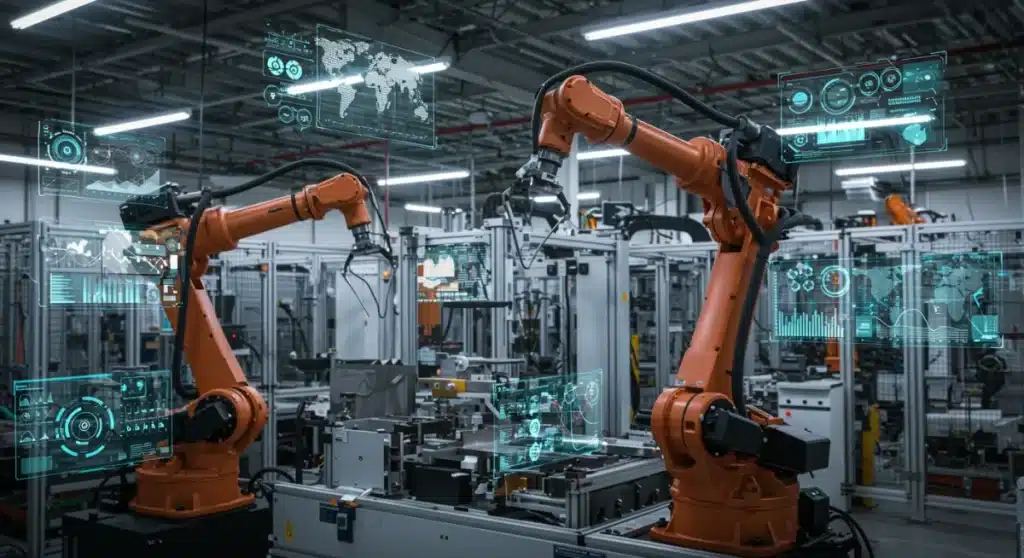
The concept of the ‘smart factory’ is perhaps the most comprehensive manifestation of AIoT in manufacturing. It envisions a production environment where machines, equipment, processes, and people are all interconnected and communicate seamlessly through a network of IoT devices, powered by AI. In a smart factory, every piece of machinery, every sensor, and every robotic arm is a data point, constantly generating information about its performance, status, and environment. AI algorithms then process this colossal stream of data to extract actionable insights, predict potential issues, and optimize operations in real-time.
Anúncios
How Smart Factories Work:
- Interconnected Devices: Thousands of IoT sensors are embedded throughout the factory, monitoring everything from temperature and humidity to machine vibration, energy consumption, and material flow.
- Real-time Data Collection: Data is continuously collected from these sensors and transmitted to a central platform, often cloud-based, for storage and analysis.
- AI-Powered Analytics: AI algorithms, including machine learning and deep learning, analyze this data to identify patterns, detect anomalies, predict failures, and suggest optimal operational parameters.
- Automated Decision-Making: Based on AI insights, the factory’s control systems can make autonomous adjustments, such as modifying machine speeds, re-routing materials, or scheduling maintenance, without human intervention.
- Human-Machine Collaboration: While highly automated, smart factories also enhance human capabilities by providing workers with real-time information, augmented reality tools, and collaborative robots (cobots).
Impact on AIoT US Manufacturing Efficiency:
Smart factories are driving efficiency gains across multiple fronts. They enable predictive quality control, where defects can be identified and corrected even before they fully manifest, significantly reducing waste and rework. Energy consumption is optimized through intelligent monitoring and control of machinery and environmental systems. Production lines become more agile and flexible, capable of rapidly adapting to changes in demand or product specifications. Furthermore, the overall equipment effectiveness (OEE) sees a substantial boost due to minimized downtime and optimized resource utilization. This holistic approach to optimization is a key driver for the projected 15% efficiency increase for AIoT US Manufacturing.
2. Predictive Maintenance: Anticipating Failure, Maximizing Uptime
One of the most significant pain points in traditional manufacturing is unexpected equipment failure, leading to costly downtime, production delays, and rushed repairs. Predictive maintenance, powered by AIoT, offers a revolutionary solution to this challenge. Instead of relying on fixed schedules (preventive maintenance) or waiting for equipment to break down (reactive maintenance), predictive maintenance uses data and AI to forecast when a machine is likely to fail, allowing maintenance to be performed precisely when needed, before a critical issue arises.
The Predictive Maintenance Process:
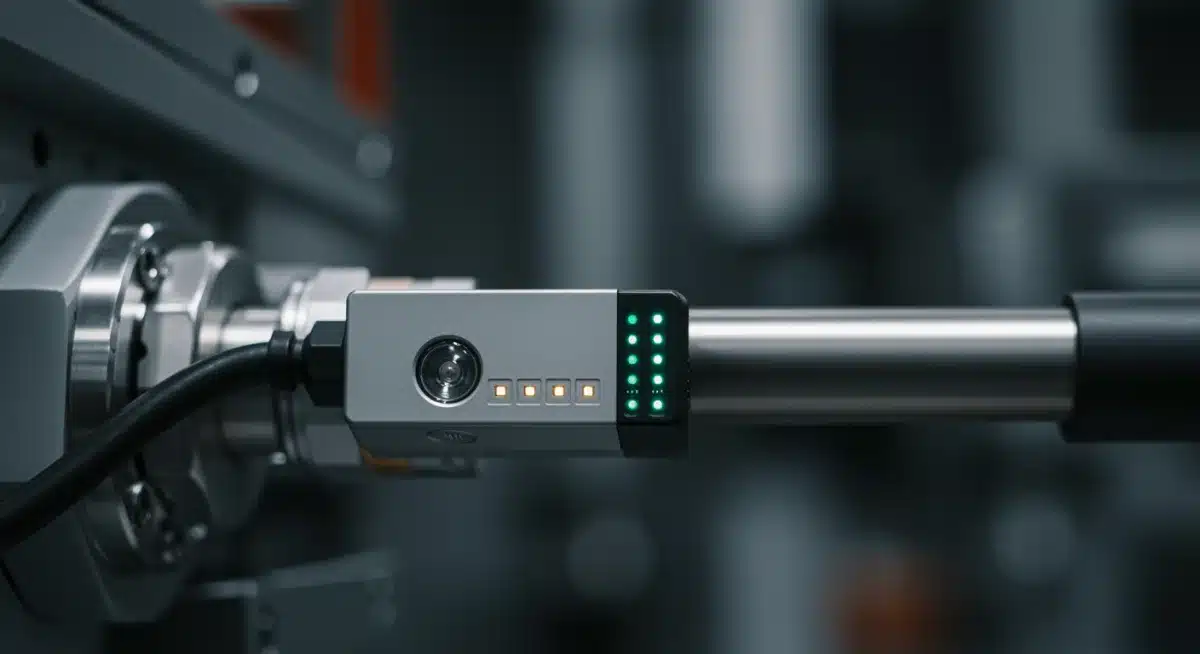
- Sensor Deployment: IoT sensors monitor critical machine parameters such as vibration, temperature, acoustic emissions, pressure, and current draw.
- Data Transmission: This sensor data is wirelessly transmitted to a central AI platform.
- AI Analysis: Machine learning algorithms analyze historical and real-time data to identify patterns indicative of impending failure. These models are trained on vast datasets of both normal operation and various failure modes.
- Anomaly Detection and Prediction: The AI system flags anomalies, predicts remaining useful life (RUL) of components, and alerts maintenance teams about potential issues.
- Optimized Scheduling: Maintenance activities can then be scheduled proactively during planned downtime or at times that minimize disruption, rather than reacting to an emergency.
Impact on AIoT US Manufacturing Efficiency:
The benefits of predictive maintenance are immense. It drastically reduces unplanned downtime, which can account for a significant portion of production losses. By performing maintenance only when necessary, it optimizes maintenance schedules, reduces labor costs, and extends the lifespan of expensive machinery. Furthermore, it minimizes the need for large inventories of spare parts, as parts can be ordered just-in-time based on predictive insights. For AIoT US Manufacturing, this translates directly into higher asset utilization, lower operational costs, and a more predictable production flow, contributing substantially to the 15% efficiency target.
3. AI-Powered Quality Control and Vision Systems: Precision at Scale
Maintaining consistent product quality is paramount in manufacturing. Traditional quality control often involves manual inspections, which are prone to human error, slow, and expensive. AIoT-driven quality control, particularly through advanced vision systems, is transforming this aspect by enabling rapid, highly accurate, and automated inspection processes.
How AI-Powered Quality Control Works:
- High-Resolution Cameras and Sensors: IoT-enabled cameras, often combined with other sensors like thermal imagers or spectrometers, capture detailed images and data of products during various stages of production.
- AI Image Recognition: Sophisticated AI algorithms, especially deep learning models, are trained on vast datasets of acceptable and defective products. They can identify even minute flaws, deviations, or imperfections that might be missed by the human eye.
- Real-time Feedback: The system provides instant feedback, allowing for immediate adjustments to the production process to correct the source of defects.
- Automated Sorting and Rejection: Defective products can be automatically sorted out or rejected from the production line, preventing them from reaching the customer.
- Process Optimization: Beyond simple detection, AI can analyze trends in defect types and locations to pinpoint root causes in the manufacturing process, enabling proactive adjustments.
Impact on AIoT US Manufacturing Efficiency:
The impact on efficiency is profound. AI-powered quality control significantly reduces the number of defective products, minimizing scrap, rework, and warranty claims. It accelerates inspection times, allowing for higher throughput and faster production cycles. By ensuring consistent quality, it enhances brand reputation and customer satisfaction. For AIoT US Manufacturing, this means not only cost savings from reduced waste but also a competitive edge derived from superior product quality, playing a crucial role in achieving the projected efficiency gains.
4. Digital Twins: Virtual Replicas for Real-World Optimization
The concept of a ‘digital twin’ is a virtual replica of a physical asset, process, or system. In manufacturing, a digital twin can be created for a single machine, an entire production line, or even an entire factory. This virtual model is continuously updated with real-time data from its physical counterpart via IoT sensors, making it a dynamic and accurate representation. AI algorithms then analyze this real-time data within the digital twin to simulate different scenarios, predict outcomes, and optimize performance.
Applications of Digital Twins in Manufacturing:
- Performance Monitoring and Optimization: The digital twin provides a comprehensive view of the physical asset’s health and performance, allowing operators to identify bottlenecks and optimize settings.
- Predictive Maintenance: As discussed, digital twins can be used to simulate potential failures and predict maintenance needs with greater accuracy by running ‘what-if’ scenarios.
- Process Simulation and Optimization: Manufacturers can simulate changes to production processes, test new layouts, or experiment with different operational parameters in the virtual environment without disrupting actual production.
- Product Design and Prototyping: Digital twins can be used in the design phase to test product performance under various conditions before physical prototypes are even built, accelerating time-to-market.
- Remote Monitoring and Control: Operators can monitor and even control physical assets remotely through their digital twins, enhancing operational flexibility.

Impact on AIoT US Manufacturing Efficiency:
Digital twins offer unparalleled opportunities for efficiency improvements. They enable manufacturers to gain deeper insights into their operations, identify inefficiencies, and test optimization strategies in a risk-free virtual environment. This leads to better decision-making, reduced operational costs, and faster innovation cycles. By optimizing everything from machine performance to entire factory layouts, digital twins are a cornerstone of the 15% efficiency boost expected in AIoT US Manufacturing, allowing for continuous improvement and proactive problem-solving.
5. AI-Driven Robotics and Automation: The Next Evolution of Productivity
Robotics has long been a staple of manufacturing automation, handling repetitive and dangerous tasks. However, the integration of AI with robotics, forming AI-powered robots, elevates automation to an entirely new level. These robots are no longer just programmed to perform fixed sequences; they can perceive their environment, learn from experience, adapt to changing conditions, and even collaborate with human workers more intelligently.
Key Advancements in AI-Driven Robotics:
- Machine Vision and Perception: AI allows robots to ‘see’ and interpret their surroundings with greater accuracy, enabling them to handle variations in parts, perform complex assembly tasks, and navigate dynamic environments.
- Machine Learning for Task Adaptation: Robots can learn new tasks through demonstration or reinforcement learning, reducing the need for extensive reprogramming. They can adapt to slight changes in product design or manufacturing processes.
- Collaborative Robots (Cobots): AI enhances the safety and intelligence of cobots, allowing them to work alongside humans without cages, understanding human intent and responding appropriately.
- Autonomous Mobile Robots (AMRs): These robots use AI to navigate factory floors autonomously, transporting materials, performing inspections, and optimizing logistics without fixed paths, improving material flow efficiency.
- Robotic Process Automation (RPA) Integration: AI can be integrated with RPA to automate not just physical tasks but also digital processes, creating a holistic automation strategy.
Impact on AIoT US Manufacturing Efficiency:
AI-driven robotics significantly boosts productivity by automating more complex tasks, reducing cycle times, and minimizing human error. They improve safety by taking over hazardous jobs and enhance flexibility by adapting to diverse production requirements. The collaboration between humans and cobots leads to a more efficient workforce, leveraging the strengths of both. For AIoT US Manufacturing, these advanced robots are crucial for scaling production, achieving higher precision, and ultimately contributing significantly to the projected 15% efficiency gain by 2026, making factories more responsive and competitive.
The Broader Impact and Future Outlook for AIoT US Manufacturing
Beyond these five core innovations, the widespread adoption of AIoT in U.S. manufacturing is creating a ripple effect across the entire industrial ecosystem. It’s fostering the development of new business models, such as manufacturing-as-a-service, and enabling greater customization at scale. The ability to collect, analyze, and act upon vast amounts of data is empowering manufacturers with unprecedented insights into their operations, supply chains, and customer demands.
Challenges and Considerations:
While the benefits are clear, the journey to full AIoT integration is not without its challenges. Cybersecurity is a paramount concern, as interconnected systems present new vulnerabilities. Data privacy and governance also need careful consideration. The initial investment in AIoT infrastructure can be substantial, requiring a clear return on investment strategy. Furthermore, workforce development is critical; employees need to be upskilled and reskilled to work alongside these advanced technologies, transitioning from manual labor to roles involving data analysis, system monitoring, and AI management.
Government and Industry Collaboration:
To fully realize the potential of AIoT, collaboration between government, industry, and academia is essential. Government initiatives supporting R&D, infrastructure development, and workforce training will be crucial. Industry leaders must drive adoption and share best practices, while academic institutions can provide the foundational research and talent pipeline necessary for sustained innovation.
The Road to 2026 and Beyond:
The prediction of a 15% efficiency boost by 2026 for AIoT US Manufacturing is not merely an optimistic forecast; it is a tangible goal grounded in the transformative power of these technologies. As these innovations mature and become more accessible, their integration will deepen, leading to even greater efficiencies and entirely new capabilities. The future of U.S. manufacturing is intelligent, connected, and highly adaptable, ready to meet the demands of a rapidly changing global economy.
Conclusion: A Smarter, More Efficient Manufacturing Future
The convergence of AI and IoT is unequivocally reshaping the U.S. manufacturing landscape, ushering in an era of unprecedented efficiency and innovation. From the intelligent automation of smart factories and the foresight of predictive maintenance to the precision of AI-powered quality control, the insights offered by digital twins, and the advanced capabilities of AI-driven robotics, these top five AIoT innovations are the bedrock of this transformation. They are collectively empowering American manufacturers to optimize every facet of their operations, reduce waste, enhance product quality, and significantly boost productivity.
The projected 15% efficiency increase by 2026 is a testament to the profound impact these technologies are having. It signifies a manufacturing sector that is not only more competitive on the global stage but also more resilient, sustainable, and capable of rapid adaptation to market dynamics. While challenges such as cybersecurity and workforce adaptation remain, the strategic integration of AIoT presents an undeniable path forward for U.S. manufacturing to solidify its position as a global leader. Embracing these innovations is not just an option; it is a necessity for any enterprise aiming to thrive in the intelligent industrial age. The future of AIoT US Manufacturing is bright, promising a smarter, more efficient, and more prosperous industrial future for the nation.