AR/VR Training ROI: 2026 US Enterprise Financial Outlook
Anúncios
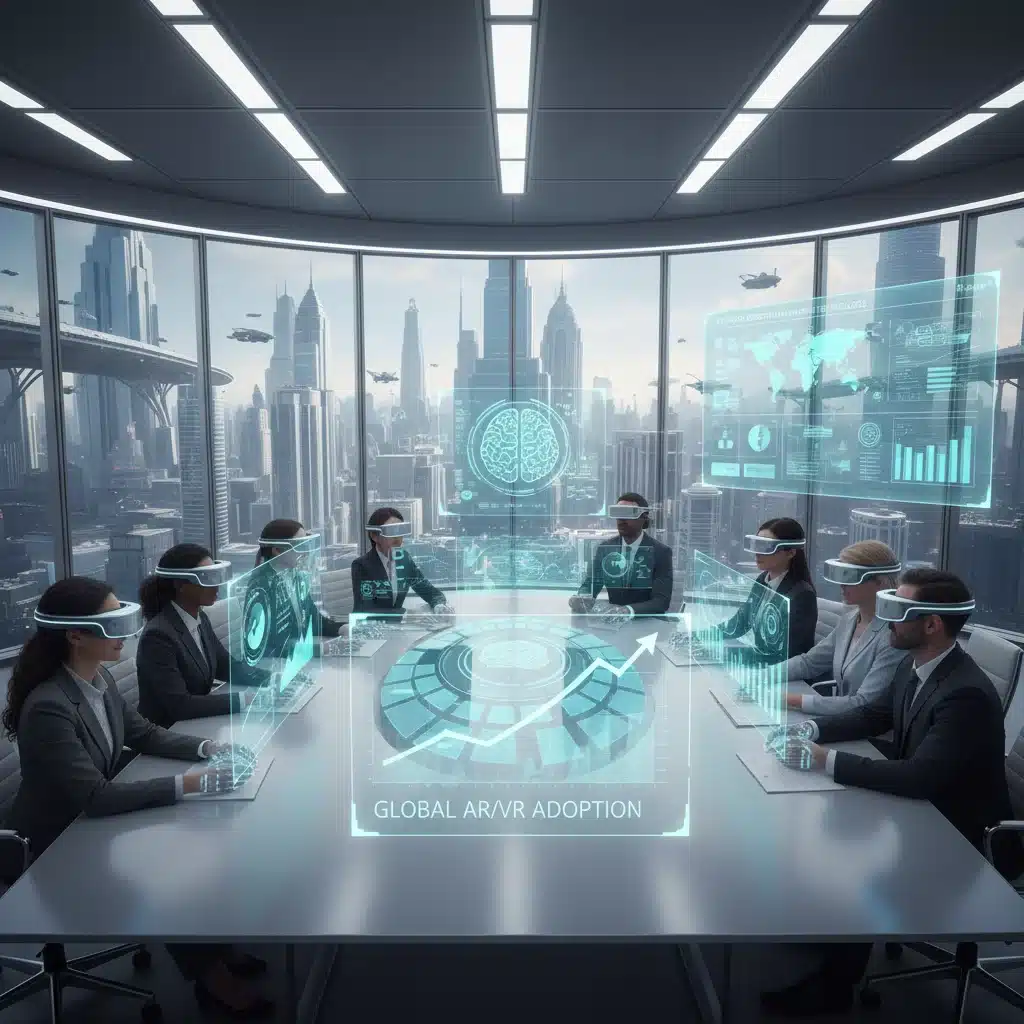
The landscape of corporate training is undergoing a profound transformation, driven by the rapid advancements in augmented reality (AR) and virtual reality (VR) technologies. As we approach 2026, US enterprises are increasingly recognizing the undeniable financial benefits and strategic imperative of integrating immersive training solutions into their workforce development strategies. This comprehensive analysis delves into the projected AR/VR Training ROI, exploring the multifaceted financial outlook for these groundbreaking technologies within the American business ecosystem.
For years, AR and VR were largely confined to the realms of gaming and niche entertainment. However, their potential for revolutionizing enterprise operations, particularly in training and development, has become undeniably clear. Companies are moving beyond pilot programs and are now actively scaling their immersive training initiatives, driven by compelling data on efficiency gains, cost reductions, and enhanced learning outcomes. The question is no longer ‘if’ AR/VR will be adopted, but ‘how quickly’ and ‘to what financial benefit’.
Anúncios
The Shifting Paradigm: From Traditional to Immersive Training
Traditional training methods, while foundational, often suffer from limitations such as high logistical costs, inconsistent delivery, safety risks in hazardous environments, and a lack of engaging, hands-on experience. Classroom-based learning, while valuable for theoretical knowledge, frequently falls short in preparing employees for complex, real-world scenarios. On-the-job training, while practical, can be disruptive, resource-intensive, and carries inherent risks, especially in industries like manufacturing, healthcare, and logistics.
Enter AR and VR. These technologies offer a paradigm shift, enabling enterprises to create highly realistic, interactive, and safe training environments. VR completely immerses users in a simulated world, allowing them to practice critical skills without real-world consequences. AR, on the other hand, overlays digital information onto the real world, providing contextual guidance and enhancing real-time performance. Both offer unparalleled opportunities for experiential learning, which is proven to lead to higher knowledge retention and skill acquisition.
Anúncios
The financial implications of this shift are profound. By reducing travel expenses, eliminating the need for physical prototypes or dangerous equipment, and accelerating the learning curve, companies are realizing significant cost savings. Furthermore, the improved performance and reduced error rates stemming from better-trained employees directly translate into increased productivity and profitability, strengthening the overall AR/VR Training ROI.
Quantifying the AR/VR Training ROI: Key Financial Drivers
Understanding the return on investment for AR/VR training requires a holistic view, encompassing both direct cost savings and indirect benefits that impact the bottom line. Let’s break down the primary financial drivers:
1. Reduced Training Costs
- Elimination of Travel and Logistics: For geographically dispersed workforces, traditional training often involves significant travel, accommodation, and venue costs. VR training platforms can deliver standardized content to employees anywhere in the world, drastically cutting these expenses.
- Reduced Equipment and Material Costs: Training on expensive or hazardous equipment (e.g., heavy machinery, medical devices, aircraft engines) can be costly and risky. VR simulations allow for unlimited practice without wear and tear on physical assets or consumption of raw materials.
- Instructor Efficiency: While initial content creation for AR/VR can be an investment, once developed, modules can be deployed to thousands of employees simultaneously with minimal instructor oversight, freeing up valuable expert time.
- Faster Skill Acquisition: Immersive learning’s effectiveness often leads to faster competency development, meaning employees become productive sooner, reducing the time and cost associated with extended training periods.
2. Enhanced Performance and Productivity
- Improved Retention Rates: Experiential learning through AR/VR is known to significantly boost knowledge retention compared to passive learning methods. Higher retention means less need for retraining and fewer errors.
- Reduced Error Rates and Rework: Better-trained employees make fewer mistakes. In industries where errors can be costly (e.g., manufacturing, healthcare, aviation), this translates directly into financial savings and improved quality.
- Accelerated Onboarding: New hires can get up to speed much faster with immersive training, leading to quicker integration into the workforce and immediate contributions to productivity.
- Standardized Training Quality: AR/VR ensures every employee receives the exact same high-quality training experience, regardless of location or instructor, leading to consistent skill levels across the organization.
3. Safety and Risk Mitigation
- Safe Practice in Hazardous Environments: Employees can practice procedures in dangerous or high-risk situations (e.g., surgical procedures, emergency response, working at heights) within a completely safe virtual environment, eliminating real-world accidents and associated costs (medical, legal, lost productivity).
- Compliance Training: AR/VR can make mandatory compliance training more engaging and memorable, leading to higher adherence to safety protocols and regulatory requirements, thereby reducing fines and legal liabilities.
4. Employee Engagement and Retention
- Increased Engagement: Immersive training is inherently more engaging and enjoyable than traditional methods, leading to higher trainee motivation and completion rates.
- Attracting Top Talent: Companies leveraging cutting-edge technologies like AR/VR for training are often perceived as innovative, making them more attractive to prospective employees, especially younger generations.
- Skill Development and Career Growth: Providing advanced training opportunities fosters employee loyalty and reduces turnover, which is a significant cost saver given the expense of recruiting and training new staff.
Sector-Specific Projections for AR/VR Training ROI in US Enterprise by 2026
While the benefits of AR/VR training are universal, certain sectors in the US are poised for particularly significant returns by 2026 due to their specific operational challenges and training needs.
Manufacturing and Industrials
This sector faces an aging workforce, a skills gap, and the increasing complexity of machinery. AR/VR training offers solutions for:
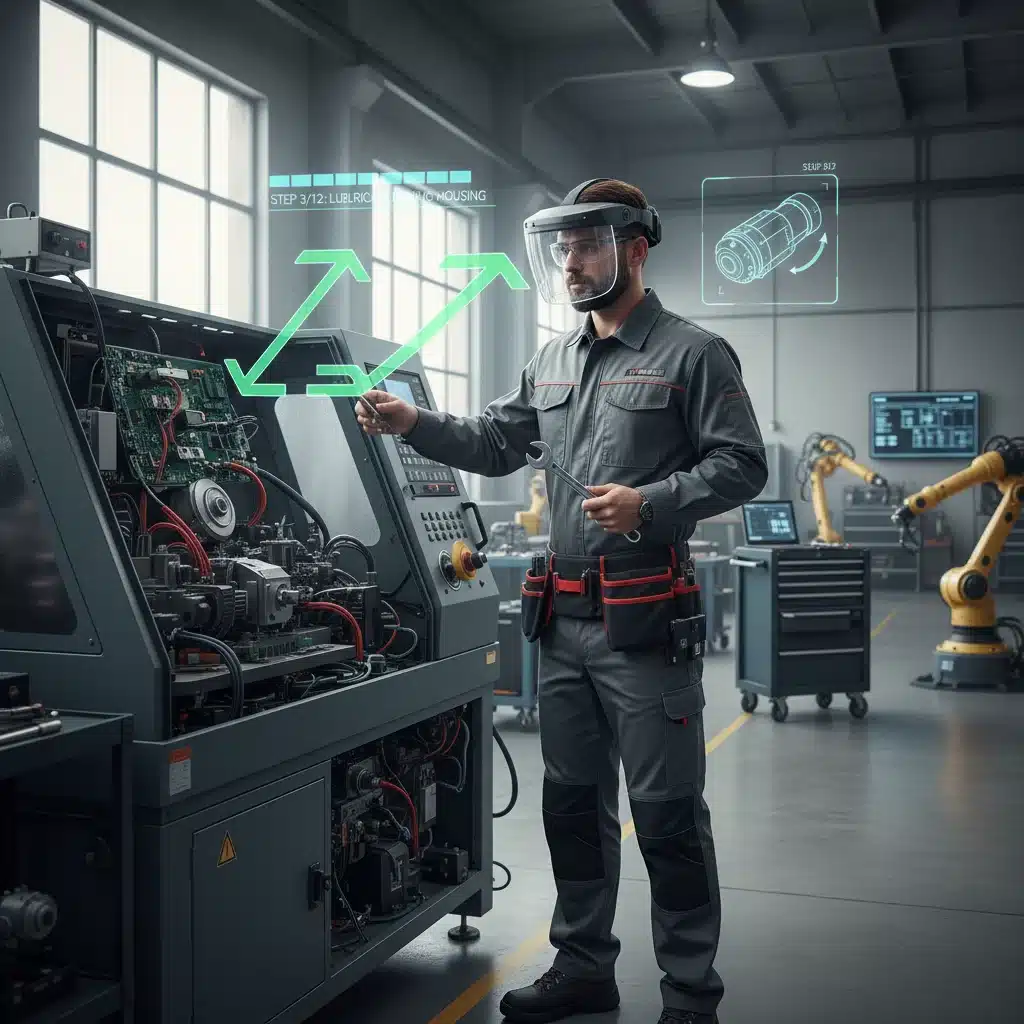
- Maintenance and Repair: AR overlays can guide technicians step-by-step through complex repairs, reducing downtime and errors. VR simulations can train new hires on machinery operation and maintenance without risking damage to expensive equipment.
- Assembly Line Training: AR can provide real-time instructions for intricate assembly tasks, improving speed and accuracy.
- Safety Procedures: Realistic VR simulations can train workers on safety protocols in hazardous environments, reducing workplace accidents.
By 2026, manufacturers investing in AR/VR training are expected to see significant reductions in training time (up to 50%), error rates (up to 30%), and a substantial increase in first-time fix rates, directly impacting operational efficiency and profitability. The AR/VR Training ROI here is often immediate and measurable.
Healthcare
The healthcare industry demands precision, continuous learning, and risk-free practice. AR/VR are transforming medical education and clinical training:
- Surgical Training: VR simulations allow surgeons to practice complex procedures repeatedly in a risk-free environment, improving dexterity and decision-making.
- Patient Empathy Training: VR can simulate patient experiences, helping healthcare professionals develop greater empathy and communication skills.
- Anatomy and Diagnostics: AR/VR provides immersive ways to learn human anatomy and practice diagnostic procedures.
- Emergency Response: Training for critical care and emergency scenarios can be conducted realistically without endangering patients.
By 2026, healthcare institutions leveraging AR/VR are projected to achieve higher surgical success rates, reduced medical errors, and faster training for critical skills, leading to improved patient outcomes and substantial cost savings from reduced complications and malpractice claims. The AR/VR Training ROI in healthcare is literally life-saving and financially prudent.
Retail and Customer Service
In these sectors, effective training impacts customer satisfaction, sales, and brand reputation.
- Product Knowledge: AR can allow sales associates to quickly access detailed product information, enhancing their ability to serve customers. VR can simulate product interactions for better understanding.
- Customer Interaction Skills: VR scenarios can provide realistic practice for handling difficult customer situations, de-escalation techniques, and sales pitches.
- Store Layout and Operations: VR can train new employees on store layouts, inventory management, and operational procedures before they even step onto the sales floor.
The financial outlook for AR/VR training in retail by 2026 includes increased sales conversions, improved customer satisfaction scores, and reduced employee turnover, all contributing to a strong AR/VR Training ROI.
Logistics and Transportation
This sector benefits from training that enhances efficiency, safety, and operational precision.
- Driving and Equipment Operation: VR simulators can provide realistic training for commercial truck drivers, forklift operators, and crane operators, reducing accidents and fuel consumption.
- Warehouse Operations: AR can guide workers through efficient picking and packing routes, improving speed and accuracy. VR can simulate various warehouse scenarios for training.
- Safety Protocols: Immersive training can reinforce safety procedures for loading, unloading, and handling hazardous materials.
By 2026, logistics companies are expected to see significant reductions in accident rates, fuel costs, and operational inefficiencies, demonstrating a clear and compelling AR/VR Training ROI.
Challenges and Considerations for Maximizing AR/VR Training ROI
While the financial prospects are bright, enterprises must navigate several challenges to maximize their AR/VR Training ROI:
1. Initial Investment Costs
The upfront costs for hardware (headsets, powerful PCs) and software development (custom content, platforms) can be substantial. However, these costs are rapidly decreasing, and the long-term savings often outweigh the initial outlay. Strategic planning and scalable solutions are key.
2. Content Creation and Expertise
Developing high-quality, engaging, and effective AR/VR training content requires specialized skills. Companies may need to invest in in-house expertise or partner with experienced AR/VR development studios. The quality of content directly impacts the effectiveness of the training and thus the eventual ROI.
3. Integration with Existing Systems
Seamless integration of AR/VR training platforms with existing Learning Management Systems (LMS), HR systems, and operational data is crucial for tracking progress, measuring effectiveness, and demonstrating ROI. Interoperability and data analytics are vital.
4. Employee Adoption and Change Management
Introducing new technologies requires careful change management. Employees may be hesitant or unfamiliar with AR/VR. Providing adequate support, clear communication of benefits, and user-friendly interfaces are essential for successful adoption and maximizing the impact on training outcomes.
Forecasting the Future: Key Trends Driving AR/VR Training ROI to 2026
Several overarching trends will continue to fuel the growth and enhance the AR/VR Training ROI in US enterprises through 2026:
1. Hardware Advancements and Affordability
Headsets are becoming lighter, more comfortable, higher resolution, and significantly more affordable. Standalone VR headsets (like Meta Quest Pro/3) are eliminating the need for expensive PCs, making deployment easier and more scalable. AR glasses are also progressing rapidly, moving from niche industrial tools to more accessible enterprise solutions.
2. AI Integration for Personalized Learning
The integration of artificial intelligence (AI) with AR/VR platforms will enable highly personalized and adaptive training experiences. AI can analyze trainee performance, identify areas of weakness, and dynamically adjust simulations to provide targeted practice, further accelerating skill development and improving the efficacy of training.
3. Rise of Collaborative Immersive Environments
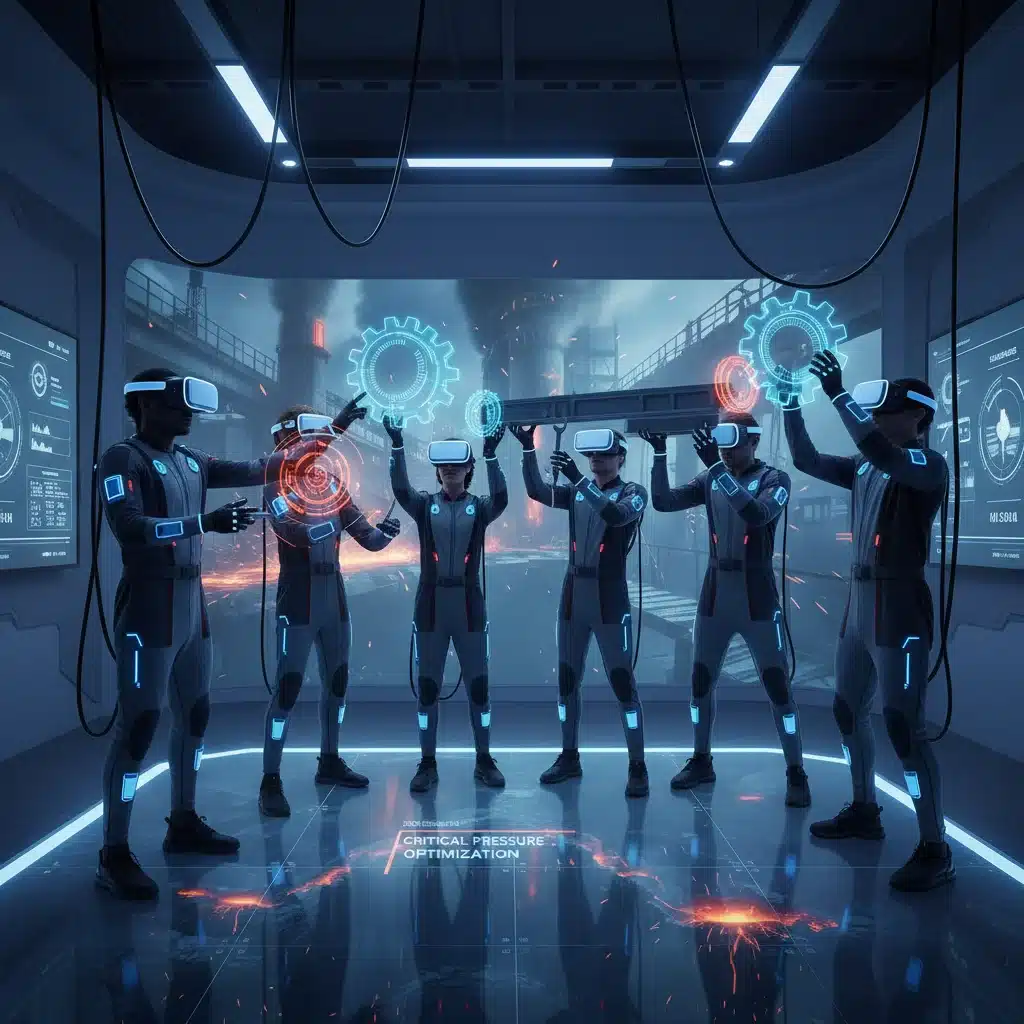
Multiplayer AR/VR training environments will become increasingly common, allowing teams to train together in simulated scenarios regardless of their physical location. This fosters teamwork, communication, and problem-solving skills in a highly engaging format.
4. Low-Code/No-Code Content Creation Tools
As the demand for AR/VR content grows, platforms that allow subject matter experts (SMEs) to create immersive training modules with minimal coding knowledge will democratize content creation, reducing development costs and time. This will enable enterprises to rapidly develop and update training content, directly impacting the AR/VR Training ROI.
5. Data Analytics and Performance Tracking
Advanced analytics within AR/VR platforms will provide granular insights into trainee performance, eye-tracking, decision-making, and skill progression. This data is invaluable for refining training programs, demonstrating measurable ROI, and making data-driven decisions about workforce development.
Conclusion: The Irreversible Trajectory of Immersive Training
By 2026, AR/VR immersive training solutions will no longer be considered experimental but rather an indispensable component of successful enterprise workforce development strategies across the United States. The compelling financial arguments – from significant cost reductions in traditional training to dramatic improvements in employee performance, safety, and retention – paint a clear picture of a robust and accelerating AR/VR Training ROI.
Enterprises that strategically invest in these technologies now, focusing on scalable solutions, quality content, and seamless integration, will gain a considerable competitive advantage. They will not only be preparing their workforce for the complexities of tomorrow but also realizing substantial financial returns today. The future of training is immersive, and its financial benefits are becoming too significant for any forward-thinking US enterprise to ignore.
The journey towards widespread adoption is not without its hurdles, but the trajectory is irreversible. As hardware becomes more accessible, software more sophisticated, and content creation more streamlined, the financial case for AR/VR training will only strengthen, solidifying its position as a cornerstone of corporate learning and development for years to come.