AI Ethics Councils: Shaping Digital Morality in 2026 Tech

Anúncios
The rapid advancement of artificial intelligence (AI) has brought forth unprecedented opportunities and equally profound ethical dilemmas. As AI systems become more integrated into every facet of our lives, from healthcare to finance, transportation to communication, the imperative to ensure their responsible development and deployment has never been more critical. In response to this growing need, American tech companies are increasingly establishing AI Ethics Councils, poised to become the arbiters of digital morality by 2026. These councils are not merely advisory bodies; they represent a fundamental shift in how the tech industry approaches innovation, embedding ethical considerations at the very core of AI design and implementation. This comprehensive exploration delves into the rise of these crucial entities, their structure, their challenges, and their projected impact on the future of AI.
The concept of AI ethics is not new, but its institutionalization within corporate structures marks a significant evolution. Historically, ethical discussions surrounding technology often occurred in academic circles or through public discourse, often lagging behind technological breakthroughs. However, the scale and potential impact of modern AI, particularly with the advent of sophisticated machine learning models and generative AI, demand a proactive and integrated approach. Companies are recognizing that neglecting ethical considerations can lead to significant reputational damage, legal liabilities, and, most importantly, the erosion of public trust. The formation of dedicated AI Ethics Councils is a direct response to these pressures, aiming to preemptively address complex moral questions before they manifest as real-world problems.
Anúncios
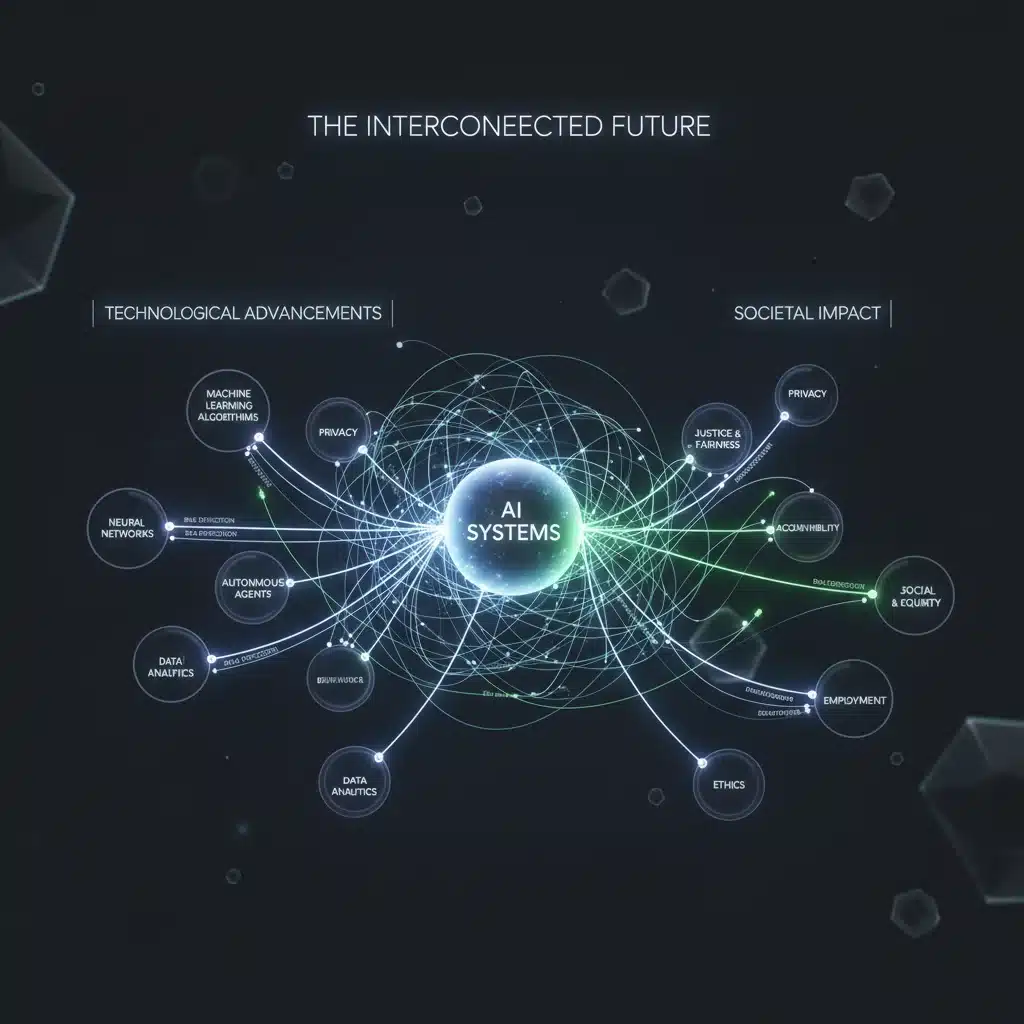
The landscape of AI development is fraught with potential pitfalls. Algorithmic bias, privacy violations, accountability gaps, and the potential for misuse are just a few of the critical concerns that require careful navigation. AI Ethics Councils are designed to be the compass guiding tech companies through this intricate terrain. They are tasked with developing frameworks, policies, and best practices that ensure AI systems are fair, transparent, accountable, and beneficial to society. By bringing together diverse perspectives from within and outside the organization, these councils seek to foster a culture of ethical awareness and responsibility, moving beyond mere compliance to genuine ethical leadership.
The Genesis of AI Ethics Councils: A Growing Imperative
The journey towards formalized AI ethics began years ago, spurred by early instances of algorithmic unfairness and public outcry. Initial efforts were often ad-hoc, involving individual researchers or small internal groups. However, as AI matured and its applications broadened, the need for a more structured and authoritative approach became undeniable. Major tech companies, often at the forefront of AI innovation, were also the first to face the ethical spotlight. Incidents involving facial recognition bias, discriminatory loan algorithms, and privacy breaches served as stark reminders that technological prowess alone is insufficient. Trust, it became clear, was the new currency of innovation.
The increasing scrutiny from governments, regulatory bodies, and civil society organizations has further accelerated the formation of AI Ethics Councils. Policymakers globally are grappling with how to regulate AI effectively, and companies that can demonstrate robust internal ethical governance are often seen as more credible and responsible partners. This proactive stance not only helps mitigate regulatory risks but also positions companies as leaders in the responsible AI movement. By 2026, it is anticipated that having a well-defined and functional AI Ethics Council will be a standard expectation for any major tech company developing or deploying AI systems.
Anúncios
Moreover, the talent landscape plays a significant role. Top AI researchers and engineers are increasingly seeking employment with companies that demonstrate a strong commitment to ethical AI. A robust AI Ethics Council can be a powerful recruitment and retention tool, attracting individuals who are not only technically brilliant but also deeply concerned about the societal impact of their work. This symbiotic relationship between ethical commitment and talent acquisition further solidifies the importance of these councils.
Structure and Composition: Who Sits on an AI Ethics Council?
The effectiveness of an AI Ethics Council hinges heavily on its structure and the diversity of its membership. While there’s no one-size-fits-all model, several key characteristics define successful councils. Typically, these councils are multidisciplinary, drawing expertise from various fields to ensure a holistic approach to ethical considerations. This often includes:
- AI Researchers and Engineers: Individuals with deep technical understanding of AI systems, their capabilities, and limitations.
- Ethicists and Philosophers: Experts in moral philosophy and applied ethics who can provide frameworks for navigating complex moral dilemmas.
- Legal and Policy Experts: Professionals who understand the evolving legal and regulatory landscape surrounding AI.
- Sociologists and Psychologists: Specialists who can assess the societal and psychological impacts of AI on individuals and communities.
- User Experience (UX) Designers: Those who can advocate for user-centric design principles and anticipate potential harms or benefits from a user perspective.
- Diversity and Inclusion Advocates: Individuals focused on ensuring AI systems are fair, equitable, and do not perpetuate or amplify existing societal biases.
- Privacy Experts: Specialists in data privacy and protection, crucial for navigating the vast amounts of data AI systems consume.
Some councils also include external advisors or independent experts to provide an unbiased perspective and enhance credibility. The blend of internal knowledge and external oversight is often seen as a best practice, helping to prevent insularity and groupthink. The reporting structure of these councils is also critical; they often report directly to senior leadership or even the board of directors, underscoring the strategic importance of their work.
The size of an AI Ethics Council can vary, but generally, they are kept agile enough to facilitate meaningful discussions while being comprehensive enough to cover the breadth of issues. Regular meetings, clear mandates, and defined processes for decision-making are essential to their operational efficiency. By 2026, we expect to see even greater standardization in the composition and operational guidelines of these councils, driven by industry best practices and emerging regulatory frameworks.
Key Responsibilities and Mandates: What Do They Do?
The mandate of an AI Ethics Council is broad and multifaceted, encompassing a range of activities designed to embed ethical considerations throughout the AI development lifecycle. Their core responsibilities typically include:
1. Developing Ethical Guidelines and Principles
One of the primary tasks is to establish a clear set of ethical principles and guidelines that will govern the company’s AI development and deployment. These principles often cover areas such as fairness, accountability, transparency, privacy, safety, and human oversight. These aren’t just abstract concepts; the council works to translate them into actionable policies and procedures that engineers and product managers can follow.
2. Conducting Ethical Impact Assessments (EIAs)
Similar to environmental impact assessments, EIAs involve systematically identifying, evaluating, and mitigating potential ethical risks associated with new AI products or features. This proactive approach helps to catch potential problems early in the development cycle, rather than dealing with them after deployment. EIAs are becoming an indispensable tool for AI Ethics Councils.
3. Providing Consultation and Oversight
Councils serve as a go-to resource for teams developing AI. They provide consultation on specific projects, offer guidance on ethical dilemmas, and review AI systems for adherence to established principles. This oversight can range from reviewing data acquisition practices to scrutinizing algorithmic decision-making processes.
4. Fostering Education and Training
A critical, often overlooked, role is to educate employees across the organization about AI ethics. This includes training for engineers on how to build ethical AI, for product managers on how to design ethical products, and for sales teams on how to communicate about AI responsibly. Building an ethical culture requires widespread understanding and commitment.
5. Engaging with External Stakeholders
Many AI Ethics Councils also engage with external stakeholders, including academics, policymakers, consumer advocacy groups, and the public. This engagement helps to gather diverse perspectives, build trust, and ensure that the company’s ethical approach remains relevant and responsive to societal expectations.
6. Addressing & Mitigating Bias
Bias in AI is a pervasive and complex issue, often stemming from biased training data or flawed algorithmic design. Councils are specifically tasked with developing strategies to identify, measure, and mitigate bias in AI systems, ensuring that they do not perpetuate or amplify discrimination against certain groups.

Challenges and Criticisms: The Road Ahead for AI Ethics Councils
While the rise of AI Ethics Councils is a positive development, they are not without their challenges and criticisms. Navigating these hurdles will be crucial for their long-term effectiveness and credibility.
1. The Illusion of Ethics Washing
One of the most significant criticisms is the concern that some councils might be used for ‘ethics washing’ – a superficial attempt to appear ethical without genuine commitment. Critics argue that if councils lack real authority, resources, or independence, they become mere PR tools. To counter this, councils need to demonstrate tangible impact and be empowered to challenge corporate decisions when necessary. Transparency in their operations and outcomes is key to building trust.
2. The Pace of Innovation vs. Ethical Deliberation
The rapid pace of AI innovation often clashes with the slower, more deliberate process of ethical deliberation. Companies are under immense pressure to release new products quickly, and ethical reviews can be perceived as slowing down development. Balancing speed with thoroughness is a constant challenge, requiring efficient processes and strong integration of ethical considerations into agile development methodologies.
3. Defining and Operationalizing Ethics
Ethics itself is a complex and often subjective field. Translating abstract ethical principles into concrete, measurable, and enforceable technical standards is a monumental task. What constitutes ‘fairness’ in one context might be different in another, and defining universal metrics for ethical performance is an ongoing area of research and debate. AI Ethics Councils must grapple with these ambiguities.
4. Lack of Enforcement Power
Many councils are advisory in nature, meaning their recommendations can be overridden by business priorities. For councils to be truly effective, they need to have a clear pathway for their recommendations to be implemented and, in some cases, the authority to halt projects that pose unacceptable ethical risks. The level of executive buy-in and empowerment is paramount.
5. Internal vs. External Expertise
While internal experts provide valuable context, there’s always a risk of insularity or being swayed by corporate interests. Conversely, purely external councils might lack the deep understanding of a company’s specific technologies and culture. A hybrid model, combining internal knowledge with independent external oversight, often offers the best balance.
6. Global Consistency vs. Local Nuances
For multinational tech companies, ensuring ethical consistency across different regions with varying cultural norms and legal frameworks presents a significant challenge. What’s considered ethically acceptable in one country might be problematic in another. AI Ethics Councils must develop flexible yet robust frameworks that can adapt to these global nuances.
The Impact by 2026: Shaping Digital Morality
By 2026, the influence of AI Ethics Councils is expected to be profound, fundamentally reshaping the digital morality landscape within the American tech industry and beyond. Their impact will be felt in several key areas:
1. Mainstreaming Ethical AI Development
Ethical considerations will no longer be an afterthought but an integral part of the AI development lifecycle. From conception to deployment and maintenance, every stage will incorporate ethical checkpoints and reviews. This mainstreaming will lead to AI systems that are inherently more robust, trustworthy, and socially responsible. Engineers will be trained not just in coding but also in ethical reasoning.
2. Enhanced Public Trust and User Adoption
As companies demonstrate a genuine commitment to ethical AI through the work of their councils, public trust in AI technologies is likely to increase. This, in turn, can drive greater user adoption and acceptance of AI solutions, fostering a more positive and productive relationship between technology and society. Transparency about ethical practices will become a competitive advantage.
3. Influence on Policy and Regulation
The best practices and frameworks developed by leading AI Ethics Councils will inevitably influence emerging AI policy and regulation. Governments and international bodies will look to successful corporate models for guidance, potentially leading to more harmonized and effective regulatory environments globally. This proactive engagement can help shape regulations that are both protective and innovation-friendly.
4. Mitigation of Risks and Liabilities
By proactively identifying and addressing ethical risks, companies can significantly reduce their exposure to legal liabilities, reputational damage, and costly public backlashes. A well-functioning council acts as a critical risk management function, safeguarding the company’s long-term viability and brand integrity.
5. Fostering a Culture of Responsibility
Beyond specific policies, AI Ethics Councils will cultivate a stronger culture of responsibility within tech organizations. Employees at all levels will be more aware of the ethical implications of their work and empowered to raise concerns. This cultural shift is perhaps the most enduring legacy, ensuring that ethical considerations are deeply ingrained in the DNA of tech innovation.
6. Setting Industry Standards
As more companies establish and refine their AI Ethics Councils, a de facto set of industry standards for ethical AI development will begin to emerge. These standards, driven by practical experience and collective learning, will provide a benchmark for all organizations involved in AI, fostering a more uniformly responsible tech ecosystem.
Case Studies: Pioneering AI Ethics Councils
Several American tech giants have already established robust AI Ethics Councils, offering valuable insights into their operation and impact. While specific details often remain proprietary, their public statements and reported initiatives highlight common themes and innovative approaches.
Google’s Advanced Technology External Advisory Council (ATEAC) and Responsible AI Initiatives
Google has been a prominent player in the AI ethics space, though its journey has not been without its challenges. The company initially formed an external AI ethics council, ATEAC, which faced significant public scrutiny and was eventually disbanded. However, this experience led to a re-evaluation and a stronger focus on internal mechanisms, including a dedicated Responsible AI organization and internal review processes. Google’s ongoing efforts focus on developing tools for fairness, interpretability, and privacy-preserving AI, demonstrating a commitment to embedding ethics within its vast AI research and product development teams.
Microsoft’s AI and Ethics in Engineering and Research (AETHER) Committee
Microsoft’s AETHER committee is a prime example of a comprehensive internal AI ethics body. Composed of senior leaders and experts from across the company, AETHER advises Microsoft’s leadership on responsible AI principles, policies, and practices. It plays a crucial role in shaping the company’s approach to sensitive AI applications, such as facial recognition and autonomous systems. Microsoft has also been a strong advocate for public policy discussions around AI ethics, sharing its internal frameworks and lessons learned to contribute to broader societal discourse.
IBM’s AI Ethics Board
IBM has long emphasized trust and transparency in its AI offerings. Its internal AI Ethics Board, composed of diverse experts, is responsible for guiding the company’s ethical AI strategy, reviewing products, and ensuring alignment with IBM’s principles of trust and transparency. IBM has also been a vocal proponent of explainable AI (XAI) and has developed tools and methodologies to help developers build more transparent and accountable AI systems. Their focus extends to industry collaborations and educational initiatives, aiming to elevate the collective understanding and practice of AI ethics.
These case studies illustrate that while approaches may differ, the underlying goal remains consistent: to ensure that AI development is guided by ethical principles and contributes positively to society. The lessons learned from these early pioneers are invaluable for other companies as they establish or refine their own AI Ethics Councils.
The Future Outlook: AI Ethics Councils in 2026 and Beyond
Looking ahead to 2026 and beyond, the role of AI Ethics Councils is only set to grow in importance and sophistication. We can anticipate several key trends:
1. Increased Standardization and Benchmarking
As the field matures, there will likely be greater standardization in the structure, responsibilities, and methodologies of AI Ethics Councils. Industry bodies and potentially even regulatory frameworks may emerge to provide benchmarks for what constitutes an effective and credible council. This will help distinguish genuinely ethical companies from those engaging in ‘ethics washing.’
2. Deeper Integration into Product Development
Ethical considerations will become even more deeply embedded into the entire product development lifecycle. Tools and processes for ethical impact assessments, bias detection, and fairness metrics will be integrated directly into engineering workflows, making ethical AI development a seamless part of the innovation process.
3. Focus on AI Governance and Accountability
The discussion will shift from merely identifying ethical issues to establishing robust AI governance frameworks that define accountability for AI decisions and outcomes. AI Ethics Councils will play a central role in designing these frameworks, ensuring that there are clear lines of responsibility when AI systems make critical decisions.
4. Addressing Emerging Ethical Frontiers
As AI technology continues to evolve, new ethical challenges will emerge. Councils will need to adapt to address frontiers such as synthetic media (deepfakes), advanced autonomous systems, brain-computer interfaces, and the ethical implications of artificial general intelligence (AGI), should it develop. Their agility and foresight will be constantly tested.
5. Global Collaboration and Harmonization
Given the global nature of AI development and deployment, there will be an increasing need for international collaboration among AI Ethics Councils, governments, and civil society. Efforts to harmonize ethical guidelines and regulatory approaches across borders will become more critical to ensure a coherent and responsible global AI ecosystem.
The journey of AI ethics is a continuous one, characterized by learning, adaptation, and a steadfast commitment to human values. The rise of AI Ethics Councils within American tech companies by 2026 is not just a trend; it is a critical institutional response to the profound moral challenges posed by artificial intelligence. These councils are becoming the guardians of digital morality, tasked with ensuring that as AI reshapes our world, it does so in a way that is fair, just, and ultimately beneficial for all of humanity. Their success will determine not only the future of technology but also the very fabric of our digital society.
Conclusion: A Moral Compass for the AI Age
The establishment and maturation of AI Ethics Councils within American tech companies represent a pivotal moment in the history of technological development. These councils are more than just a corporate response to public pressure; they signify a growing recognition within the industry that the power of AI comes with immense responsibility. By 2026, these bodies will be indispensable, acting as the moral compass guiding the development and deployment of artificial intelligence.
Their ongoing work in defining ethical principles, conducting impact assessments, fostering education, and engaging with stakeholders is crucial for building trust, mitigating risks, and ensuring that AI serves humanity’s best interests. While challenges such as ethics washing, the pace of innovation, and the complexities of operationalizing ethics remain, the commitment to overcoming these hurdles is evident.
The future of AI is not solely about technical prowess; it is fundamentally about ethical wisdom. The AI Ethics Councils are at the forefront of this endeavor, shaping a digital morality that will define the next era of technological advancement. Their success will be measured not just in the absence of harm, but in the proactive creation of AI systems that enhance human dignity, promote fairness, and contribute to a more just and equitable world. As we move further into the AI age, these councils will stand as testament to the industry’s evolving conscience, ensuring that innovation and integrity go hand in hand.