Blockchain Beyond Crypto: 5 Practical US Business Applications Emerging in the Next 12 Months
For many, the term ‘blockchain’ immediately conjures images of Bitcoin and other cryptocurrencies. While digital currencies were indeed the groundbreaking first application of this revolutionary technology, the true potential of blockchain extends far beyond the volatile world of speculative assets. In the United States, forward-thinking businesses and industries are increasingly recognizing the core value proposition of distributed ledger technology (DLT): unparalleled transparency, immutable record-keeping, enhanced security, and streamlined processes. The next 12 months are poised to be a pivotal period, witnessing the widespread emergence of practical blockchain business applications that will reshape how various sectors operate.
This article aims to peel back the layers of hype and delve into five concrete, non-cryptocurrency blockchain business applications that are not only gaining traction but are expected to see significant implementation and impact across the US business landscape in the immediate future. From optimizing complex supply chains to revolutionizing healthcare data management, the versatility of blockchain is proving to be a game-changer. Understanding these emerging applications is crucial for businesses looking to stay competitive and innovative in an increasingly digital and interconnected world.
Anúncios
The underlying principles of blockchain – decentralization, cryptography, and consensus mechanisms – offer solutions to long-standing problems of trust, efficiency, and data integrity. As regulatory frameworks evolve and technological maturity increases, the barrier to entry for adopting these solutions is lowering, making them accessible to a broader range of enterprises. Let’s explore the forefront of this exciting evolution.
1. Revolutionizing Supply Chain Management and Traceability
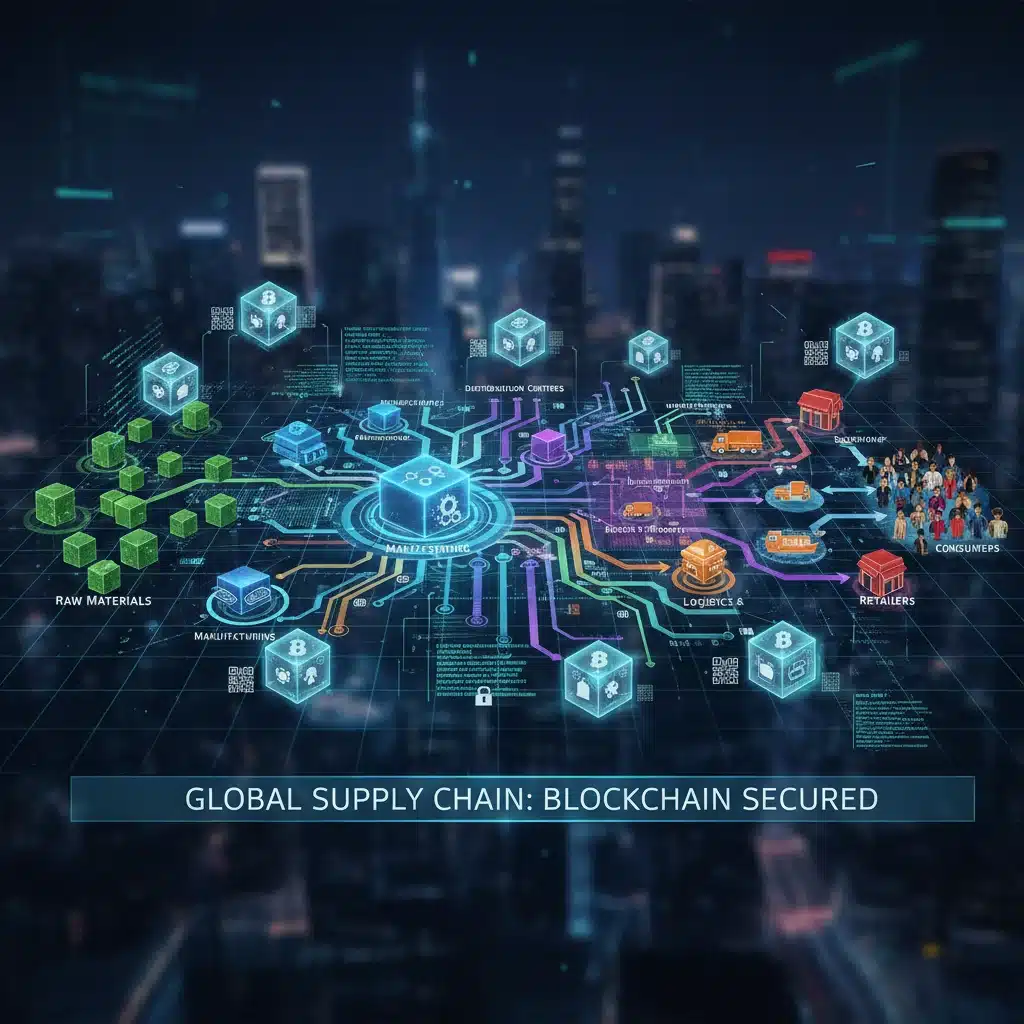
One of the most immediate and impactful blockchain business applications is in supply chain management. The traditional global supply chain is a labyrinth of intermediaries, paper-based documentation, and siloed systems, leading to inefficiencies, lack of transparency, and susceptibility to fraud. Blockchain offers a powerful solution by creating an immutable, shared ledger that tracks products from their origin to the consumer.
Anúncios
In the US, industries like food and beverage, pharmaceuticals, and luxury goods are already piloting and scaling blockchain solutions. Imagine a consumer scanning a QR code on a product and instantly accessing its entire journey: where it was sourced, processed, packaged, and transported, complete with timestamps and certifications. This level of transparency builds consumer trust, helps identify counterfeit goods, and significantly improves recall efficiency in case of contamination or defect.
For businesses, blockchain in supply chains means enhanced visibility, reduced administrative costs, faster dispute resolution, and improved compliance with regulations. Smart contracts, another facet of blockchain technology, can automate payments upon delivery or verification of specific conditions, further streamlining operations. The next 12 months will see more major retailers and logistics companies in the US integrating these systems, moving beyond pilot programs to full-scale deployment, making it a leading example of practical blockchain business applications.
The benefits extend to proving ethical sourcing and sustainability claims, which are increasingly important to consumers and regulators. Companies can demonstrate fair labor practices or environmentally friendly processes through verifiable blockchain records. This not only enhances brand reputation but also mitigates risks associated with unethical supply chain practices. The ability to audit and verify every step of a product’s journey on an unchangeable ledger provides an unprecedented level of accountability that traditional systems simply cannot match.
Furthermore, blockchain can help optimize inventory management. With real-time, accurate data on product location and status, businesses can reduce waste, prevent stockouts, and improve demand forecasting. This leads to significant cost savings and increased operational efficiency. The integration of IoT devices with blockchain can provide automated data capture, further enhancing the accuracy and immediacy of supply chain information, solidifying its place as a critical blockchain business application.
2. Enhancing Healthcare Data Security and Interoperability
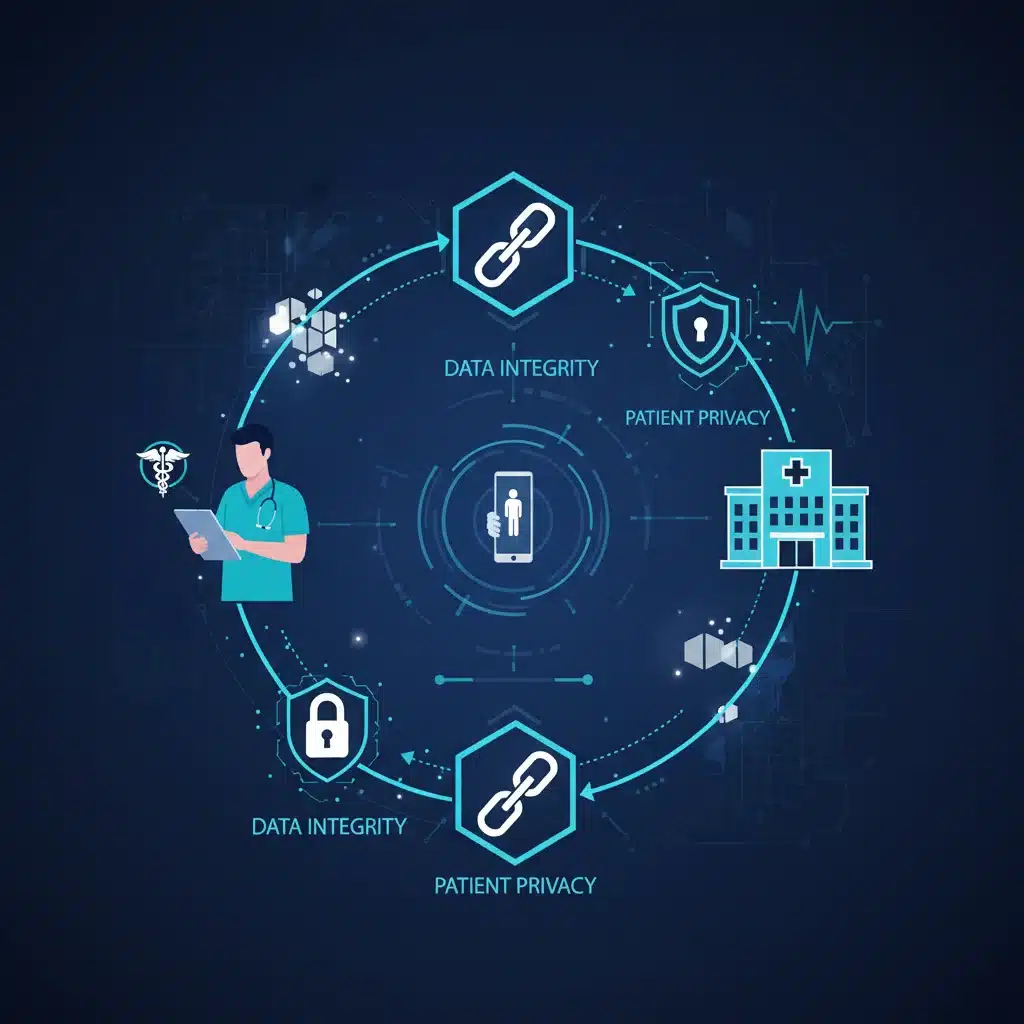
The US healthcare system grapples with immense challenges related to data security, patient privacy, and interoperability between disparate systems. Electronic health records (EHRs) are often fragmented, making it difficult for healthcare providers to access a complete patient history, especially when patients move between different facilities or specialists. Blockchain offers a promising solution to these complex issues, emerging as a vital blockchain business application in the health sector.
By leveraging blockchain, healthcare organizations can create secure, tamper-proof, and auditable records of patient data. Patients could control access to their own medical information, granting permissions to specific doctors or institutions as needed, thereby enhancing privacy and autonomy. This patient-centric model empowers individuals while ensuring that healthcare providers have access to the most up-to-date and accurate information when authorized.
The decentralized nature of blockchain means that data is not stored in a single, vulnerable location, reducing the risk of large-scale data breaches. Instead, encrypted data can be stored off-chain, with only cryptographic hashes and access permissions recorded on the blockchain. This approach maintains privacy while providing an immutable audit trail of all data access attempts.
Within the next year, we anticipate a rise in pilot projects and early implementations focusing on secure sharing of medical records, prescription tracking, and insurance claims processing. For example, blockchain could streamline the often-cumbersome process of verifying insurance eligibility and processing claims, reducing fraud and administrative overhead. This makes it a compelling blockchain business application for both providers and payers.
Beyond patient records, blockchain can also be used for managing clinical trials, ensuring the integrity and transparency of research data. It can also help track the provenance of pharmaceuticals, combating counterfeit drugs and ensuring patient safety. The move towards value-based care models further necessitates integrated and accessible data, and blockchain provides the architectural backbone for such a system. The potential for blockchain to transform healthcare efficiency and patient outcomes is enormous, making it a critical area for blockchain business applications development.
3. Streamlining Real Estate Transactions and Property Management
The real estate industry, traditionally slow to adopt new technologies, is ripe for disruption by blockchain. The process of buying, selling, and managing property in the US is notoriously complex, involving multiple intermediaries (brokers, lawyers, banks, title companies), extensive paperwork, and often lengthy delays. Blockchain offers the potential to significantly streamline these processes, making it a powerful emerging blockchain business application.
One of the primary applications is in tokenizing real estate assets. This involves representing fractional ownership of a property as digital tokens on a blockchain. This can lower the barrier to entry for investors, allowing them to invest in high-value properties with smaller amounts of capital. It also increases liquidity, as these tokens can be traded more easily than traditional property shares.
Beyond fractional ownership, blockchain can revolutionize the entire transaction process. Smart contracts can automate key stages of a property sale, such as the transfer of funds upon verification of title and other conditions. This can reduce closing times from weeks to days, or even hours, and significantly cut down on administrative fees. The immutable ledger can also serve as a single, verifiable source of truth for property titles and ownership records, eliminating the need for costly title insurance and reducing the risk of fraud.
Within the next 12 months, we can expect to see more platforms emerging that facilitate blockchain-based property sales and management. These platforms will likely focus on specific niches initially, such as commercial real estate or vacation rentals, before expanding to broader markets. The transparency and security offered by blockchain are particularly appealing in an industry where trust and verification are paramount. This represents a significant leap forward for blockchain business applications in real estate.
Furthermore, blockchain can simplify property management by tracking rental agreements, maintenance requests, and payment histories. This creates a transparent and auditable record for both landlords and tenants. The ability to record and verify every interaction on an immutable ledger can reduce disputes and improve the overall efficiency of property operations. As the real estate sector seeks greater efficiency and reduced costs, blockchain’s role as a transformative blockchain business application will only grow.
4. Enhancing Digital Identity and Credential Verification
In an increasingly digital world, managing and verifying personal and professional identities is a growing challenge. From online logins to background checks and academic credential verification, current systems are often centralized, vulnerable to breaches, and cumbersome for individuals. Self-sovereign identity (SSI) built on blockchain technology is emerging as a critical blockchain business application that empowers individuals with control over their digital identity.
SSI allows individuals to store their verifiable credentials (e.g., driver’s license, passport, academic degrees, professional certifications) in a secure digital wallet, often on their mobile device. When proof of identity or credentials is required, the individual can selectively share only the necessary information, cryptographically verified by the issuing authority, without revealing other personal data. This enhances privacy and reduces the risk of identity theft.
In the US, this technology has significant implications for various sectors. For instance, in employment, employers could instantly and securely verify an applicant’s educational background and work history without relying on slow, manual processes. In banking and finance, Know Your Customer (KYC) and Anti-Money Laundering (AML) checks could be streamlined, reducing onboarding times and compliance costs. Government services could also benefit from more secure and efficient identity verification for citizens accessing public services.
The next 12 months will likely see increased adoption of blockchain-based identity solutions, particularly in regulated industries and sectors where strong authentication is crucial. Companies are investing in developing interoperable SSI frameworks that allow for seamless verification across different platforms and organizations. This shift towards user-controlled digital identities marks a significant evolution in how we interact online and offline, making it a pivotal blockchain business application.
The decentralized nature of blockchain ensures that no single entity controls an individual’s identity, preventing censorship or arbitrary revocation. This fosters greater trust and security in digital interactions. As data privacy concerns continue to mount, the ability to selectively disclose information while maintaining verifiable credentials will become an indispensable feature of modern digital life, firmly establishing blockchain’s role in identity management as a key blockchain business application.
5. Protecting Intellectual Property and Digital Rights Management
For creators, artists, and innovators, proving ownership and managing the rights to their intellectual property (IP) in the digital age is a constant battle. Plagiarism, unauthorized use, and difficulty in tracking royalties are pervasive issues. Blockchain technology offers a robust solution for protecting IP and revolutionizing digital rights management (DRM), making it a compelling blockchain business application.
By timestamping and registering creative works on an immutable blockchain ledger, creators can establish an unalterable record of ownership and creation. This provides irrefutable proof of existence at a specific time, which can be crucial in copyright disputes. From music and digital art to patents and research data, any digital asset can be recorded and verified on a blockchain.
Furthermore, blockchain-powered DRM systems can automate the enforcement of usage rights and the distribution of royalties. Smart contracts can be programmed to release payments to creators automatically whenever their work is accessed or used, according to predefined terms. This eliminates the need for intermediaries, reduces costs, and ensures fair compensation for creators.
In the coming year, we expect to see increased experimentation and implementation of blockchain solutions in the entertainment, media, and publishing industries. Platforms that allow artists to directly register their work and manage licenses on a blockchain will gain traction. This empowers creators by giving them greater control over their intellectual property and a more transparent way to monetize their work, positioning it as a significant blockchain business application.
The ability to track the usage of digital content across various platforms and geographies in a transparent and auditable manner is a game-changer. This not only benefits individual creators but also large corporations with extensive IP portfolios, helping them to protect their assets and ensure compliance with licensing agreements. As the digital economy continues to expand, the need for robust IP protection and efficient rights management will only grow, making blockchain an indispensable tool and a leading blockchain business application.
The Road Ahead: Challenges and Opportunities for Blockchain Business Applications
While the potential of these blockchain business applications is immense, their widespread adoption in the US is not without challenges. Scalability, regulatory clarity, interoperability between different blockchain networks, and the need for skilled talent are all factors that will influence the pace of implementation. However, significant progress is being made on all these fronts.
Technological advancements are addressing scalability concerns, with new consensus mechanisms and layer-2 solutions improving transaction speeds and throughput. Governments and regulatory bodies are actively exploring frameworks to govern blockchain technology, which will provide the much-needed legal certainty for businesses to invest and innovate. Industry consortia are working on interoperability standards to ensure that different blockchain systems can communicate seamlessly.
The next 12 months will be a period of accelerated growth and maturation for enterprise blockchain. Businesses that embrace these emerging blockchain business applications will gain a significant competitive advantage, characterized by increased efficiency, enhanced security, greater transparency, and ultimately, stronger trust with their customers and partners. The shift from theoretical potential to practical, impactful solutions is well underway, marking a new era for how businesses operate in the digital economy.
Conclusion
Blockchain technology is rapidly evolving beyond its cryptocurrency origins to become a foundational technology for a wide array of US business applications. From revolutionizing supply chain transparency and securing healthcare data to streamlining real estate transactions, enhancing digital identity, and protecting intellectual property, the impact is profound and far-reaching. The next 12 months promise to be a period of significant progress, as more enterprises move from pilot projects to full-scale implementations of these transformative solutions.
Businesses that proactively explore and adopt these practical blockchain business applications will not only drive innovation but also build more resilient, efficient, and trustworthy operations. The future of business is increasingly distributed, transparent, and secure, and blockchain is at the heart of this paradigm shift. Staying informed about these developments is no longer optional but essential for any organization aiming to thrive in the digital age.