Cybersecurity in 2026: 6 Proactive Measures US Companies Must Implement Against New Threats
As we hurtle towards 2026, the landscape of cybersecurity continues to evolve at an unprecedented pace. For US companies, staying ahead of emerging threats isn’t just about compliance; it’s about survival. The sophistication of cyber adversaries, coupled with the increasing complexity of digital infrastructures, demands a proactive and adaptive approach. This article delves into the critical cybersecurity 2026 threats and outlines six essential proactive measures US companies must implement to safeguard their assets, data, and reputation.
The digital transformation accelerated by recent global events has opened new avenues for cybercriminals. From the rise of artificial intelligence (AI) in offensive operations to the intricate web of supply chain dependencies, the attack surface is expanding rapidly. Understanding these evolving threats is the first step towards building a resilient defense. Our focus here is on actionable strategies that can be integrated into existing security frameworks, preparing organizations for the challenges that lie ahead.
The Evolving Threat Landscape: Cybersecurity 2026 Threats
Before we explore the solutions, it’s crucial to grasp the nature of the cybersecurity 2026 threats. The adversaries are becoming more organized, leveraging advanced technologies, and exploiting human vulnerabilities with greater efficacy. Here are some of the key trends defining the threat landscape:
- AI and Machine Learning (ML)-Driven Attacks: AI isn’t just a defensive tool; it’s also being weaponized. Attackers are using AI to automate phishing campaigns, develop more evasive malware, and even predict defensive responses. This allows for highly personalized and sophisticated attacks that are harder to detect by traditional means.
- Sophisticated Ransomware 2.0: Ransomware continues to be a dominant threat, but it’s evolving. Beyond data encryption, attackers are now engaging in double extortion (exfiltrating data before encrypting it, threatening to leak it), triple extortion (adding DDoS attacks or informing customers/partners of the breach), and even targeting critical infrastructure with devastating consequences.
- Supply Chain Vulnerabilities: The interconnectedness of modern businesses means that a compromise in one vendor’s system can cascade through an entire ecosystem. Attackers are increasingly targeting weaker links in the supply chain to gain access to larger organizations.
- IoT and Edge Device Exploitation: The proliferation of Internet of Things (IoT) devices and edge computing expands the attack surface significantly. Many of these devices lack robust security features, making them easy targets for botnets, data exfiltration, and entry points into corporate networks.
- State-Sponsored Cyber Espionage and Warfare: Geopolitical tensions are increasingly playing out in cyberspace. State-sponsored actors possess vast resources and advanced capabilities, targeting critical infrastructure, intellectual property, and government data with highly sophisticated, persistent threats.
- Deepfakes and Information Manipulation: The rise of deepfake technology poses a significant threat to trust and verifiable information. Attackers can use deepfakes for social engineering, disinformation campaigns, and even to impersonate high-level executives, leading to financial fraud or reputational damage.
- Quantum Computing Threats (Emerging): While not fully mature by 2026, the foundational work for quantum computing’s threat to current encryption standards will be well underway. Companies need to start considering quantum-resistant cryptography strategies.
These cybersecurity 2026 threats necessitate a paradigm shift from reactive defense to proactive resilience. Companies can no longer afford to wait for an attack to occur; they must anticipate, prepare, and adapt.
Six Proactive Measures for US Companies Against Cybersecurity 2026 Threats
To effectively counter the evolving cybersecurity 2026 threats, US companies must adopt a multi-faceted and forward-thinking approach. The following six measures form the cornerstone of a robust and resilient cybersecurity strategy.
1. Implement Advanced AI-Driven Threat Detection and Response
Traditional signature-based antivirus and firewall systems are increasingly insufficient against AI-driven attacks. Companies must leverage AI and ML for their own defense. This involves:
- Behavioral Analytics: Deploying AI-powered solutions that learn normal network and user behavior to detect anomalies indicative of a breach, even zero-day attacks.
- Predictive Threat Intelligence: Utilizing AI to analyze vast amounts of global threat data, identify emerging patterns, and predict potential attacks before they materialize.
- Automated Incident Response: Implementing Security Orchestration, Automation, and Response (SOAR) platforms that use AI to automatically respond to detected threats, isolating compromised systems, and patching vulnerabilities without human intervention, thereby reducing response times from hours to minutes.
- AI-Powered Security Operations Centers (SOCs): Enhancing SOC capabilities with AI tools that can process and prioritize alerts, reducing alert fatigue for human analysts and allowing them to focus on the most critical threats.
- AI for Vulnerability Management: Using AI to continuously scan and identify vulnerabilities in systems and applications, prioritizing them based on potential impact and exploitability, and recommending remediation strategies.
By harnessing AI for defense, companies can create a more intelligent, agile, and scalable security posture capable of matching the sophistication of modern adversaries.
2. Fortify Supply Chain Cybersecurity
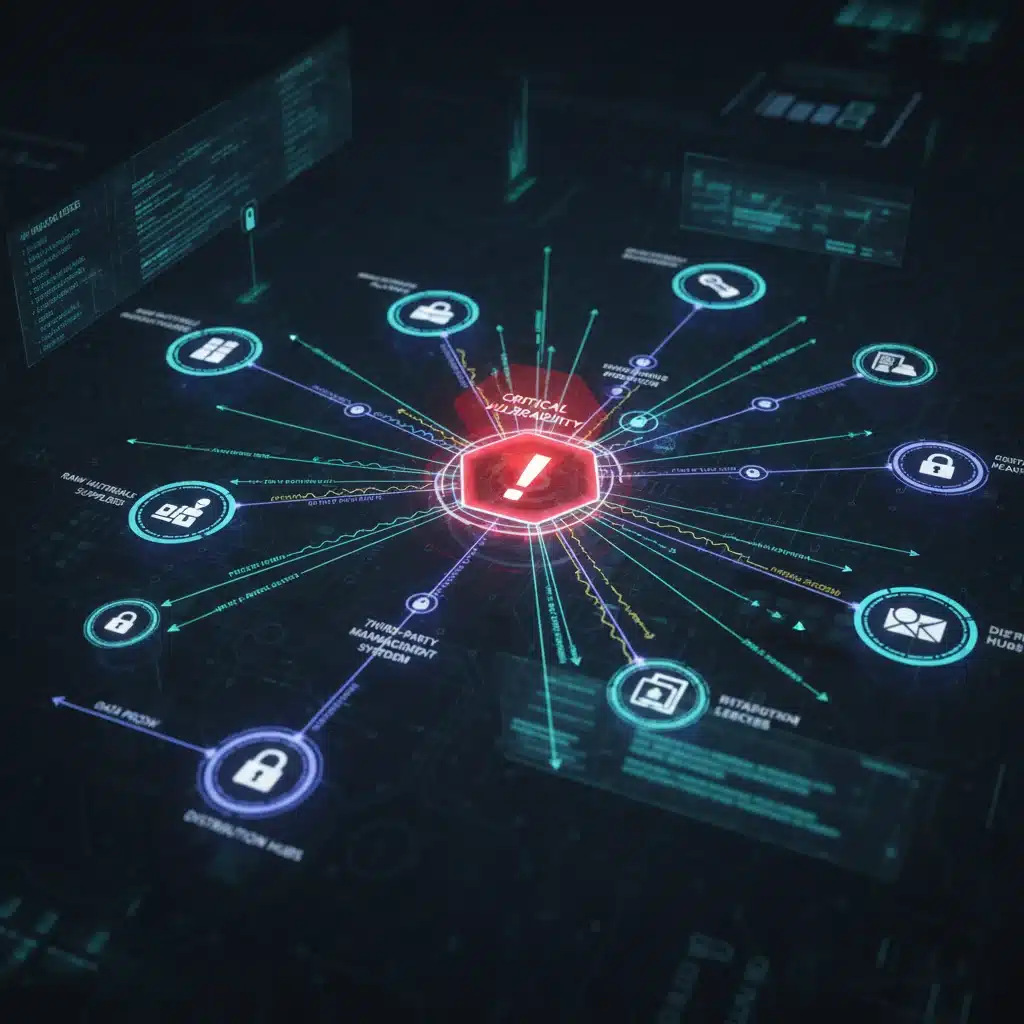
The weakest link in a company’s security chain is often not within its own walls but in its extended network of suppliers, vendors, and partners. Supply chain attacks are a growing vector for cybersecurity 2026 threats. To mitigate this:
- Comprehensive Vendor Risk Management (VRM): Establish rigorous VRM programs that include thorough security assessments of all third-party vendors, not just at onboarding but on an ongoing basis. This should cover their security policies, incident response plans, and compliance certifications.
- Software Bill of Materials (SBOM): Mandate and utilize SBOMs for all software components, allowing companies to understand the provenance of their software, identify known vulnerabilities in third-party libraries, and react quickly to new disclosures.
- Segmentation and Least Privilege: Implement strict network segmentation to isolate critical systems from less secure third-party connections. Apply the principle of least privilege, ensuring vendors only have access to the resources absolutely necessary for their function.
- Continuous Monitoring of Third-Party Access: Implement solutions that continuously monitor third-party access to networks and data, detecting any unusual activity or unauthorized attempts.
- Incident Response Planning with Vendors: Develop joint incident response plans with critical vendors, outlining communication protocols, roles, and responsibilities in the event of a breach affecting the shared supply chain.
- Contractual Security Clauses: Include robust cybersecurity clauses in all vendor contracts, detailing security requirements, audit rights, and liability in case of a breach.
3. Adopt a Zero Trust Architecture (ZTA)
The traditional ‘perimeter security’ model is obsolete in the face of modern cybersecurity 2026 threats. Zero Trust, based on the principle of ‘never trust, always verify,’ is essential. This architectural shift involves:
- Identity-Centric Security: Verifying the identity of every user and device attempting to access resources, regardless of their location (inside or outside the network). This includes strong multi-factor authentication (MFA) for all access.
- Micro-segmentation: Breaking down the network into smaller, isolated segments, and applying granular security policies to each segment. This limits lateral movement for attackers, even if they breach one part of the network.
- Least Privilege Access: Granting users and applications only the minimum access necessary to perform their tasks, and revoking that access when no longer needed.
- Continuous Monitoring and Validation: Continuously monitoring all traffic, user activity, and device posture for suspicious behavior, and re-authenticating and re-authorizing access based on context and risk.
- Device Trust: Evaluating the security posture of every device attempting to connect to the network, ensuring it meets specific security requirements before granting access.
Implementing ZTA is a journey, not a destination, requiring a phased approach and a cultural shift within the organization towards pervasive security.
4. Invest in Human-Centric Security and Advanced Training
Despite technological advancements, the human element remains a significant vulnerability. Phishing, social engineering, and insider threats are still prevalent cybersecurity 2026 threats. Proactive measures include:
- Continuous Security Awareness Training: Moving beyond annual training to ongoing, engaging, and simulated phishing exercises. Training should be tailored to specific roles and regularly updated to reflect new threat vectors like deepfake scams.
- Robust Insider Threat Programs: Implementing policies, technologies, and procedures to detect, prevent, and respond to insider threats, both malicious and unintentional. This includes behavioral analytics, data loss prevention (DLP), and privileged access management (PAM).
- Cyber Hygiene Reinforcement: Emphasizing fundamental practices like strong password policies, regular software updates, and secure browsing habits across the entire organization.
- Executive and Board-Level Training: Ensuring that leadership understands the financial, reputational, and operational risks of cyberattacks, fostering a security-conscious culture from the top down.
- Stress Testing and Incident Response Drills: Regularly conducting tabletop exercises and full-scale incident response drills to ensure that employees know their roles and responsibilities during a cyber crisis.
A well-trained and security-aware workforce is the first and often most effective line of defense against many cybersecurity 2026 threats.
5. Prioritize Data Resilience and Quantum-Safe Cryptography Planning
Data is the lifeblood of any modern business. Protecting its integrity, availability, and confidentiality is paramount. Furthermore, looking ahead, quantum computing poses a long-term threat to current encryption methods.
- Immutable Backups and Disaster Recovery: Implement robust data backup strategies, including immutable backups that cannot be altered or deleted by ransomware. Develop and regularly test comprehensive disaster recovery (DR) plans to ensure rapid restoration of operations after a major incident.
- Data Encryption Everywhere: Encrypt data at rest (on servers, databases, and endpoints) and in transit (over networks, VPNs, and cloud connections) using strong, up-to-date cryptographic protocols.
- Data Loss Prevention (DLP): Deploy DLP solutions to monitor, detect, and block sensitive data from leaving the organization’s control, whether intentionally or accidentally.
- Quantum-Resistant Cryptography Roadmapping: While quantum computers capable of breaking current encryption are not yet widely available, US companies should begin planning for the transition to quantum-safe cryptography. This involves identifying critical data that needs long-term protection and understanding the NIST standardization process for post-quantum cryptographic algorithms.
- Data Minimization and Retention Policies: Implement policies to collect, process, and store only the data that is necessary, and define clear retention schedules to minimize the attack surface.
Building data resilience means not only preventing breaches but also ensuring that operations can quickly resume even if a successful attack occurs.
6. Embrace Threat Intelligence and Collaborative Security
No company operates in a vacuum. Sharing and consuming threat intelligence is vital for staying ahead of cybersecurity 2026 threats. Collaborative security efforts enhance collective defense.
- Active Threat Intelligence Consumption: Subscribe to and actively consume threat intelligence feeds from government agencies (like CISA), industry-specific Information Sharing and Analysis Centers (ISACs/ISAOs), and reputable cybersecurity vendors. This provides insights into emerging threats, attack methodologies, and indicators of compromise (IOCs).
- Participate in Information Sharing: Contribute to relevant threat intelligence sharing communities, sharing anonymized insights into attacks experienced. This collective knowledge benefits everyone.
- Red Teaming and Purple Teaming: Conduct regular red team exercises (simulated attacks by ethical hackers) to test the effectiveness of defenses and blue team responses. Implement purple teaming, where red and blue teams work together to improve security posture and validate controls.
- Engage with Cybersecurity Frameworks and Standards: Align security programs with established frameworks like NIST Cybersecurity Framework, ISO 27001, or CMMC (for defense contractors), which provide structured guidance for managing cyber risk.
- Partnerships with Managed Security Service Providers (MSSPs): For companies with limited internal resources, partnering with an MSSP can provide access to advanced security tools, 24/7 monitoring, and expert threat intelligence.

The Strategic Imperative: Beyond 2026
The proactive measures outlined above are not merely a checklist for 2026; they represent a fundamental shift in how US companies must approach cybersecurity. The digital realm is dynamic, and so too must be our defenses. Cybersecurity is no longer solely an IT problem; it is a business risk that demands executive attention, adequate budgeting, and integration into every aspect of an organization’s strategy.
The cost of a cyberattack extends far beyond immediate financial losses. It encompasses reputational damage, loss of customer trust, regulatory fines, and potential legal repercussions. In an increasingly competitive global market, a strong cybersecurity posture can even be a differentiator, signaling reliability and trustworthiness to customers and partners.
Looking beyond 2026, the trends indicate an even greater reliance on AI, further integration of digital and physical worlds (cyber-physical systems), and the persistent challenge of human factors. Companies that establish a culture of continuous improvement, foster strong internal and external collaboration, and proactively invest in cutting-edge security technologies will be best positioned to thrive in this complex environment.
Conclusion
The cybersecurity 2026 threats demand immediate and strategic action from US companies. By implementing advanced AI-driven threat detection, fortifying supply chain security, adopting Zero Trust architectures, investing in human-centric security training, prioritizing data resilience and quantum-safe cryptography planning, and embracing threat intelligence and collaborative security, organizations can build a formidable defense. The future of business success is intrinsically linked to cybersecurity resilience. Proactive measures today will determine the security and prosperity of tomorrow.
Don’t wait for a breach to catalyze change. The time to act is now. Assess your current posture, identify your vulnerabilities, and strategically implement these six proactive measures to safeguard your enterprise against the evolving and complex cybersecurity 2026 threats.