Future of Remote Work: 7 Technologies Shaping Hybrid Models 2026
Anúncios
The landscape of employment in the United States has undergone a seismic shift, with remote and hybrid work models transitioning from temporary solutions to permanent fixtures. As we look towards 2026, the future remote work paradigm will be increasingly defined by technological advancements that bridge geographical divides, enhance collaboration, and optimize productivity. This comprehensive exploration delves into the seven crucial technologies poised to shape the hybrid workplace, offering insights into how businesses and employees can prepare for this evolving reality.
Anúncios
The COVID-19 pandemic acted as an unprecedented catalyst, forcing organizations worldwide to embrace remote work at an accelerated pace. What began as a necessity has since proven to be a viable and often preferable mode of operation for many. Studies consistently show that a significant percentage of employees desire continued flexibility, and companies are responding by investing heavily in the infrastructure and tools required to support a distributed workforce. The future remote work environment isn’t just about working from home; it’s about creating a seamless, efficient, and equitable experience for all employees, regardless of their physical location.
Understanding these technological trends is not merely an academic exercise; it’s a strategic imperative for businesses aiming to attract and retain top talent, foster innovation, and maintain a competitive edge. For employees, adapting to these tools will be key to career growth and navigating the evolving demands of the modern workplace. Let’s explore the technologies that will define the next chapter of remote and hybrid work.
Advanced Collaboration Platforms: Beyond Basic Video Conferencing
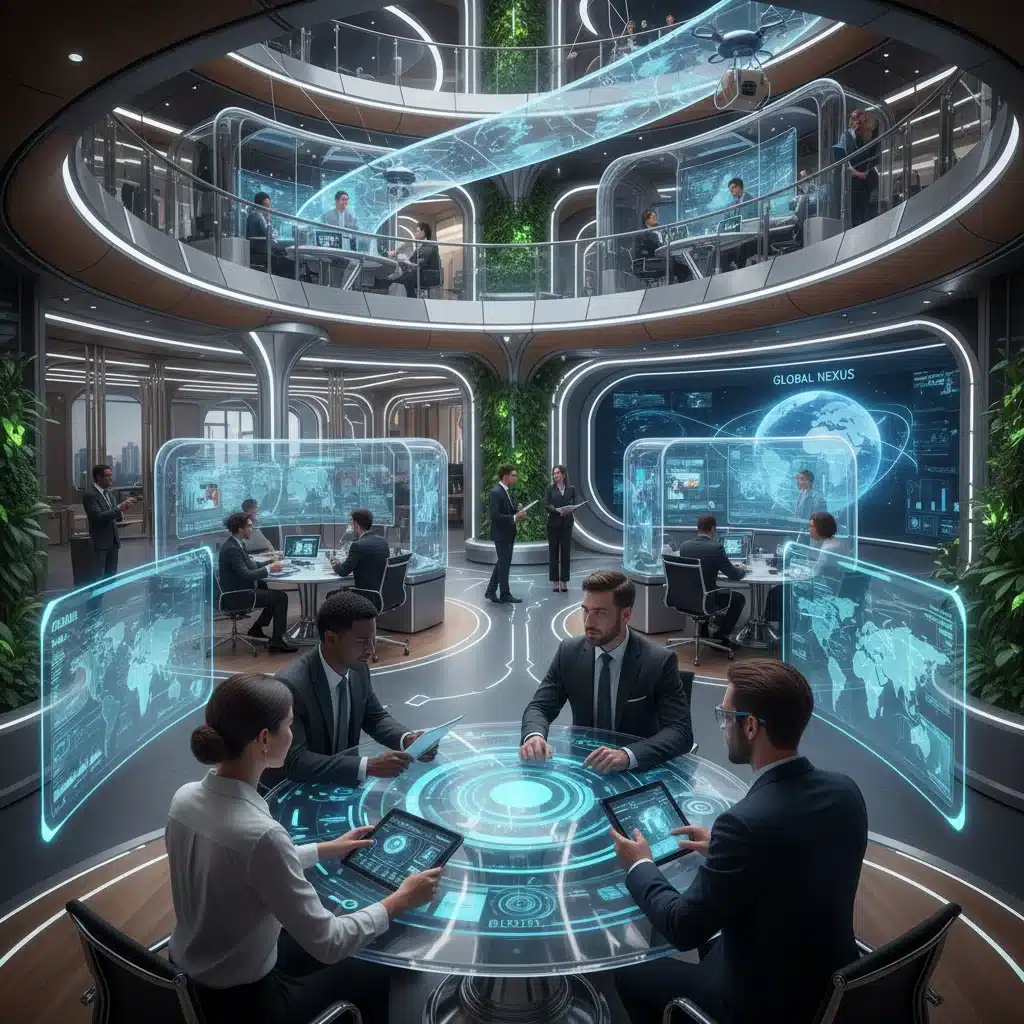
While video conferencing tools like Zoom and Microsoft Teams became household names during the pandemic, the next generation of collaboration platforms will offer far more sophisticated functionalities. These are no longer just about seeing and hearing colleagues; they are about creating immersive, interactive, and highly integrated digital workspaces.
Anúncios
Enhanced Virtual Meeting Experiences
Expect to see platforms incorporating AI-powered features such as real-time transcription, translation services, sentiment analysis, and smart summaries. These features will not only improve accessibility for diverse teams but also boost efficiency by automating note-taking and highlighting key discussion points. Imagine a meeting where AI automatically generates action items and assigns them to the relevant team members, or where language barriers are instantly dissolved, allowing for truly global collaboration.
Persistent Digital Workspaces
The concept of a ‘digital office’ will become more tangible. These platforms will offer persistent virtual rooms where teams can work on projects asynchronously and synchronously. Think of shared digital whiteboards that remain active between meetings, integrated project management tools, and virtual ‘huddle spaces’ where spontaneous brainstorming can occur. These environments aim to replicate the serendipitous interactions and continuous workflow of a physical office, fostering a sense of shared presence and camaraderie among distributed teams.
Integration with Productivity Suites
Seamless integration with existing productivity suites (e.g., Microsoft 365, Google Workspace) will be non-negotiable. This means effortless document sharing, co-editing, and version control directly within the collaboration platform, eliminating the need to constantly switch between applications. The goal is to reduce digital friction and allow employees to focus on their core tasks without being bogged down by technological inefficiencies.
Virtual and Augmented Reality (VR/AR) for Immersive Collaboration
Perhaps one of the most exciting and transformative technologies for the future remote work landscape is the integration of VR and AR. While still in nascent stages for widespread business adoption, their potential to create truly immersive collaboration experiences is immense.
VR for Immersive Meetings and Training
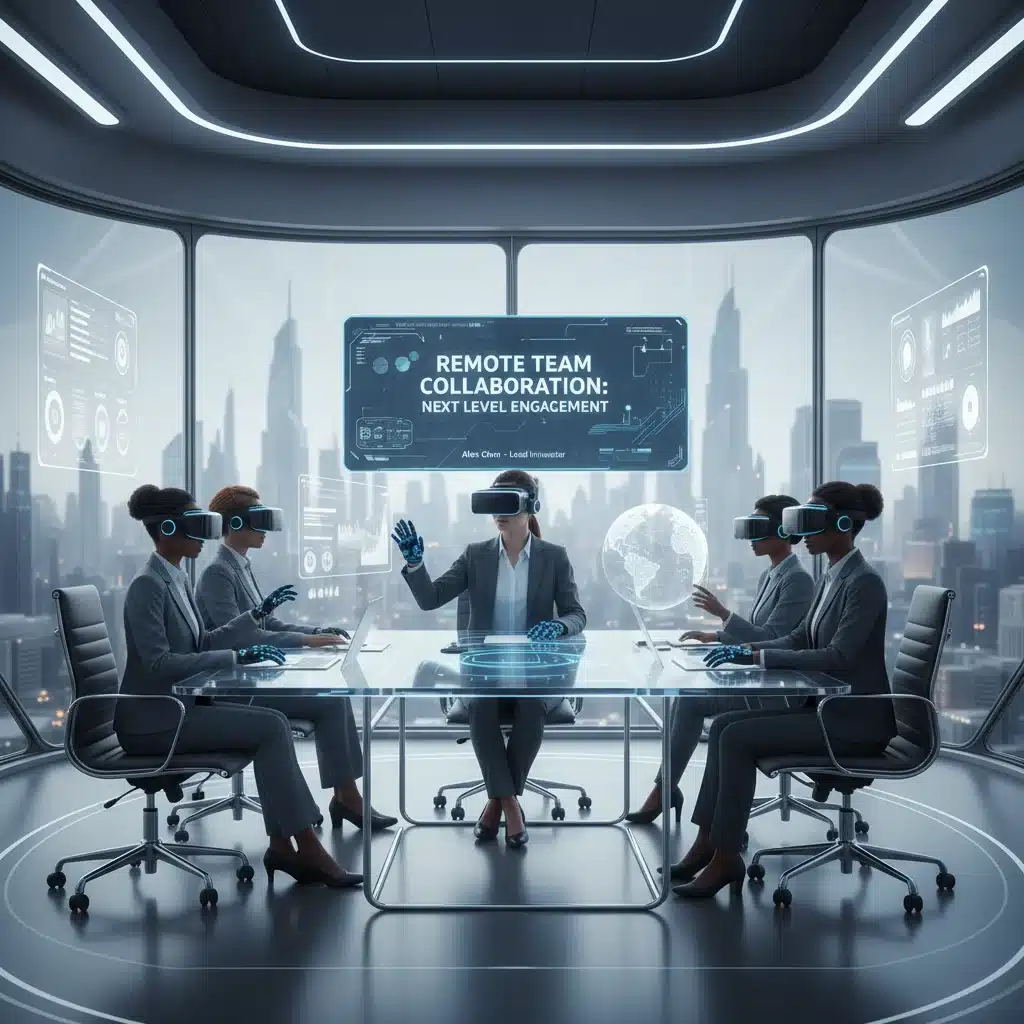
VR headsets can transport remote employees into shared virtual environments, making meetings feel more like in-person interactions. Participants can move around, interact with virtual objects, and even experience non-verbal cues that are often lost in traditional video calls. This is particularly powerful for complex design reviews, architectural walkthroughs, or highly interactive training sessions where a sense of shared space is critical. The ability to manipulate 3D models collaboratively in a virtual space, for instance, could revolutionize product development for geographically dispersed teams.
AR for Enhanced On-site and Remote Support
AR, which overlays digital information onto the real world, offers practical applications for field service, manufacturing, and technical support. Remote experts can guide on-site technicians through complex repairs using AR overlays on their mobile devices or smart glasses. This reduces the need for travel, speeds up problem resolution, and democratizes expertise. Imagine a technician in a remote location receiving real-time visual instructions projected onto the equipment they are working on, guided by an expert thousands of miles away.
Challenges and Adoption
While the benefits are clear, challenges remain, including the cost of hardware, potential motion sickness, and the need for robust network infrastructure. However, as hardware becomes more affordable and user-friendly, and as software develops more compelling use cases, VR/AR will play a significant role in shaping the immersive aspects of the future remote work experience.
Artificial Intelligence (AI) and Machine Learning (ML) for Productivity and Management
AI and ML are not just buzzwords; they are becoming indispensable tools for optimizing workflows, automating mundane tasks, and providing actionable insights in the remote and hybrid workplace.
Intelligent Automation and Task Management
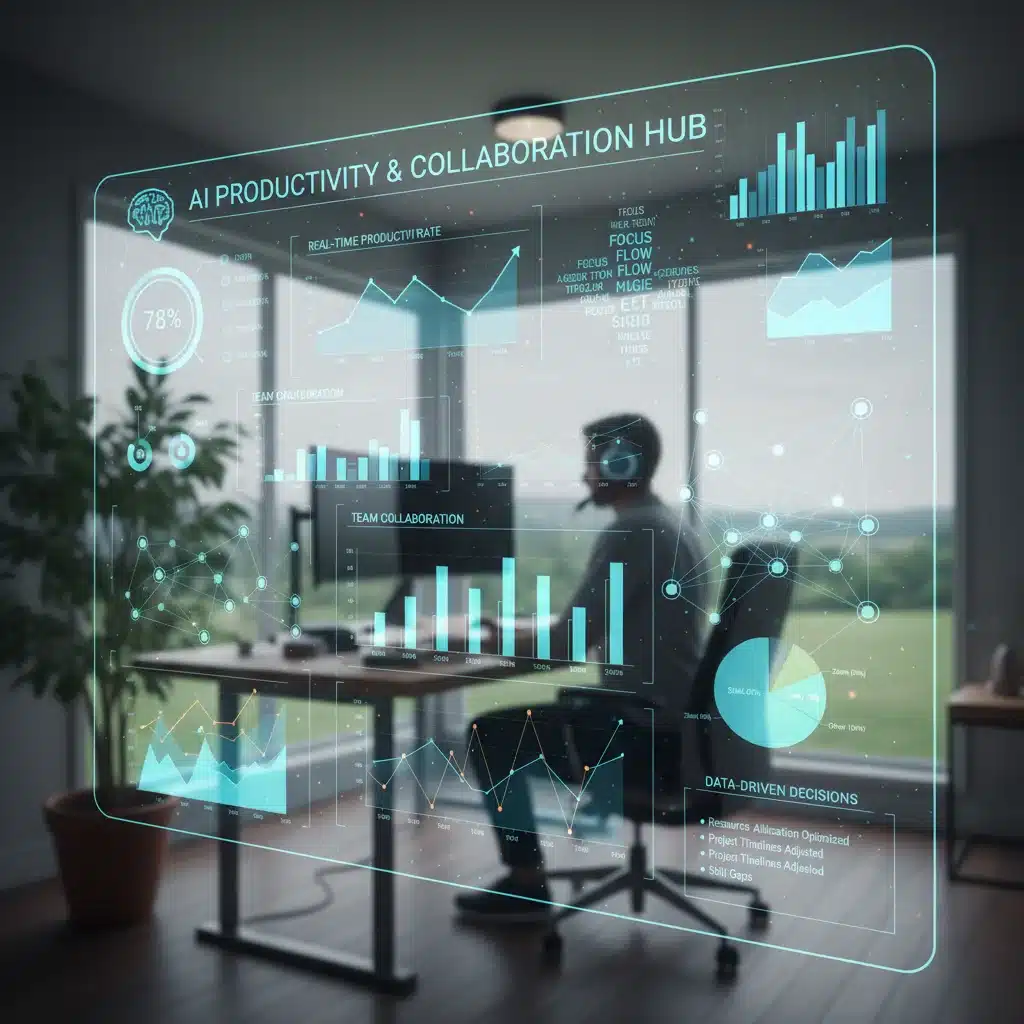
AI-powered tools can automate repetitive tasks, such as data entry, scheduling, and email management, freeing up employees to focus on higher-value work. Intelligent task management systems can prioritize workloads, suggest optimal times for specific tasks based on individual work patterns, and even identify potential bottlenecks before they occur. This leads to significant gains in efficiency and reduces employee burnout.
Performance Monitoring and Feedback
While often raising privacy concerns, AI can provide valuable insights into team performance and individual productivity trends. Tools can analyze communication patterns, project progress, and engagement levels to help managers identify areas where support is needed or where processes can be improved. The key will be to implement these tools transparently and ethically, focusing on enhancing well-being and productivity rather than surveillance.
Personalized Learning and Development
AI can tailor learning paths for remote employees, recommending relevant courses and resources based on their roles, skill gaps, and career aspirations. This personalized approach ensures continuous professional development, which is crucial in a rapidly changing work environment. AI can also facilitate onboarding processes, making the integration of new remote hires smoother and more effective.
Cloud Computing and Edge Computing for Seamless Access
The foundation of any successful remote or hybrid work model is robust and secure access to data and applications, regardless of location. Cloud computing has been central to this, and edge computing is emerging as its powerful complement.
Ubiquitous Cloud Access
Cloud computing provides the scalability, flexibility, and accessibility necessary for distributed teams. Employees can access their work files, applications, and collaborative tools from any device, anywhere, ensuring business continuity and agility. The shift to cloud-native applications will continue, reducing reliance on on-premise infrastructure and simplifying IT management for remote setups.
Edge Computing for Faster Processing and Security
Edge computing brings computation and data storage closer to the source of data generation, rather than relying solely on a centralized cloud. For remote work, this can mean faster processing for specific applications, reduced latency, and enhanced security for sensitive data that needs to remain closer to the user or device. For example, processing data from IoT devices at the ‘edge’ can provide real-time insights without sending all data to the cloud, which is beneficial for remote operational teams.
Security Implications
Both cloud and edge computing require stringent security measures. With data distributed across various locations and devices, robust cybersecurity protocols, including zero-trust architectures, multi-factor authentication, and continuous threat monitoring, are paramount. Protecting sensitive company data and ensuring employee privacy will be a constant challenge and a top priority.
Advanced Cybersecurity Solutions: Protecting the Distributed Enterprise
As the perimeter of the corporate network dissolves with remote work, cybersecurity becomes more complex and critical. The future remote work environment demands a proactive and adaptive approach to security.
Zero-Trust Architecture
The ‘never trust, always verify’ principle of zero-trust security will become the standard. This means every user, device, and application attempting to access resources must be authenticated and authorized, regardless of whether they are inside or outside the traditional network perimeter. This approach significantly reduces the risk of breaches from compromised credentials or devices.
Endpoint Detection and Response (EDR)
With employees using a variety of devices in different environments, EDR solutions will be essential. These tools continuously monitor endpoints (laptops, mobile devices) for malicious activity, detect threats, and enable rapid response and remediation. EDR goes beyond traditional antivirus by providing deeper visibility and behavioral analysis.
Secure Access Service Edge (SASE)
SASE (pronounced ‘sassy’) converges network security functions (like firewalls, VPNs, secure web gateways) with wide area networking (WAN) capabilities into a single, cloud-native service. This provides secure, optimized access for remote users to applications and data, regardless of where they are located. SASE simplifies security management for IT teams and ensures consistent policy enforcement across the distributed workforce.
Internet of Things (IoT) for Smart Workspaces and Employee Well-being
IoT devices will play an increasing role in creating intelligent, adaptable workspaces, both in physical offices and in remote home setups, contributing to employee well-being and operational efficiency.
Smart Office Environments
For hybrid models, IoT sensors in physical offices can optimize space utilization, manage environmental controls (lighting, temperature, air quality), and enhance meeting room booking systems. This data helps companies make informed decisions about office layouts and resource allocation, ensuring a comfortable and productive environment for those who choose to come in.
Remote Employee Well-being and Productivity
While more personal, IoT devices can also contribute to remote employee well-being. Smart home devices could potentially integrate with work systems to remind employees to take breaks, adjust lighting for optimal work conditions, or even monitor posture. The ethical considerations around such integrations are significant, emphasizing the need for opt-in features and clear privacy policies. The focus here is on empowering employees to create their ideal work environment.
Asset Tracking and Management
For IT departments, IoT can facilitate the tracking and management of company assets distributed across various remote locations. This helps in inventory management, ensuring equipment is properly maintained, and securely retrieved when employees leave the company. This is especially important as companies issue more hardware to support remote work.
5G Connectivity: The Backbone of the Mobile Workforce
Reliable, high-speed internet connectivity is the lifeblood of remote work. 5G technology is not just an incremental upgrade; it represents a foundational shift that will unlock new possibilities for the future remote work experience.
Unprecedented Speed and Low Latency
5G offers significantly faster download and upload speeds compared to previous generations, along with ultra-low latency. This means seamless video conferencing, rapid file transfers, and instant access to cloud applications, even in areas with less robust wired infrastructure. For professionals who rely on real-time data or large file manipulation, 5G will be a game-changer.
Enhanced Mobility and Flexibility
With 5G, employees can truly work from anywhere with a strong signal – coffee shops, parks, co-working spaces, or during commutes – without compromising on performance. This increased mobility allows for greater flexibility and can open up talent pools in previously underserved areas. It transforms any location into a potential office, supporting a truly nomadic professional lifestyle if desired.
Support for IoT and Edge Computing
5G’s capacity to connect a massive number of devices and its low latency make it an ideal partner for the proliferation of IoT devices and the growth of edge computing. It provides the necessary bandwidth and responsiveness for these technologies to function effectively, creating a more interconnected and intelligent work ecosystem.
Navigating the Challenges and Embracing the Opportunities
While these technologies offer immense potential, their successful integration into the future remote work model hinges on addressing several critical challenges.
Digital Divide and Equity
Access to high-speed internet and necessary technology remains a barrier for some. Companies must consider how to ensure all employees have equitable access to the tools and infrastructure required for effective remote work, potentially offering stipends or equipment. The digital divide, if not addressed, could exacerbate existing inequalities.
Employee Training and Adoption
The introduction of new technologies requires comprehensive training and ongoing support. Employees need to feel comfortable and proficient with these tools to fully leverage their benefits. Change management strategies will be crucial to ensure smooth adoption and avoid frustration.
Work-Life Balance and Digital Fatigue
While technology enables flexibility, it can also blur the lines between work and personal life. Companies and employees must establish clear boundaries and utilize tools that promote well-being, such as digital detox features or intelligent scheduling assistants that respect personal time. The constant ‘always-on’ culture facilitated by technology can lead to burnout if not managed effectively.
Data Privacy and Security
As mentioned, the increased reliance on cloud services, IoT devices, and AI-powered tools necessitates a robust focus on data privacy and security. Companies must adhere to strict regulations, implement best practices, and continuously educate employees on cybersecurity hygiene. Trust is paramount in a distributed environment.
Leadership and Culture
Technology alone cannot define the future remote work. Strong leadership that fosters a culture of trust, communication, and empathy is essential. Leaders must adapt their management styles to effectively lead distributed teams, focusing on outcomes rather than presenteeism, and actively promoting a sense of belonging and inclusion among all employees, regardless of their location.
Conclusion: The Evolving Tapestry of Work
The future remote work landscape through 2026 will be a dynamic and technologically rich environment. The seven technologies discussed – advanced collaboration platforms, VR/AR, AI/ML, cloud/edge computing, advanced cybersecurity, IoT, and 5G – will collectively weave a new tapestry of how and where work gets done. They promise greater flexibility, enhanced productivity, and more immersive collaboration experiences.
For businesses, embracing these technologies is not just about keeping up; it’s about pioneering new ways of working that can unlock unprecedented levels of efficiency, innovation, and employee satisfaction. By strategically investing in these areas and thoughtfully addressing the associated challenges, organizations can build resilient, adaptable, and future-ready workforces. For individuals, continuous learning and adaptability to these tools will be key to thriving in this exciting new era of work.
The journey towards a fully optimized hybrid model is ongoing, but with these technological advancements as our compass, the path forward for remote work in the US is clear: it is one of innovation, connectivity, and profound transformation.