Next-Gen Biotech in the US: 3 Key Innovations Set to Revolutionize Healthcare Within 18 Months

Anúncios
Next-Gen Biotech in the US: 3 Key Innovations Set to Revolutionize Healthcare Within 18 Months
The healthcare landscape is perpetually evolving, but rarely do we witness periods of such rapid and profound transformation as we are experiencing now. The United States, a global leader in scientific research and development, stands at the forefront of this revolution. Within the next 18 months, several next-gen biotech innovations are poised to fundamentally alter how we diagnose, treat, and prevent diseases, promising a future where medicine is more precise, effective, and tailored to the individual. This article will delve into three of the most impactful of these advancements: advanced gene editing technologies, AI-driven drug discovery, and the burgeoning field of highly personalized medicine. These innovations are not just theoretical concepts; they are rapidly moving from research labs to clinical applications, promising tangible benefits for patients and healthcare providers alike.
The convergence of advanced computing power, sophisticated biological understanding, and innovative engineering has created an unparalleled environment for breakthroughs. These next-gen biotech innovations are not merely incremental improvements; they represent paradigm shifts that will redefine the boundaries of what is medically possible. From curing previously untreatable genetic diseases to developing new therapies at unprecedented speeds, the implications are vast and far-reaching. Understanding these key developments is crucial for anyone interested in the future of healthcare, from patients and medical professionals to investors and policymakers.
Anúncios
1. Advanced Gene Editing: Precision at the Molecular Level
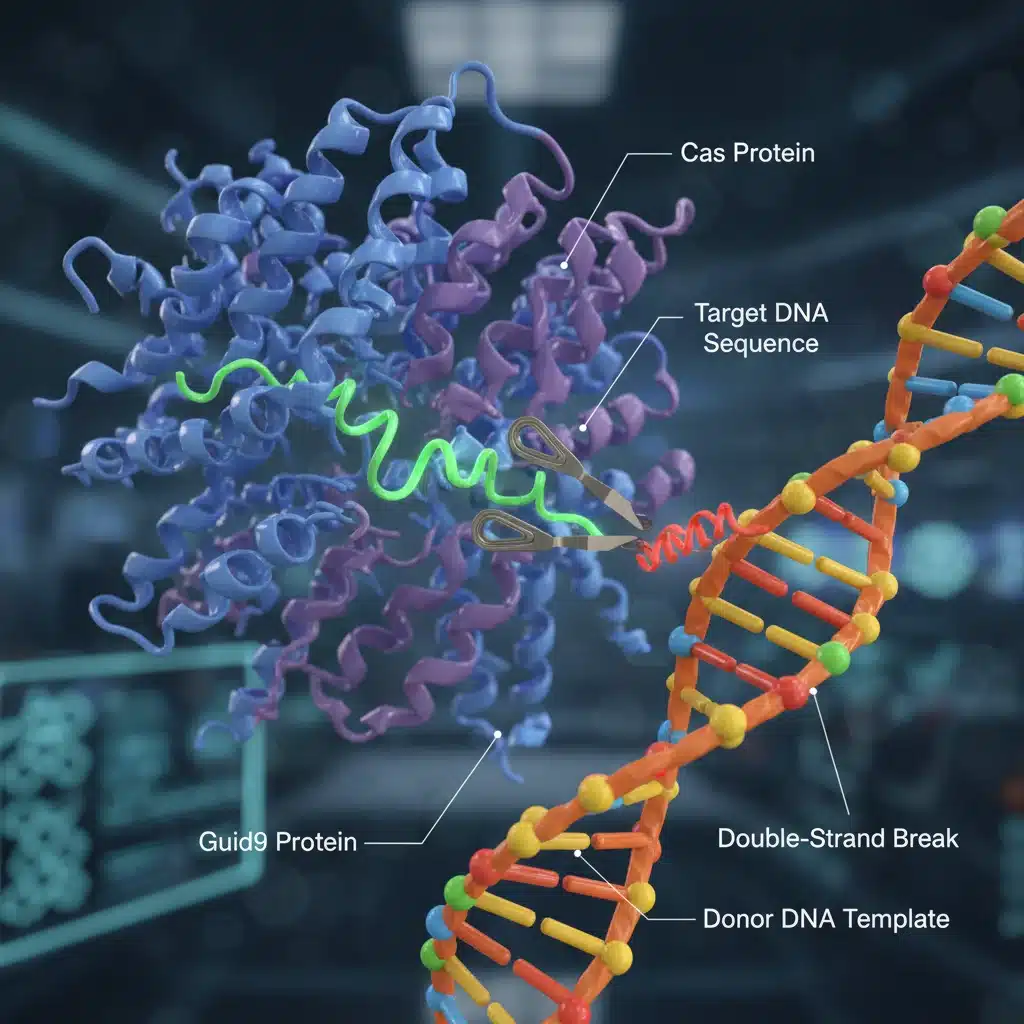
Gene editing technologies, particularly CRISPR-Cas9, have been a focal point of biological research for years, but their clinical applications are now accelerating at an astonishing pace. What was once considered science fiction—the ability to precisely cut, paste, and replace segments of DNA—is now a reality with profound implications for treating a myriad of genetic disorders. Within the next 18 months, we anticipate significant advancements in both the safety and efficacy of these tools, leading to expanded clinical trials and potentially, approved therapies for a wider range of conditions. These next-gen biotech innovations in gene editing are moving beyond the initial proof-of-concept stages and into direct patient impact.
The Evolution of CRISPR and Beyond
CRISPR-Cas9, often hailed as a ‘molecular scissor,’ allows scientists to target specific DNA sequences and make precise edits. Initially, its use was primarily in research settings, but now, it’s being tested in human trials for diseases like sickle cell anemia, beta-thalassemia, and certain forms of cancer. Early results have been highly promising, demonstrating the potential to offer curative treatments rather than just symptomatic relief. However, traditional CRISPR-Cas9 can sometimes lead to off-target edits, which is where the ‘advanced’ aspect of these next-gen biotech innovations comes into play.
Anúncios
Newer gene editing techniques, such as prime editing and base editing, offer even greater precision and fewer off-target effects. Prime editing, for instance, can directly write new DNA sequences into the genome without breaking both strands of the DNA helix, reducing the risk of unwanted mutations. Base editing chemically alters individual DNA bases (A, C, G, T) without cutting the DNA backbone, making it even more precise for single-point mutations responsible for many genetic diseases. These refinements are critical for widespread clinical adoption and are currently undergoing intensive research and development, with results expected to materialize within our 18-month window.
Clinical Applications and Ethical Considerations
The immediate impact of these next-gen biotech innovations will be felt in areas where a single gene mutation is responsible for a severe disease. Think of cystic fibrosis, Huntington’s disease, or certain types of inherited blindness. Clinical trials are already showing incredible promise. For example, patients with severe sickle cell disease have seen their symptoms dramatically alleviated, and in some cases, effectively cured, through gene-edited cell therapies. As these trials progress and expand, the regulatory landscape is also adapting, paving the way for eventual approvals.
However, the ethical implications of altering the human genome are significant and continue to be debated. Questions surrounding germline editing (changes that can be passed down to future generations), equitable access to these expensive therapies, and the potential for ‘designer babies’ remain at the forefront of public discussion. While current clinical efforts focus on somatic cell editing (changes not inherited), the rapid pace of technological advancement means these discussions are more urgent than ever. The next 18 months will not only see scientific breakthroughs but also crucial societal conversations shaping the responsible deployment of these powerful tools.
2. AI-Driven Drug Discovery: Accelerating the Path to New Cures
The process of discovering and developing new drugs has historically been notoriously slow, expensive, and often riddled with failures. From initial target identification to preclinical testing and clinical trials, it can take over a decade and billions of dollars to bring a single drug to market. Artificial intelligence (AI) and machine learning (ML) are rapidly changing this paradigm, representing another critical pillar of next-gen biotech innovations. AI’s ability to process vast datasets, identify complex patterns, and predict molecular interactions is dramatically accelerating every stage of the drug discovery pipeline.
From Hypothesis to High-Throughput Screening
Traditionally, drug discovery often began with a hypothesis about a disease mechanism, followed by laborious experimental screening of thousands, if not millions, of compounds. AI algorithms can now analyze massive databases of genomic data, protein structures, patient records, and existing drug compounds to identify novel drug targets and potential therapeutic molecules with unprecedented speed and accuracy. This significantly reduces the time and resources spent on dead-end avenues.
For instance, AI can predict how a potential drug molecule will bind to a target protein, optimizing its shape and chemical properties for maximum efficacy and minimal side effects. It can also sift through vast chemical libraries to identify existing compounds that could be repurposed for new diseases, a process known as ‘drug repurposing.’ This capability is particularly valuable in emergent health crises, as demonstrated during the COVID-19 pandemic, where AI helped identify potential antiviral treatments much faster than conventional methods. The impact of these next-gen biotech innovations is already being felt, with several AI-designed drugs now entering clinical trials.
Predictive Analytics in Clinical Trials
Beyond initial discovery, AI is also revolutionizing clinical trial design and execution. Predictive analytics can identify patient populations most likely to respond to a particular drug, leading to more efficient and successful trials. AI can monitor patient data in real-time, detecting adverse events earlier and optimizing dosing regimens. This not only speeds up the trial process but also makes it safer for participants. Furthermore, AI can analyze vast amounts of real-world evidence (RWE) from electronic health records, insurance claims, and wearable devices to generate insights into drug effectiveness and safety post-market approval.
Within the next 18 months, we expect to see multiple AI-discovered or AI-optimized drugs progress further through clinical development, with some potentially nearing regulatory approval. Companies leveraging AI in drug discovery are attracting significant investment, signaling confidence in this transformative technology. The ability to bring more effective and safer drugs to patients faster will be one of the most profound impacts of these next-gen biotech innovations on global health.
3. Personalized Medicine: Tailoring Treatments to the Individual
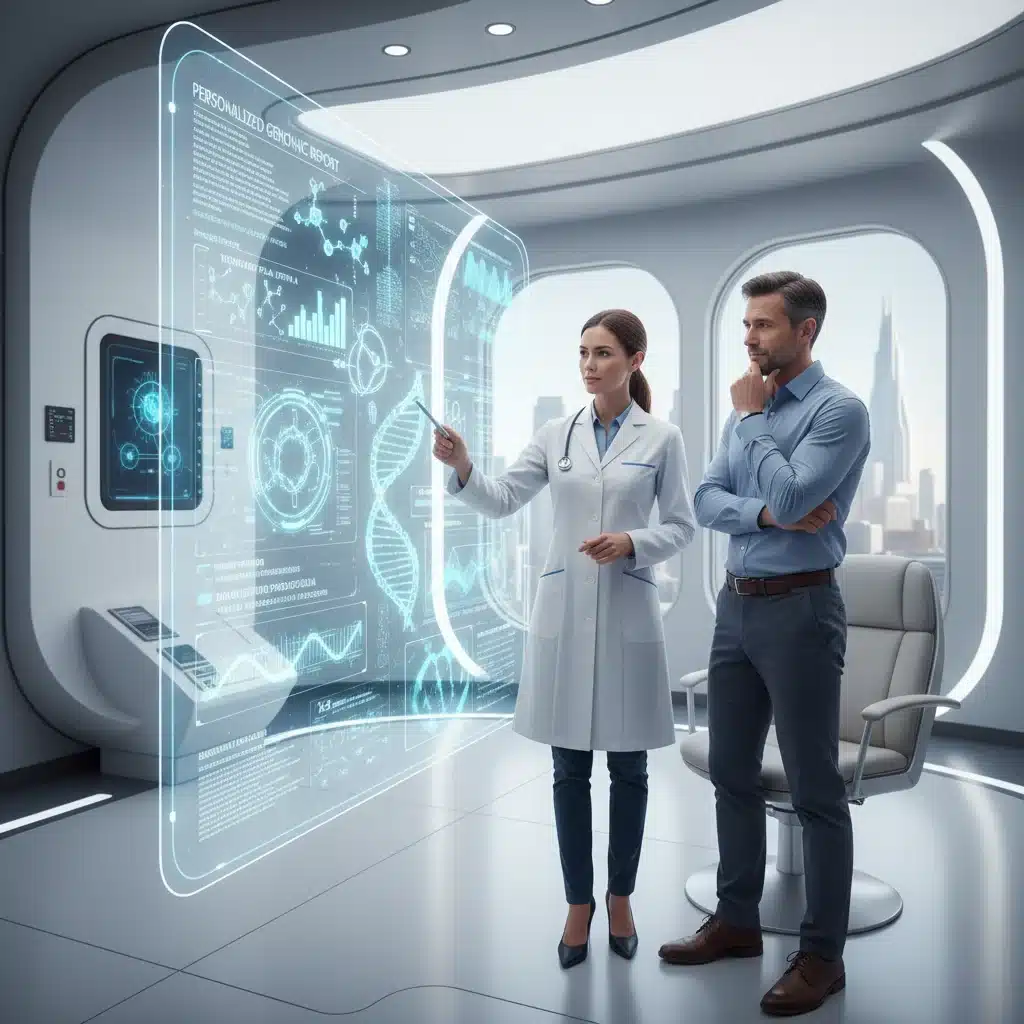
The concept of ‘one-size-fits-all’ medicine is rapidly becoming obsolete. Personalized medicine, also known as precision medicine, is perhaps the most patient-centric of all next-gen biotech innovations. It involves tailoring medical treatment to the individual characteristics of each patient, considering their unique genetic makeup, lifestyle, and environment. This approach promises to deliver more effective treatments with fewer side effects, fundamentally changing how healthcare is delivered.
Genomic Sequencing and Diagnostics
At the heart of personalized medicine is the ability to understand an individual’s unique biological profile. Advances in genomic sequencing technologies have made it faster and more affordable than ever to sequence an entire human genome or targeted gene panels. This information provides crucial insights into an individual’s predisposition to certain diseases, their likely response to specific medications, and the unique characteristics of their disease, especially in complex conditions like cancer.
For example, in oncology, genomic sequencing of a patient’s tumor can identify specific mutations that drive cancer growth. This allows oncologists to select targeted therapies that directly attack these mutations, leading to significantly better outcomes than traditional chemotherapy. Companion diagnostics, which are tests designed to identify patients who will benefit from a particular drug, are becoming increasingly common. These next-gen biotech innovations in diagnostics are crucial for guiding treatment decisions.
Pharmacogenomics and Advanced Therapies
Pharmacogenomics, a key component of personalized medicine, studies how an individual’s genes affect their response to drugs. By understanding a patient’s genetic variations, doctors can predict whether a drug will be effective, cause adverse reactions, or require dosage adjustments. This can prevent serious side effects, improve treatment efficacy, and reduce healthcare costs by avoiding ineffective treatments. For instance, genetic tests can guide the prescription of antidepressants, pain medications, and even cardiovascular drugs.
Beyond pharmacogenomics, personalized medicine is also driving the development of advanced therapies, such as CAR T-cell therapy for certain blood cancers. Here, a patient’s own immune cells are genetically engineered to recognize and destroy their cancer cells. This highly individualized approach has achieved remarkable success in patients who have failed conventional treatments. Within the next 18 months, we expect to see expanded indications for these cell and gene therapies, as well as the development of new personalized vaccines and immunotherapies for a broader range of diseases.
The Synergistic Impact of Next-Gen Biotech Innovations
It’s important to recognize that these three areas of next-gen biotech innovations—gene editing, AI-driven drug discovery, and personalized medicine—are not developing in isolation. They are deeply interconnected and synergistic. AI, for example, is instrumental in analyzing the vast genomic data generated for personalized medicine and in designing the optimal guide RNAs for gene editing. Gene editing, in turn, can create new models for drug discovery and enable the development of highly personalized cell therapies.
The rapid advancements in one area often fuel breakthroughs in another. This interconnectedness creates a powerful feedback loop, accelerating progress across the entire biotech ecosystem. For instance, AI can help identify novel genetic targets for diseases, which gene editing tools can then precisely modify. The outcomes of these modifications can then be analyzed by AI, further refining the gene editing techniques or informing personalized treatment strategies. This holistic approach is what makes the current era of biotech innovation so transformative.
Challenges and Opportunities Ahead
Despite the immense promise, the path forward for these next-gen biotech innovations is not without challenges. Regulatory hurdles, the high cost of developing and delivering these advanced therapies, and the need for a skilled workforce capable of implementing them are significant considerations. Ensuring equitable access to these potentially life-saving treatments will also be paramount. However, the opportunities they present for improving human health are too great to ignore.
The US healthcare system, with its robust research infrastructure, significant private investment, and a growing emphasis on value-based care, is uniquely positioned to capitalize on these innovations. Government initiatives and private sector collaborations are working to streamline regulatory processes, foster innovation, and address cost concerns. The next 18 months will be a critical period for demonstrating the real-world impact of these technologies and laying the groundwork for their broader adoption.
Conclusion: A New Era of Healthcare is Dawning
The landscape of healthcare is on the brink of a profound transformation, driven by the relentless pace of scientific discovery and technological advancement. The three pillars of next-gen biotech innovations—advanced gene editing, AI-driven drug discovery, and personalized medicine—are converging to create a future where diseases previously deemed incurable become manageable, treatments are precisely tailored to the individual, and the development of new therapies is dramatically accelerated. Within the next 18 months, we can expect to see significant milestones reached in each of these areas, moving from the realm of experimental possibility to tangible clinical reality.
These developments hold the potential to alleviate suffering, extend lives, and fundamentally reshape our understanding of health and disease. While challenges remain, the collective efforts of scientists, clinicians, policymakers, and industry leaders are paving the way for a healthier future. Staying informed about these rapidly evolving next-gen biotech innovations is not just about understanding medical progress; it’s about anticipating a new era of healthcare that promises hope and unprecedented possibilities for patients worldwide.