Predictive Analytics & Edge AI: 25% U.S. Logistics Efficiency by 2026
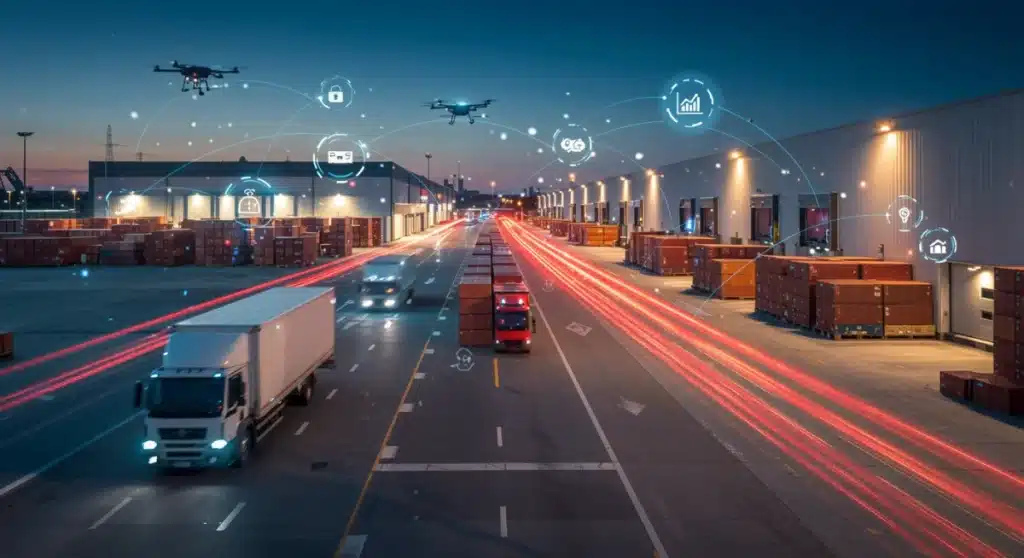
Predictive analytics, empowered by Edge AI, is set to revolutionize U.S. logistics, driving a projected 25% increase in operational efficiency by 2026 through real-time data processing and proactive decision-making.
Imagine a future where logistics operations are not just reactive, but truly prescient. Where every truck, every package, and every route is optimized with uncanny precision. This isn’t science fiction; it’s the imminent reality driven by predictive analytics with Edge AI, a technological synergy poised to significantly boost operational efficiency in U.S. logistics by an impressive 25% by 2026. This transformative shift promises to reshape how goods move across the nation, making supply chains smarter, faster, and more resilient than ever before.
The foundation: understanding predictive analytics in logistics
Predictive analytics, at its core, involves using historical data, statistical algorithms, and machine learning techniques to identify the likelihood of future outcomes based on past patterns. In the complex world of logistics, this means moving beyond simply knowing what happened to understanding what will happen, and more importantly, why.
For logistics, predictive analytics translates into a powerful tool for anticipating various operational challenges and opportunities. It allows companies to foresee potential disruptions, optimize resource allocation, and enhance customer satisfaction by making data-driven decisions before issues even arise.
Key applications of predictive analytics
The scope of predictive analytics in logistics is vast, touching nearly every aspect of the supply chain. From forecasting demand to managing fleet maintenance, its applications are designed to reduce uncertainty and improve performance.
- Demand forecasting: Accurately predicting future product demand to optimize inventory levels, minimizing stockouts and excess inventory.
- Route optimization: Analyzing traffic patterns, weather conditions, and delivery schedules to determine the most efficient routes in real time.
- Predictive maintenance: Monitoring vehicle health and anticipating equipment failures, allowing for proactive repairs and reducing unexpected downtime.
- Risk assessment: Identifying potential delays, disruptions, or security threats across the supply chain, enabling quick mitigation strategies.
By leveraging these capabilities, logistics companies can shift from a reactive mode to a proactive one, fundamentally altering their operational paradigm. This proactive stance is crucial for maintaining competitiveness in a rapidly evolving market and for meeting the ever-increasing demands of consumers.
The power of predictive analytics lies in its ability to transform raw data into actionable insights, providing logistics managers with the foresight needed to navigate complex operational landscapes. This foundational understanding sets the stage for the next layer of innovation: Edge AI.
Edge AI: bringing intelligence closer to the action
While predictive analytics provides the ‘what’ and ‘when,’ Edge AI provides the ‘how’ and ‘where’ in real-time, bringing computational power and intelligence directly to the source of data generation. Instead of sending all data to a centralized cloud for processing, Edge AI processes it locally, at the ‘edge’ of the network.
This localized processing has profound implications for logistics, where immediate decisions can have a significant impact on efficiency, safety, and cost. It eliminates the latency associated with cloud-based processing, enabling instantaneous responses to dynamic situations.
Why Edge AI matters for U.S. logistics
The vast and intricate network of U.S. logistics, encompassing thousands of vehicles, warehouses, and distribution centers, benefits immensely from the decentralized intelligence offered by Edge AI. Its ability to operate autonomously and make decisions without constant cloud connectivity is a game-changer.
- Reduced latency: Real-time data processing on devices means faster decision-making, critical for applications like autonomous driving and immediate route adjustments.
- Enhanced security: Processing data locally reduces the need to transmit sensitive information over networks, minimizing exposure to cyber threats.
- Lower bandwidth costs: Less data needs to be sent to the cloud, significantly reducing data transmission expenses and network congestion.
- Improved reliability: Edge devices can continue to function and make intelligent decisions even when internet connectivity is intermittent or unavailable.
Consider a delivery truck navigating congested urban streets. An Edge AI system on board can process live traffic data, sensor inputs from the vehicle, and even local weather forecasts to suggest optimal turns or warn of potential hazards in milliseconds. This level of responsiveness is simply not achievable with purely cloud-based analytics.
Edge AI empowers individual components within the logistics ecosystem to become intelligent nodes, capable of contributing to the overall efficiency and resilience of the entire network. This distributed intelligence is a cornerstone for achieving the ambitious efficiency targets set for U.S. logistics by 2026.
Synergy: combining predictive analytics with Edge AI
The true power emerges when predictive analytics and Edge AI are not viewed as separate entities but as complementary forces. Predictive models, often trained in the cloud with large datasets, can be deployed to Edge AI devices, allowing them to execute these sophisticated models locally and in real time.
This synergy creates a closed-loop system where data is collected at the edge, processed by AI models, and then used to make immediate, informed decisions, all while continuously feeding back into the larger predictive models for refinement and improvement.
Real-world impact on logistics operations
The combination of these technologies leads to a profound transformation in how logistics operations are managed and executed. It moves beyond simple automation to intelligent automation, where systems can anticipate, adapt, and optimize autonomously.
Imagine a fleet of autonomous trucks. Predictive analytics can forecast potential delays due to weather patterns or road construction days in advance, while Edge AI on each truck can dynamically reroute in real-time based on unexpected traffic jams or vehicle performance issues. This seamless integration ensures optimal flow and minimizes disruptions.
Another example lies in warehouse management. Predictive analytics can forecast demand for specific items, allowing Edge AI-powered robots to pre-position those items closer to shipping docks, significantly reducing picking times and improving throughput. This micro-optimization at every touchpoint accumulates into substantial overall efficiency gains.
The integration also extends to proactive security measures. Predictive models can identify patterns indicative of theft or tampering, and Edge AI-powered surveillance systems can immediately flag suspicious activities or unauthorized access, enabling rapid response and preventing losses. This holistic approach to operational intelligence is what drives the projected 25% efficiency boost.
The fusion of predictive analytics and Edge AI represents a paradigm shift, moving logistics from a reactive, human-intensive process to a proactive, intelligent, and highly automated system. This is not just about faster deliveries; it is about fundamentally rethinking the architecture of supply chains for unparalleled efficiency and resilience.
Achieving 25% operational efficiency: a roadmap for U.S. logistics by 2026
The ambitious target of boosting operational efficiency by 25% in U.S. logistics by 2026 is within reach, but it requires a strategic roadmap and concerted effort across the industry. This journey involves embracing new technologies, fostering data-driven cultures, and investing in the necessary infrastructure.
The key to unlocking this potential lies in a phased approach, starting with pilot programs and gradually scaling up successful implementations. It’s not about a single grand solution, but rather a series of incremental improvements powered by intelligent systems.
Key pillars for success
Several critical areas must be addressed to realize the projected efficiency gains. These pillars form the foundation upon which a truly optimized logistics network can be built.
- Data infrastructure upgrades: Implementing robust sensor networks and connectivity solutions (e.g., 5G) to feed high-quality, real-time data to Edge AI devices.
- AI model development and deployment: Investing in developing sophisticated predictive models and ensuring they can be efficiently deployed and updated on diverse Edge AI hardware.
- Workforce reskilling: Training logistics personnel to work alongside AI systems, focusing on data interpretation, system management, and advanced problem-solving.
- Regulatory adaptation: Collaborating with regulatory bodies to establish frameworks for autonomous logistics, data privacy, and ethical AI use.
One tangible example is the optimization of last-mile delivery. Predictive analytics can forecast peak delivery times and locations, allowing Edge AI in delivery vehicles to dynamically adjust routes, consolidate deliveries, and even manage drone deployment from mobile hubs. This precision reduces fuel consumption, labor costs, and delivery times significantly.
Furthermore, the integration of smart contracts on blockchain with predictive analytics and Edge AI can automate payments and verification processes, reducing administrative overhead and increasing transparency across the supply chain. This means less paperwork, fewer disputes, and faster transaction times.
The roadmap to 25% efficiency is not merely technological; it’s a holistic transformation involving process re-engineering, cultural shifts, and strategic partnerships. Companies that proactively invest in these areas will be well-positioned to lead the charge in the intelligent logistics era.
Overcoming challenges and ensuring adoption
While the benefits of integrating predictive analytics with Edge AI are clear, the path to widespread adoption is not without its hurdles. These challenges range from technical complexities to organizational resistance, and addressing them effectively is crucial for achieving the targeted efficiency improvements.
Overcoming these obstacles requires a multi-faceted approach, combining technological innovation with strategic planning and effective change management.
Common challenges and mitigation strategies
Logistics companies must be prepared to tackle several key challenges to successfully implement these advanced technologies.
- Data quality and integration: Ensuring consistent, high-quality data from disparate sources and integrating it seamlessly into AI systems. Solutions include standardized data protocols and robust data cleansing processes.
- Initial investment costs: The upfront capital required for new hardware, software, and training can be substantial. Phased rollouts and clear ROI projections can help justify these investments.
- Cybersecurity risks: Protecting Edge AI devices and the data they process from sophisticated cyber-attacks. Implementing strong encryption, secure boot processes, and regular security audits is essential.
- Talent gap: A shortage of skilled professionals capable of developing, deploying, and managing AI and Edge computing solutions. Investing in internal training programs and partnering with academic institutions can help bridge this gap.
For instance, addressing the talent gap could involve creating specialized training modules for existing logistics technicians to become ‘AI-enabled’ operators, capable of monitoring and troubleshooting Edge AI systems. This empowers the current workforce rather than replacing it entirely.
Another critical aspect is the ethical consideration of AI. Ensuring fairness, transparency, and accountability in AI-driven decisions, especially those impacting human jobs or critical infrastructure, is paramount. Developing clear ethical guidelines and governance structures for AI deployment will build trust and facilitate smoother adoption.
Ultimately, successful adoption hinges on demonstrating clear value and building confidence in the new systems. Pilot projects that show tangible results, coupled with strong leadership commitment, will pave the way for broader implementation and help U.S. logistics realize its efficiency potential.
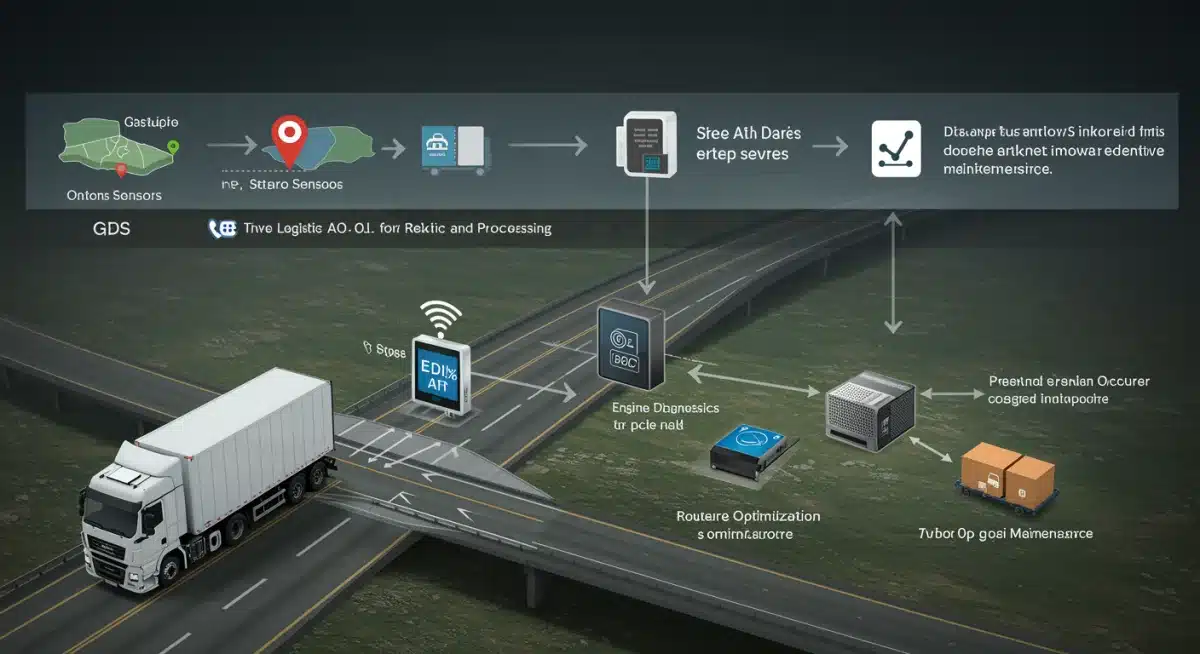
The future landscape: what U.S. logistics will look like in 2026
By 2026, the U.S. logistics landscape will be fundamentally transformed by the pervasive integration of predictive analytics and Edge AI. The industry will operate with unprecedented levels of efficiency, responsiveness, and sustainability, impacting everything from global supply chains to local delivery services.
This future isn’t just about faster deliveries; it’s about a more resilient, cost-effective, and environmentally conscious system that benefits businesses and consumers alike.
Key characteristics of future logistics
The operational shifts brought about by these technologies will manifest in several distinct ways across the logistics sector.
- Hyper-optimized routes: Real-time adjustments based on traffic, weather, and demand, leading to minimal delays and fuel consumption.
- Autonomous operations: Increased use of autonomous vehicles, drones, and robotics in warehouses and for last-mile delivery, supervised by human operators.
- Proactive maintenance: Near-zero unplanned downtime for fleets due to predictive maintenance schedules and Edge AI diagnostics.
- Dynamic inventory management: AI-driven forecasting and real-time tracking ensuring optimal stock levels, reducing waste and carrying costs.
- Enhanced security and transparency: AI-powered surveillance and predictive threat detection minimizing losses and improving supply chain integrity.
Consider the environmental impact. Optimized routes and autonomous vehicles operating at peak efficiency will dramatically reduce carbon emissions. Predictive maintenance will extend the lifespan of equipment, further contributing to sustainability goals. This aligns with broader corporate social responsibility initiatives and consumer demand for greener logistics.
Moreover, customer experience will be elevated. Predictive analytics will enable highly accurate delivery time estimates, proactive communication about potential delays, and even personalized delivery options. The ‘last mile’ will become the ‘smart mile,’ with AI ensuring seamless and satisfactory delivery experiences.
The U.S. logistics sector will evolve into a highly interconnected and intelligent network, where every component communicates and collaborates to achieve optimal outcomes. This vision of an efficient, resilient, and sustainable supply chain is the promise of predictive analytics with Edge AI, a promise that is rapidly becoming reality.
| Key Aspect | Impact on U.S. Logistics |
|---|---|
| Predictive Analytics | Enables foresight in demand, routes, and maintenance, reducing operational surprises. |
| Edge AI Processing | Provides real-time decision-making capabilities at the source of data, eliminating latency. |
| Synergy & Integration | Combines cloud-trained models with local execution for intelligent, adaptive logistics operations. |
| Efficiency Target | Aims for a 25% boost in operational efficiency for U.S. logistics by 2026 through these technologies. |
Frequently asked questions about predictive analytics and Edge AI in logistics
The primary benefit is achieving real-time, proactive decision-making directly at the point of action. Predictive analytics forecasts potential scenarios, and Edge AI processes this information locally, enabling immediate responses to dynamic operational conditions without relying on constant cloud connectivity, significantly enhancing speed and reliability.
Edge AI reduces costs by optimizing routes, minimizing fuel consumption, enabling predictive maintenance to prevent costly breakdowns, and improving inventory management to reduce waste. Local processing also cuts down on data transmission costs and bandwidth usage associated with cloud-only solutions, contributing to overall savings.
Companies may encounter challenges such as ensuring high-quality data, managing significant initial investment costs, mitigating cybersecurity risks for distributed devices, and addressing a potential talent gap for AI and Edge computing expertise. Strategic planning and phased implementation are crucial for overcoming these hurdles successfully.
Yes, significantly. By optimizing routes, these technologies reduce fuel consumption and carbon emissions. Predictive maintenance extends vehicle lifespans, minimizing waste. Efficient inventory management also prevents overproduction and unnecessary transportation, contributing to a more environmentally friendly and sustainable supply chain across the United States.
Autonomous vehicles will heavily rely on Edge AI for real-time decision-making, processing sensor data locally for navigation, obstacle detection, and dynamic route adjustments. This integration allows for safer, more efficient, and more reliable autonomous operations, which are essential for scaling up automated logistics networks by 2026.
Conclusion
The convergence of predictive analytics and Edge AI is not merely an incremental upgrade but a foundational shift for U.S. logistics. By enabling real-time, intelligent decision-making at every point of the supply chain, these technologies are set to unlock unprecedented levels of operational efficiency, driving a projected 25% boost by 2026. This transformation promises a future where logistics is more resilient, cost-effective, sustainable, and responsive to the ever-evolving demands of the market, ultimately benefiting businesses and consumers across the nation.