Robotics in Logistics: Cutting Operational Costs by 20% in 12 Months
Anúncios
Robotics in Logistics: How U.S. Companies Are Cutting Operational Costs by 20% in the Next 12 Months
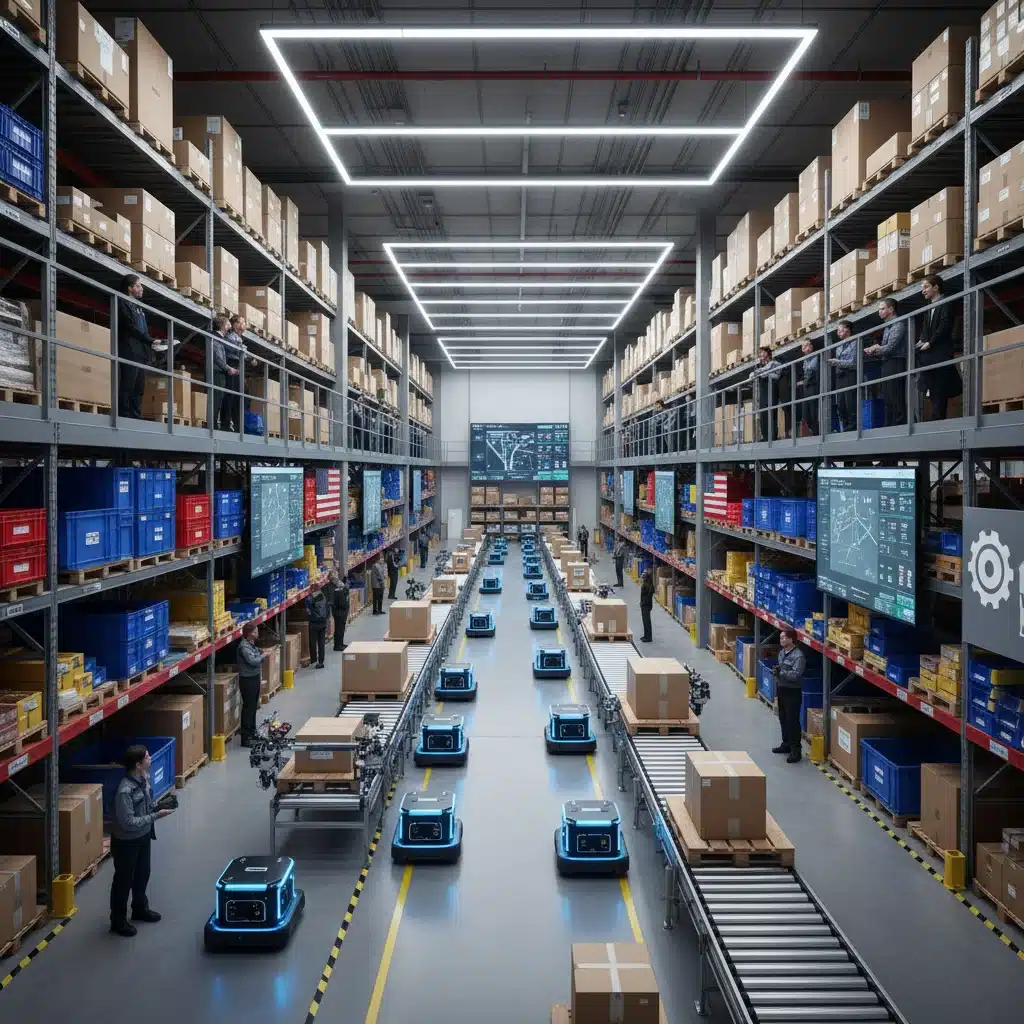
In the fiercely competitive landscape of modern commerce, operational efficiency is not just an advantage; it’s a necessity. U.S. companies, facing mounting pressure from rising labor costs, supply chain disruptions, and the ever-increasing demand for faster delivery, are turning to an unlikely yet powerful ally: robotics in logistics. The promise? A significant reduction in operational costs, often targeting an ambitious 20% within the next 12 months. This isn’t a futuristic dream; it’s a present-day reality being actively shaped by innovative businesses across the nation.
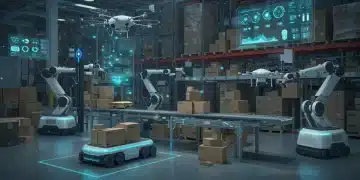
The integration of advanced robotic systems into warehousing, fulfillment centers, and transportation networks is revolutionizing how goods move from manufacturer to consumer. From automating repetitive tasks to optimizing complex logistical processes, robots are proving to be invaluable assets. This comprehensive guide will delve into the strategic implementation of robotics in logistics, explore the tangible benefits U.S. companies are realizing, and outline the roadmap to achieving substantial cost savings in a remarkably short timeframe.
Anúncios
The Imperative for Cost Reduction in U.S. Logistics
The U.S. logistics sector is a colossal engine driving the national economy, but it’s also a sector fraught with challenges that directly impact profitability. Labor shortages, particularly for roles in warehousing and trucking, have driven up wages. Fuel price volatility adds another layer of unpredictability. Furthermore, the relentless pace of e-commerce has amplified the need for speed and accuracy, placing immense strain on traditional, manual operations.
These factors collectively contribute to escalating operational costs, eroding profit margins, and hindering growth. Companies are actively seeking innovative solutions to mitigate these pressures. This is where robotics in logistics emerges as a game-changer. By automating key processes, businesses can address labor challenges, enhance efficiency, minimize errors, and ultimately, achieve the crucial cost reductions necessary to remain competitive.
Anúncios
Understanding the "20% Cost Reduction in 12 Months" Goal
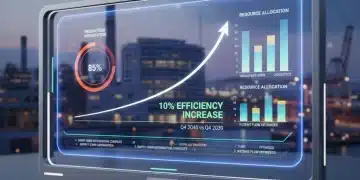
While a 20% cost reduction might seem aggressive, it’s an achievable target for many U.S. companies that strategically deploy robotics. This goal isn’t just about cutting expenses; it’s about optimizing the entire logistical ecosystem. The savings come from multiple avenues:
- Reduced Labor Costs: Automating repetitive, labor-intensive tasks frees up human workers for more complex, value-added activities.
- Increased Throughput and Efficiency: Robots can operate 24/7 without fatigue, leading to faster processing times and higher output.
- Minimized Errors and Damages: Robotic precision significantly reduces picking errors, inventory discrepancies, and product damage, saving on returns and rework.
- Optimized Space Utilization: Autonomous robots can navigate tighter spaces and stack items more densely, allowing for more efficient use of warehouse real estate.
- Improved Safety: Robots can handle heavy lifting and operate in hazardous environments, reducing workplace injuries and associated costs.
Achieving this 20% target requires a clear understanding of current operational bottlenecks, a phased implementation strategy, and a commitment to integrating robotic solutions seamlessly into existing workflows. The focus is not merely on replacing human labor but on augmenting capabilities and creating a more resilient and cost-effective supply chain.
Key Robotic Technologies Driving Cost Savings
The landscape of robotics in logistics is diverse, encompassing a range of technologies designed to address specific operational challenges. Understanding these technologies is crucial for U.S. companies looking to make informed investment decisions.
1. Autonomous Mobile Robots (AMRs)
AMRs are perhaps the most visible and widely adopted robotic solution in modern warehouses. Unlike traditional Automated Guided Vehicles (AGVs) that follow fixed paths, AMRs use advanced sensors, AI, and on-board mapping to navigate dynamic environments independently. They can transport goods, assist with picking, and replenish inventory.
How AMRs Cut Costs:
- Reduced Walking Time: AMRs bring items directly to human pickers, drastically cutting down on unproductive walking time.
- Increased Picking Efficiency: They enable zone picking and batch picking strategies, increasing orders processed per hour.
- Scalability: Fleets of AMRs can be easily scaled up or down based on demand, offering flexibility without significant infrastructure changes.
- Lower Infrastructure Costs: AMRs don’t require magnetic strips or extensive wiring, reducing initial setup and ongoing maintenance costs compared to AGVs.
2. Robotic Arms for Picking and Packing
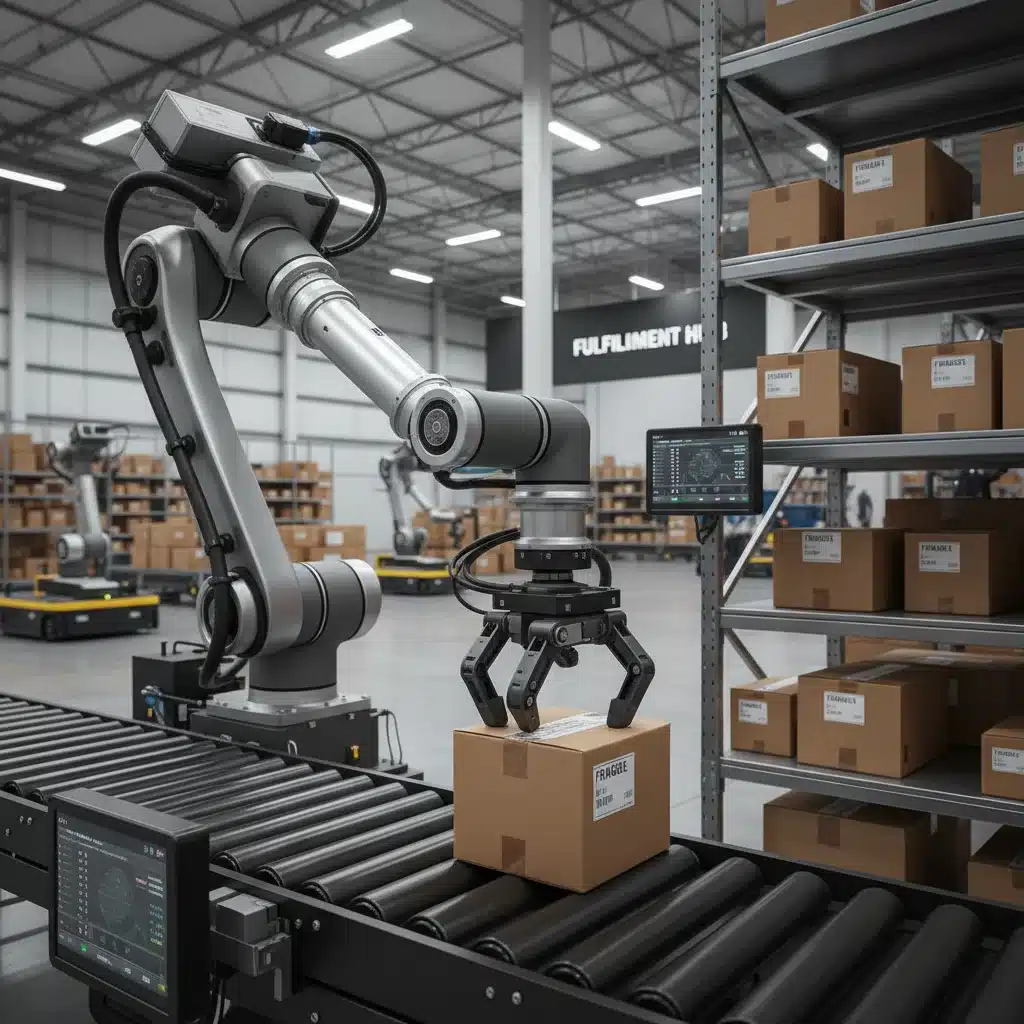
Robotic arms, equipped with advanced vision systems and dexterous grippers, are increasingly being deployed for precise picking and packing tasks. These robots can handle a wide variety of products, from small, delicate items to larger, heavier boxes.
How Robotic Arms Cut Costs:
- Elimination of Repetitive Strain Injuries (RSIs): Automating repetitive tasks reduces the risk of human injury, lowering healthcare and workers’ compensation costs.
- High Accuracy and Reduced Errors: Robotic arms offer unparalleled precision, minimizing mis-picks and product damage.
- 24/7 Operation: They can operate continuously, maximizing throughput during peak demand periods.
- Consistency: Maintain consistent speed and quality, leading to predictable operational outcomes.
3. Automated Storage and Retrieval Systems (AS/RS)
AS/RS are sophisticated robotic systems designed for automatically placing and retrieving items from storage locations in a warehouse. They come in various forms, including crane-based, shuttle-based, and carousel-based systems.
How AS/RS Cut Costs:
- Maximized Space Utilization: AS/RS can use vertical space much more efficiently than manual systems, reducing the need for larger, more expensive warehouse footprints.
- Reduced Labor Requirements: Automation of storage and retrieval significantly reduces the need for human intervention in these processes.
- Improved Inventory Accuracy: Automated tracking systems provide real-time, highly accurate inventory data, minimizing stockouts and overstocking.
- Faster Throughput: Items can be retrieved and stored much faster, accelerating order fulfillment.
4. Automated Guided Vehicles (AGVs)
While AMRs offer more flexibility, AGVs still play a crucial role in many U.S. logistics operations, especially for high-volume, repetitive transport tasks along fixed routes. They are robust, reliable, and ideal for moving heavy loads.
How AGVs Cut Costs:
- Reduced Forklift Accidents: AGVs eliminate the need for human-operated forklifts in designated areas, decreasing accident rates and associated costs.
- Consistent Material Flow: Ensure a steady, predictable flow of materials between different areas of a facility.
- Lower Labor Overhead: Reduce the need for human operators for internal transportation.
Strategic Implementation: Achieving the 20% Target
Implementing robotics in logistics for significant cost reduction is not just about buying robots; it’s about strategic planning, careful integration, and continuous optimization. U.S. companies aiming for a 20% reduction within 12 months follow a structured approach.
1. Comprehensive Process Audit and Bottleneck Identification
Before investing in any technology, it’s crucial to conduct a thorough audit of current logistics operations. Identify:
- Labor-intensive tasks: Where are human workers spending the most time on repetitive, low-value activities?
- Error-prone processes: What steps lead to frequent mistakes, returns, or rework?
- Space inefficiencies: Is warehouse space being fully utilized, or are there opportunities for denser storage?
- Throughput limitations: What bottlenecks prevent faster processing of goods?
- Safety hazards: Are there areas where automation could reduce risks to human workers?
This audit provides a baseline for measuring improvements and helps pinpoint the most impactful areas for robotic intervention.
2. Phased Implementation and Pilot Programs
Rather than a "big bang" approach, successful companies often opt for phased implementation. This involves:
- Pilot Projects: Start with a small-scale deployment in a specific area or for a particular task to test the technology, gather data, and refine processes.
- Scalability: Choose robotic solutions that can be scaled up as needs evolve and as the benefits become evident.
- Integration with Existing Systems: Ensure new robotic systems can seamlessly integrate with existing Warehouse Management Systems (WMS) and other IT infrastructure.
3. Workforce Training and Management
The introduction of robots often raises concerns about job displacement. However, the most successful implementations focus on workforce augmentation rather than replacement. This involves:
- Reskilling and Upskilling: Train existing employees to operate, maintain, and manage robotic systems. This transforms roles from manual labor to supervisory or technical positions.
- Change Management: Communicate clearly with employees about the benefits of automation and how it will enhance their roles and the company’s overall efficiency.
- Collaborative Robotics (Cobots): Explore cobots that are designed to work safely alongside humans, enhancing productivity without fully replacing human touch.
4. Data-Driven Optimization
The true power of robotics in logistics lies in the data they generate. Companies must harness this data to continually optimize their operations:
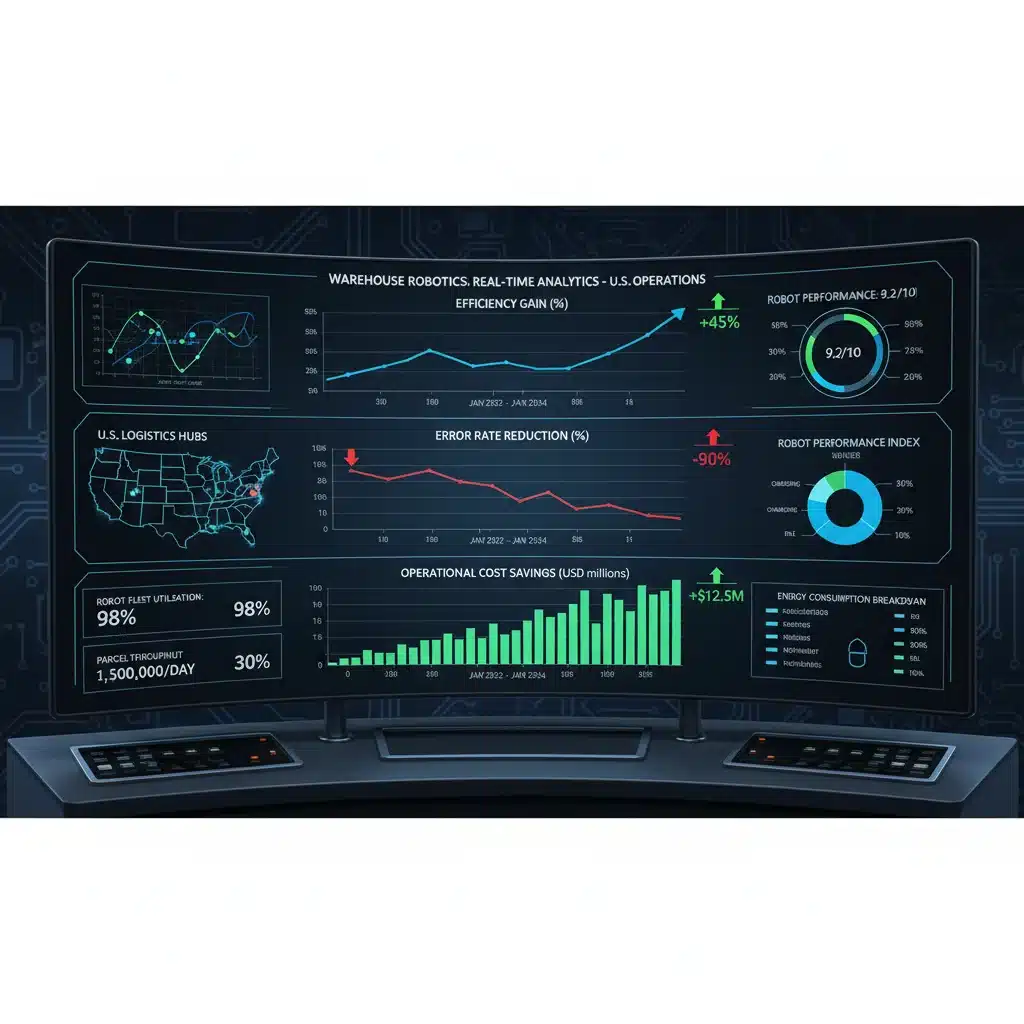
- Performance Metrics: Track key performance indicators (KPIs) such as throughput, error rates, uptime, and energy consumption.
- Predictive Maintenance: Use sensor data to anticipate and address potential equipment failures before they occur, minimizing downtime.
- Route Optimization: AI-powered software can analyze robot movement data to identify and implement more efficient navigation paths.
- Inventory Management: Real-time data from robotic systems provides unparalleled accuracy for inventory levels, leading to better forecasting and reduced carrying costs.
Real-World Examples: U.S. Companies Leading the Way
Numerous U.S. companies across various industries are already demonstrating the profound impact of robotics in logistics on their bottom line. While specific figures can be proprietary, the trends are clear.
E-commerce Giants
Leading e-commerce players have been at the forefront of robotic adoption. Their massive fulfillment centers are often showcases of automation, utilizing hundreds or thousands of AMRs, robotic arms, and AS/RS to handle millions of orders daily. These companies report significant reductions in order fulfillment times, labor costs, and error rates, directly contributing to their ability to offer competitive pricing and rapid delivery.
Retailers with Omni-channel Strategies
Traditional brick-and-mortar retailers are also investing heavily in robotics to support their growing online sales and omni-channel strategies. By automating their distribution centers, they can efficiently manage inventory for both in-store replenishment and direct-to-consumer shipping, optimizing stock levels and reducing the need for costly manual transfers. This dual approach helps them compete with online-only rivals while leveraging their physical presence.
Third-Party Logistics (3PL) Providers
3PLs are embracing robotics to offer enhanced services to their clients. By investing in automation, they can provide faster, more accurate, and more cost-effective logistics solutions, attracting new clients and retaining existing ones. The ability to scale operations quickly with robotics is a major draw for 3PLs managing fluctuating client demands.
Manufacturing and Automotive Sectors
Even beyond consumer goods, sectors like manufacturing and automotive use robotics for internal logistics, moving parts and components within factories and assembly lines. This ensures a lean manufacturing process, reduces lead times, and significantly lowers the operational costs associated with material handling.
Challenges and Considerations for Robotics Adoption
While the benefits are compelling, U.S. companies must also be aware of potential challenges when implementing robotics in logistics.
Initial Investment Costs
Robotic systems represent a significant upfront capital expenditure. Companies must conduct thorough ROI analysis to ensure the long-term savings justify the initial outlay. Flexible financing options, including Robotics-as-a-Service (RaaS) models, are emerging to help mitigate this barrier.
Integration Complexity
Integrating new robotic systems with existing legacy IT infrastructure (WMS, ERP, etc.) can be complex. Seamless data flow and communication between systems are critical for optimal performance. Expert consultation and robust integration platforms are often required.
Maintenance and Technical Expertise
Robots, like any machinery, require maintenance. Companies need access to skilled technicians for troubleshooting, repairs, and preventative maintenance. This may involve hiring new staff or partnering with robotic solution providers for ongoing support.
Scalability and Flexibility
While many robotic systems offer scalability, it’s crucial to choose solutions that can adapt to future changes in demand, product mix, and warehouse layout. Over-automating or under-automating can lead to inefficiencies down the line.
Cybersecurity Risks
As logistics operations become more connected, the risk of cyber threats increases. Robotic systems and their underlying networks must be secured against potential breaches to protect sensitive data and prevent operational disruptions.
The Future of Robotics in U.S. Logistics
The trajectory for robotics in logistics in the U.S. is one of rapid growth and increasing sophistication. Several trends are shaping its future:
- Enhanced AI and Machine Learning: Robots will become even smarter, capable of more complex decision-making, predictive analytics, and adaptive learning, further optimizing routes and tasks.
- Greater Dexterity and Versatility: Advances in gripper technology and machine vision will enable robots to handle an even wider range of irregular or delicate items, expanding their applicability.
- Outdoor and Last-Mile Delivery Robots: Beyond the warehouse, autonomous vehicles and drones are being tested for last-mile delivery, promising further cost reductions and faster service.
- Robotics-as-a-Service (RaaS): This model will become more prevalent, allowing companies to deploy robotics with lower upfront costs, paying for usage rather than ownership.
- Human-Robot Collaboration: The focus will continue to be on creating symbiotic relationships where humans and robots work together, leveraging each other’s strengths for maximum efficiency and safety.
Conclusion: A Leaner, More Efficient Future with Robotics
The goal of cutting operational costs by 20% in the next 12 months is not merely aspirational for U.S. companies; it’s a strategic imperative being actively realized through the judicious deployment of robotics in logistics. From autonomous mobile robots streamlining warehouse movements to robotic arms perfecting picking and packing, these technologies are fundamentally transforming the supply chain.
By embracing automation, businesses are not only achieving significant financial savings but also enhancing efficiency, improving accuracy, boosting safety, and building more resilient and adaptable operations. The journey requires careful planning, strategic investment, and a commitment to continuous optimization, but the rewards – a leaner, more competitive, and future-proof logistics enterprise – are well within reach. For U.S. companies looking to thrive in an increasingly demanding market, the question is no longer if they should adopt robotics, but how quickly and effectively they can integrate these transformative technologies into their core logistics strategies.