Social Media Landscape 2026: Threads, Bluesky, and Emerging Competitors
Anúncios
From Threads to Bluesky: Analyzing the Latest Competitors in the U.S. Social Media Landscape for 2026
The digital realm is in a constant state of flux, and nowhere is this more evident than in the ever-evolving world of social media. As we cast our gaze towards 2026, the U.S. social media landscape is poised for significant shifts, driven by both established giants and ambitious newcomers. The emergence of platforms like Threads and Bluesky has injected a fresh wave of competition, challenging the dominance of long-standing players and reshaping user expectations. This comprehensive analysis delves into the intricate dynamics of these new contenders, exploring their strategies, user acquisition, and potential impact on the broader social media ecosystem. Understanding these Social Media Competitors 2026 is crucial for businesses, marketers, and individual users alike, as the platforms we choose to engage with directly influence how information is consumed, communities are formed, and brands connect with their audiences.
Anúncios
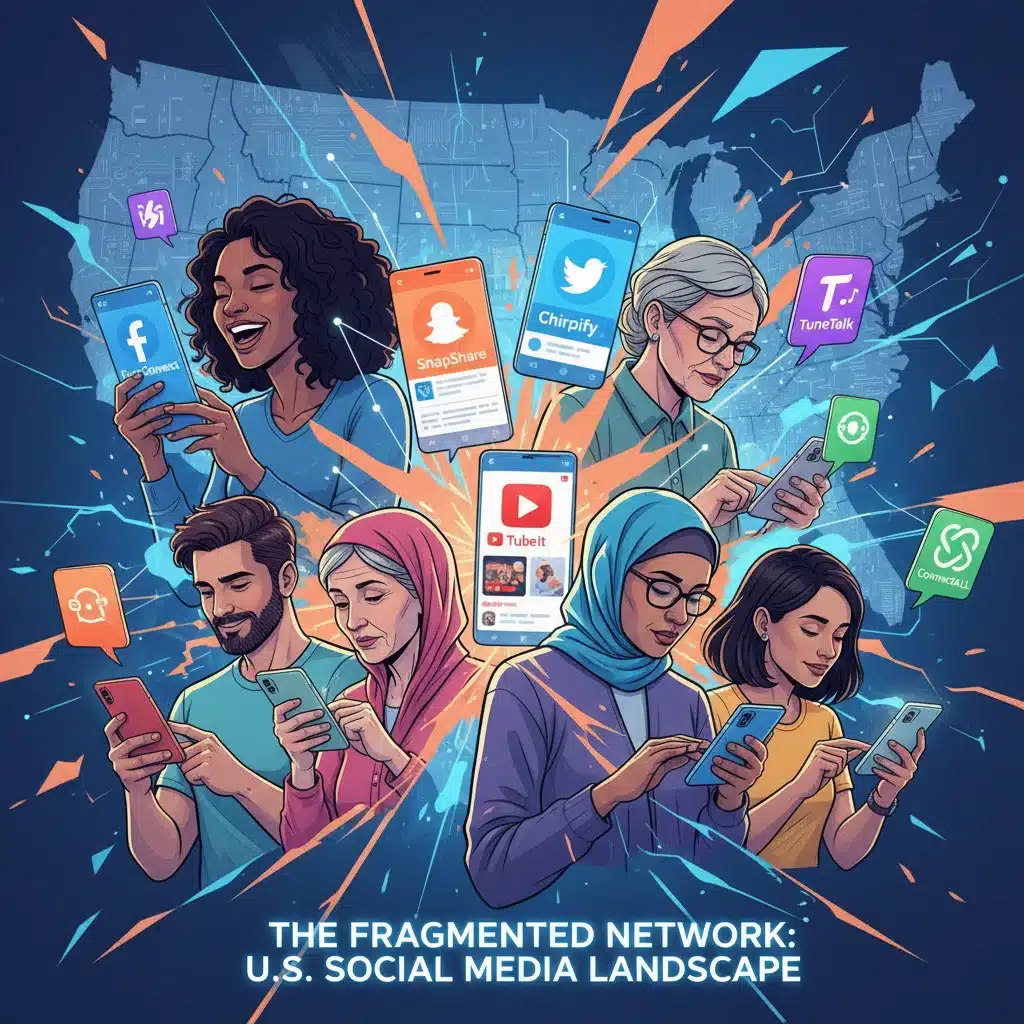
For years, the social media sphere seemed to be a settled affair, dominated by a handful of behemoths. Facebook, Instagram, Twitter (now X), and TikTok held sway, each carving out its niche and commanding vast user bases. However, the last few years have seen a noticeable fragmentation, fueled by a desire for more niche communities, privacy concerns, and a general fatigue with the status quo. This environment has created fertile ground for innovation, allowing smaller, more focused platforms to gain traction and even for tech giants to launch new ventures aimed at capturing specific segments of the market. The competitive spirit is alive and well, and the battle for user attention is intensifying, making the study of Social Media Competitors 2026 more relevant than ever.
The Rise of Threads: Meta’s Answer to Microblogging
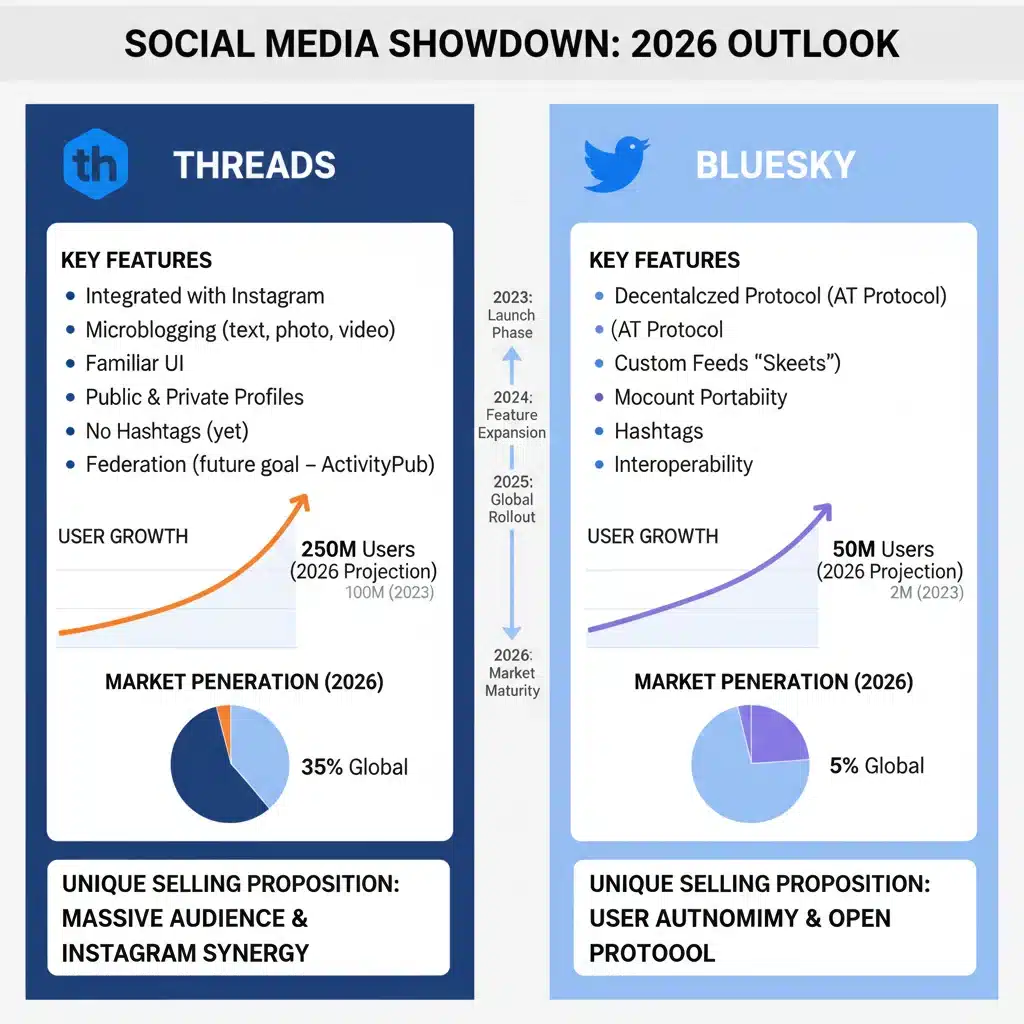
When Meta Platforms, Inc. (formerly Facebook) launched Threads in July 2023, it sent ripples across the social media world. Positioned as a direct competitor to X (formerly Twitter), Threads leveraged Instagram’s massive user base, allowing for seamless sign-up and follower migration. This strategic move provided Threads with an unprecedented initial boost, attracting millions of users within days of its launch. The platform’s interface is familiar, focusing on text-based posts, links, photos, and videos, mirroring the microblogging format that X popularized. However, Threads also brought its own distinct flavor, emphasizing a more positive and less confrontational environment, a clear differentiator from the often-polarized discourse found on its rival.
The initial hype surrounding Threads was undeniable, demonstrating Meta’s formidable capability to scale new products rapidly. Its integration with Instagram meant that users could easily port their existing social graph, overcoming one of the biggest hurdles for new social platforms: building an audience from scratch. This advantage allowed Threads to quickly become a significant player among Social Media Competitors 2026. However, rapid growth also brought challenges. Concerns over data privacy, the lack of certain features present on X (like direct messaging at launch, a robust trending topics section, or a comprehensive search function), and the initial absence of a strong unique selling proposition beyond its connection to Instagram, led to a stabilization in its growth trajectory after the initial surge.
Anúncios
Looking ahead to 2026, Threads’ trajectory will depend heavily on its ability to evolve beyond being merely an ‘X clone.’ Meta’s commitment to developing the platform, introducing new features, and fostering a distinct community identity will be paramount. We can expect Threads to focus on deeper integration with the broader Meta ecosystem, potentially offering cross-platform content sharing, enhanced monetization opportunities for creators, and more sophisticated moderation tools. Its success will also be tied to how well it navigates the complex regulatory landscape surrounding data and content, especially in the U.S. market. The platform’s ability to retain and re-engage its user base, while attracting new users who are seeking a different kind of microblogging experience, will define its standing among the leading Social Media Competitors 2026.
Bluesky Social: The Decentralized Dream Takes Flight
In stark contrast to Threads’ centralized, corporate-backed launch, Bluesky Social emerged from a different philosophy: decentralization. Initiated by former Twitter CEO Jack Dorsey, Bluesky aims to build a ‘decentralized social network protocol’ called AT Protocol, allowing users more control over their data, algorithms, and overall social experience. This vision resonates with a segment of users disillusioned with the current state of centralized social media, where platform owners dictate terms, content moderation policies, and data usage. Bluesky’s approach is rooted in the idea of interoperability, where different applications can be built on top of the same underlying protocol, fostering a more open and diverse social media environment.
Bluesky’s growth has been more gradual and invite-only, cultivating a community that is often more tech-savvy and privacy-conscious. This slower, more controlled expansion has allowed the platform to refine its protocol and features based on early user feedback, rather than being overwhelmed by a sudden influx. While its user numbers are significantly smaller than Threads’, its influence could be disproportionately large, especially if the decentralized model gains widespread adoption. The platform offers a familiar microblogging experience but with the promise of greater user agency, customizable feeds, and the ability to migrate data between different services built on the AT Protocol. This fundamental difference positions Bluesky as a unique and potentially disruptive force among Social Media Competitors 2026.
By 2026, Bluesky’s success will hinge on its ability to translate the abstract concept of decentralization into tangible benefits for the average user. Simplifying the user experience, providing robust moderation tools within a decentralized framework, and attracting a critical mass of users and developers to build on the AT Protocol will be key. If Bluesky can demonstrate that a decentralized social network can be both user-friendly and powerful, it could fundamentally alter how we perceive and interact with social media. Its potential to empower users and creators, offering alternatives to the traditional platform gatekeepers, makes it a fascinating case study in the evolving landscape of Social Media Competitors 2026. The ideological battle between centralized control and decentralized freedom will undoubtedly be a defining characteristic of the social media space in the coming years.
Other Notable Contenders and Emerging Niche Platforms
While Threads and Bluesky represent two of the most prominent new entrants, the U.S. social media landscape for 2026 is far from a two-horse race. Several other platforms, both established and nascent, are vying for user attention and market share. Each offers a unique value proposition, catering to specific demographics or interests, and contributing to the overall fragmentation of the social media experience. Understanding these diverse players is essential for a holistic view of Social Media Competitors 2026.
Mastodon and the Fediverse
Mastodon, a decentralized, open-source social network, has been around for some time but gained significant renewed interest during periods of instability and policy changes on X. As part of the ‘Fediverse’ (a portmanteau of ‘federated’ and ‘universe’), Mastodon operates not as a single platform but as a collection of independent, interconnected servers (instances) run by various communities and individuals. Users can choose an instance to join, and still interact with users on other instances. This model offers users a high degree of control over their experience, with each instance setting its own rules and moderation policies. While it still represents a smaller, more niche audience, its philosophical alignment with user autonomy makes it an important player to watch, particularly as more users seek alternatives to corporate-controlled platforms. Its organic growth, driven by community and a shared ethos, could see it solidify its position among niche Social Media Competitors 2026.
TikTok’s Enduring Influence and Potential Challenges
Despite ongoing geopolitical concerns and regulatory scrutiny, TikTok remains a dominant force, particularly among younger demographics. Its short-form video format has revolutionized content consumption, and its powerful algorithm continues to deliver highly personalized content feeds. However, the threat of potential bans or restrictions in the U.S. looms large. Should such measures be implemented, it would create a massive vacuum, leading to an even more dramatic reshuffling of the social media deck and potentially accelerating the growth of other video-centric platforms or new entrants among Social Media Competitors 2026. Even without a ban, TikTok faces intense competition from Instagram Reels, YouTube Shorts, and other platforms that have adopted its successful format.
Emerging Niche Platforms and Community-Focused Apps
Beyond the major players, a plethora of niche platforms are gaining traction by focusing on specific interests, hobbies, or professional communities. Platforms catering to gamers, artists, specific professional networks, or those with shared cultural identities are emerging. These platforms often provide a more intimate, relevant, and moderated experience than the sprawling general-purpose social networks. Examples include BeReal, which emphasizes authentic, unedited moments, and various Discord servers that function as vibrant, interest-based communities. While none of these might individually challenge the scale of a Meta or Google, collectively they represent a significant shift in user behavior towards more curated and meaningful online interactions. This trend suggests that by 2026, the ‘social media’ experience will be increasingly fragmented across a diverse array of specialized applications, making the landscape of Social Media Competitors 2026 more complex and multifaceted.
Key Factors Shaping the Social Media Landscape in 2026
Several overarching factors will continue to influence the trajectory of Social Media Competitors 2026 and the broader digital landscape. These include technological advancements, evolving user expectations, regulatory pressures, and the ongoing battle for data and attention.
Technological Advancements: AI and Immersive Experiences
Artificial intelligence (AI) is already deeply embedded in social media algorithms, powering content recommendations, moderation, and personalization. By 2026, AI’s role will likely expand further, leading to more sophisticated content creation tools, hyper-personalized feeds, and potentially even AI-driven virtual companions or community managers. Furthermore, the push towards immersive experiences, including augmented reality (AR) and virtual reality (VR) within the metaverse concept, will influence how platforms are designed and how users interact. Platforms that successfully integrate these technologies in a meaningful and accessible way could gain a significant competitive edge.
User Expectations: Authenticity, Privacy, and Control
Users are becoming increasingly discerning. There’s a growing demand for authenticity, a desire to move away from perfectly curated, often unrealistic, online personas. This fuels the rise of platforms like BeReal and the emphasis on genuine interactions. Privacy concerns are also paramount, with users demanding greater transparency about how their data is collected and used, and more control over their digital footprint. Platforms that prioritize user privacy and offer robust data management options will likely build greater trust and loyalty. The appeal of decentralized platforms like Bluesky and Mastodon directly stems from this desire for greater control and transparency, making them strong contenders among Social Media Competitors 2026 for a specific, yet growing, demographic.
Regulatory Scrutiny and Data Governance
Governments worldwide, including in the U.S., are increasingly scrutinizing social media platforms regarding issues such as data privacy, content moderation, misinformation, and antitrust concerns. Legislation like the Digital Services Act (DSA) in Europe, and potential similar frameworks in the U.S., could significantly impact how platforms operate, particularly concerning content moderation, data sharing, and competition. Platforms that proactively address these regulatory challenges and demonstrate a commitment to responsible governance will be better positioned for long-term success. The ability to navigate this complex legal and ethical landscape will be a critical differentiator for Social Media Competitors 2026.
Monetization Models and Creator Economy
The creator economy continues to flourish, and social media platforms are central to its growth. By 2026, we can expect to see even more diverse and innovative monetization models, including subscriptions, direct tipping, robust e-commerce integrations, and decentralized autonomous organizations (DAOs) for content ownership. Platforms that offer creators fair compensation, effective tools for audience engagement, and diverse revenue streams will attract and retain top talent, which in turn drives user engagement and content quality. This focus on empowering creators will be a key battleground for Social Media Competitors 2026.
Impact on Digital Marketing and Business Strategies
The shifting social media landscape has profound implications for digital marketing strategies and businesses seeking to connect with their target audiences. As new Social Media Competitors 2026 emerge and user behaviors evolve, marketers must adapt their approaches to remain effective and relevant.
Diversification of Presence
Relying solely on one or two dominant platforms is becoming an increasingly risky strategy. Businesses will need to diversify their social media presence, identifying where their target audience is most active and tailoring content accordingly. This means potentially engaging with niche communities on platforms like Bluesky or Mastodon, experimenting with Threads for microblogging, while maintaining a strong presence on established platforms. A multi-platform strategy, carefully managed, will be crucial for maximizing reach and engagement.
Authenticity and Community Building
As users seek more authentic interactions, brands must move beyond purely promotional content. Building genuine communities, fostering dialogue, and engaging in transparent communication will become even more critical. This could involve participating in discussions on platforms like Threads, supporting creators on various platforms, or even establishing dedicated communities on decentralized platforms. The focus will shift from broadcasting messages to facilitating meaningful connections.
Data-Driven Decisions and Analytics
With a more fragmented landscape, understanding audience demographics, preferences, and behaviors across different platforms will require sophisticated data analytics. Marketers will need robust tools to track performance, measure ROI, and gain insights into the effectiveness of their multi-platform campaigns. The ability to interpret complex data sets will be a core competency for successful digital marketing in 2026.
Navigating Content Moderation and Brand Safety
Each platform has its own content moderation policies and community guidelines, which can vary significantly. Brands must be acutely aware of these differences to ensure brand safety and avoid association with inappropriate content. This becomes particularly complex on decentralized platforms where moderation is often community-driven. Developing clear brand guidelines for social media engagement and closely monitoring brand mentions across diverse platforms will be essential.
Embracing New Ad Formats and Monetization Opportunities
As platforms innovate, so too will their advertising and monetization models. Marketers should be prepared to experiment with new ad formats, explore creator collaborations, and potentially leverage decentralized advertising models if they emerge. Early adoption of effective new strategies can provide a significant competitive advantage. For instance, Threads could introduce new ad units that leverage Instagram’s sophisticated targeting capabilities, while Bluesky might explore novel ways for brands to engage with its community without traditional advertising.
Conclusion: The Dynamic Future of Social Media
The U.S. social media landscape in 2026 will undoubtedly be more dynamic, diverse, and perhaps more fragmented than ever before. The emergence of strong Social Media Competitors 2026 like Threads and Bluesky, alongside the ongoing evolution of established platforms and the rise of niche communities, signifies a pivotal moment in digital communication. Threads, with its massive Meta backing and Instagram integration, has the potential to solidify its position as a major microblogging alternative, provided it continues to innovate and differentiate itself. Bluesky, on the other hand, represents a bold experiment in decentralized social networking, offering a vision of greater user control and interoperability that could reshape fundamental aspects of online interaction.
For individuals, this increased competition offers more choices, allowing them to select platforms that best align with their values, interests, and desired level of engagement. For businesses and marketers, it presents both challenges and opportunities. The need for diversified strategies, authentic community building, and keen analytical insights will be paramount. Adapting to new technological advancements, navigating regulatory complexities, and embracing evolving monetization models will define success in this competitive arena.
Ultimately, the future of social media in the U.S. is not about a single platform dominating all others, but rather about a rich tapestry of interconnected and specialized networks. The battle for user attention will be fought on multiple fronts, from the speed of content delivery to the strength of community bonds, and the promise of privacy and control. As we move towards 2026, observing how these Social Media Competitors 2026 evolve, innovate, and respond to both user demands and external pressures will provide invaluable insights into the ever-changing nature of our digital lives.