U.S. Space Tourism: Next 18 Months’ Launch Frontier
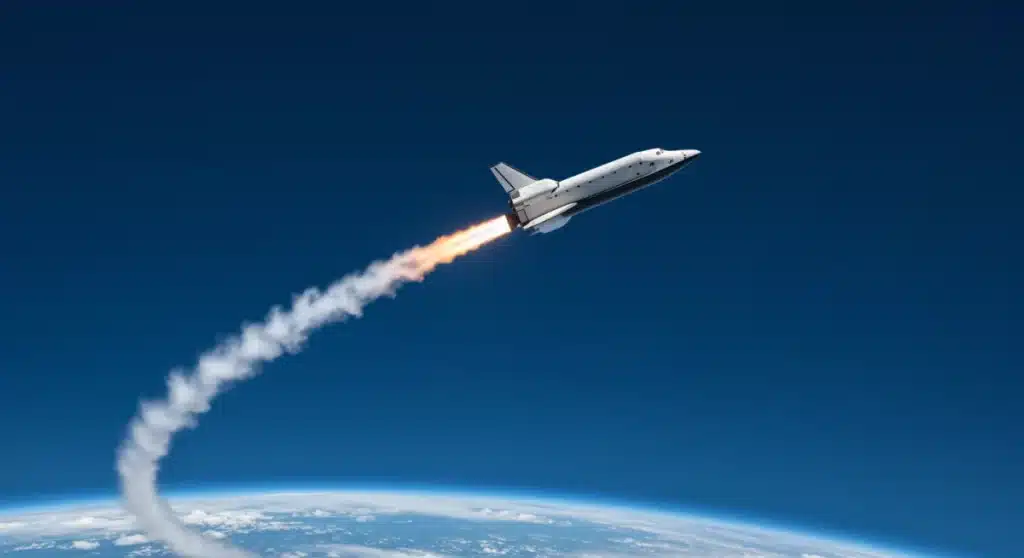
The U.S. space tourism sector is rapidly expanding, with several pioneering companies preparing to launch both suborbital and orbital flights within the next 18 months, promising unprecedented access to space for civilians.
The dream of space travel is rapidly transforming into a tangible reality, with a significant surge in activity within the United States. The sector of U.S. space tourism launches is poised for a pivotal period, promising to redefine access to the cosmos for civilians.
The Dawn of Commercial Spaceflight for Tourists
Commercial spaceflight has moved beyond science fiction, evolving into a burgeoning industry driven by private U.S. companies. This section explores the foundational shifts enabling this new era of space tourism.
For decades, space travel was the exclusive domain of government agencies and highly trained astronauts. However, the landscape has dramatically changed, thanks to significant technological advancements and the entrepreneurial spirit of private enterprises. These companies are not only developing new rockets and spacecraft but also pioneering entirely new business models focused on making space accessible to a broader audience.
Pioneering Companies and Their Visions
Several U.S.-based companies are at the forefront of this revolution, each bringing a unique approach to space tourism. Their visions range from brief, exhilarating suborbital hops to multi-day orbital expeditions, catering to different levels of adventure and budgets.
- Blue Origin: Focusing on suborbital flights with their New Shepard rocket, offering a few minutes of weightlessness and stunning views of Earth.
- Virgin Galactic: Specializing in suborbital spaceflights from a runway launch, providing a similar experience of weightlessness and Earth observation.
- SpaceX: Aiming for orbital tourism, including private missions to the International Space Station and ambitious circumlunar flights with their Starship program.
These companies are not just selling tickets; they are selling an experience that was once unimaginable, pushing the boundaries of human exploration and opening up new frontiers for commercial endeavors. The competition among them is fostering rapid innovation, driving down costs, and enhancing safety protocols, all of which are crucial for the long-term viability of space tourism.
Suborbital Adventures: Blue Origin and Virgin Galactic
The immediate future of U.S. space tourism largely centers on suborbital flights, offering a thrilling, albeit brief, journey to the edge of space. Blue Origin and Virgin Galactic are leading this charge, each with distinct technologies and operational philosophies.
Suborbital flights involve ascending to an altitude above the Kármán line (approximately 62 miles or 100 kilometers), the internationally recognized boundary of space, before returning to Earth. Passengers experience a few minutes of microgravity and witness the breathtaking curvature of our planet against the blackness of space. This experience, while short, is profound and transformative for those who undertake it.
Blue Origin’s New Shepard Program
Blue Origin, founded by Jeff Bezos, utilizes its New Shepard reusable rocket system for suborbital missions. The company has successfully completed multiple uncrewed and crewed test flights, including carrying Bezos himself to space. Their approach emphasizes automated flight, providing a seamless and safe experience for passengers.
- Vehicle: New Shepard, a vertical take-off and vertical landing rocket.
- Experience: Approximately 10-11 minutes flight time, with 3-4 minutes of weightlessness.
- Capacity: Six passengers per flight.
- Launch Site: West Texas Launch Site.
The company is reportedly ramping up its flight schedule, aiming for more frequent commercial operations within the next 18 months, making it a key player in the expansion of U.S. space tourism launches.
Virgin Galactic’s SpaceShipTwo Unity
Virgin Galactic, spearheaded by Richard Branson, offers a different suborbital flight profile. Their SpaceShipTwo Unity is air-launched from a carrier aircraft, WhiteKnightTwo, before firing its rocket engine to propel passengers into space. This unique system allows for a runway take-off and landing.
- Vehicle: SpaceShipTwo Unity, launched from WhiteKnightTwo.
- Experience: Approximately 90-minute flight, with several minutes of weightlessness.
- Capacity: Six passengers and two pilots.
- Launch Site: Spaceport America, New Mexico.
Following a period of operational adjustments, Virgin Galactic has resumed commercial flights, with plans to increase frequency. Both companies are critical in defining the early stages of civilian space travel, paving the way for more advanced orbital missions.
Orbital Aspirations: SpaceX and the Starship Era
While suborbital flights offer a taste of space, orbital tourism promises extended stays and journeys further afield. SpaceX, under the leadership of Elon Musk, is at the forefront of these ambitious orbital aspirations, particularly with its Starship program.
Orbital flights involve reaching a speed and altitude sufficient to circle the Earth, typically requiring much more powerful rockets and complex spacecraft. These missions can last from several days to weeks, offering passengers a truly immersive space experience, including living and working in microgravity for extended periods.
Starship’s Revolutionary Potential
SpaceX’s Starship is designed to be a fully reusable, super heavy-lift launch system capable of transporting both cargo and humans to Earth orbit, the Moon, and eventually Mars. Its sheer size and capacity make it a game-changer for space travel, including tourism.
- Vehicle: Starship, a two-stage-to-orbit reusable rocket.
- Capacity: Designed to carry over 100 people or 100 tons of cargo.
- Missions: Earth orbit, lunar missions, and Martian voyages.
- Launch Site: Starbase, Boca Chica, Texas.
SpaceX has already conducted several high-profile orbital missions, including Inspiration4, the first all-civilian orbital spaceflight, using its Dragon capsule. The development and testing of Starship are ongoing, with significant progress made in recent integrated flight tests. The company’s vision for orbital tourism includes private missions around the Moon and eventually point-to-point travel on Earth. Within the next 18 months, we anticipate further crucial test flights and potentially the announcement of more concrete timelines for Starship’s first tourist missions.
Training and Preparation for Space Tourists
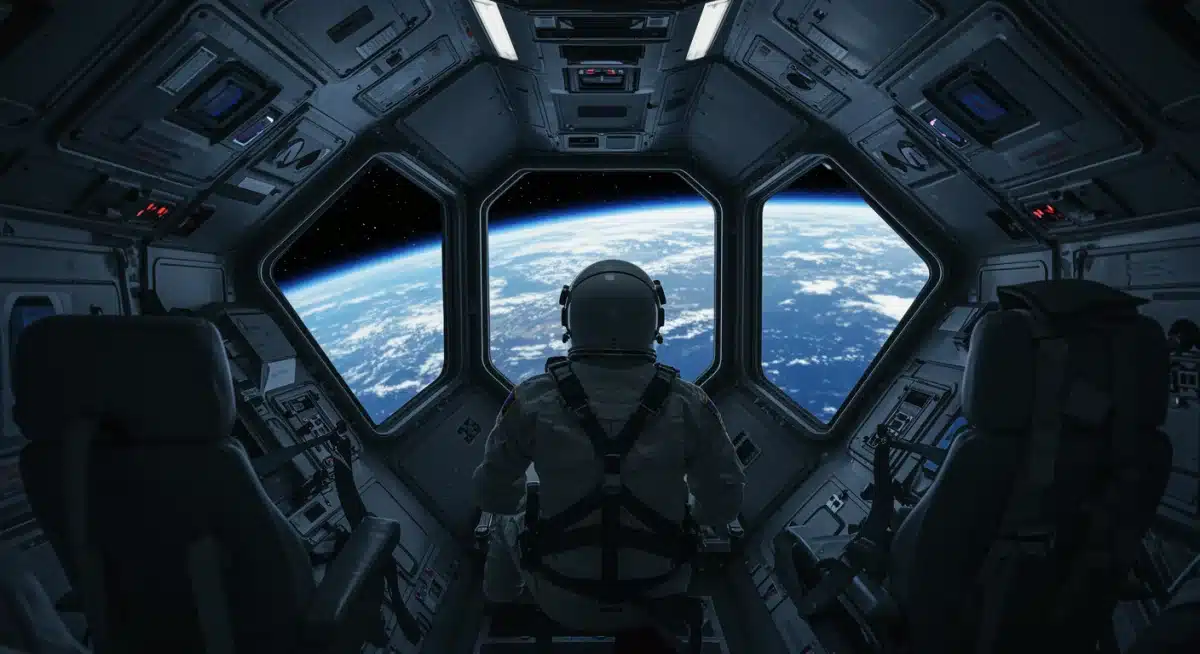
Embarking on a space tourism journey, whether suborbital or orbital, requires more than just a ticket; it demands rigorous training and preparation. U.S. companies are developing comprehensive programs to ensure passenger safety and enjoyment.
The training protocols are designed to familiarize prospective space tourists with the unique environment of space, including microgravity, high G-forces during launch and re-entry, and emergency procedures. These programs vary in intensity and duration depending on the type of mission, but all prioritize passenger well-being.
Suborbital Flight Training
For suborbital flights with companies like Blue Origin and Virgin Galactic, training is typically condensed but thorough. It focuses on acclimatization to the spacecraft environment and understanding safety protocols.
- Briefing Sessions: Detailed explanations of the flight profile, safety systems, and what to expect during each phase of the mission.
- G-Force Familiarization: Experience in centrifuges or specialized aircraft to simulate the forces felt during launch and re-entry.
- Emergency Procedures: Instruction on how to react in various unforeseen circumstances, though automatic systems handle most operations.
- Microgravity Adaptation: Tips for moving and interacting in a weightless environment during the few minutes of zero-G.
This preparation ensures that passengers are not only physically ready but also mentally prepared to fully appreciate their brief, but intense, journey to space.
Orbital Flight Training
Orbital missions, being longer and more complex, necessitate more extensive training. For missions involving SpaceX’s Dragon capsule, for instance, participants undergo several months of preparation.
- Extended Spacecraft Systems Training: In-depth knowledge of the capsule’s various systems, including life support, communications, and waste management.
- Simulated Missions: Hours spent in full-fidelity simulators, practicing normal operations and responding to various contingencies.
- Physical Conditioning: Tailored exercise regimens to maintain physical fitness and help adapt to microgravity’s effects over longer periods.
- Team Integration: For multi-person missions, training often includes team-building exercises and coordination drills to foster cohesion.
This comprehensive preparation is vital for ensuring that orbital space tourists can safely and effectively participate in their missions, truly becoming temporary astronauts.
Regulatory Landscape and Safety Protocols
The rapid growth of U.S. space tourism necessitates a robust regulatory framework to ensure the safety of participants and the public. Government agencies, particularly the Federal Aviation Administration (FAA), play a crucial role in overseeing these operations.
The FAA’s Office of Commercial Space Transportation (AST) is responsible for licensing launch and re-entry operations, as well as overseeing the safety of spaceflight participants. This regulatory environment is continuously evolving to keep pace with technological advancements and the increasing frequency of commercial space missions.
FAA’s Role in Commercial Spaceflight
The FAA’s approach to commercial human spaceflight is currently based on informed consent, meaning participants must be aware of the risks involved. However, as the industry matures, discussions are ongoing about potentially more prescriptive regulations.
- Launch and Re-entry Licensing: The FAA issues licenses for all commercial launches and re-entries from U.S. soil.
- Safety Oversight: While not certifying individual spacecraft designs in the same way as commercial aircraft, the FAA ensures that launch providers operate safely and meet certain performance standards.
- Astronaut Wings: The FAA also awards commercial astronaut wings to individuals who have flown above 50 miles (80 kilometers) on a licensed commercial vehicle.
This regulatory oversight is critical for building public trust and ensuring that U.S. space tourism launches maintain the highest safety standards as they become more common. The balance between fostering innovation and ensuring safety is a delicate one that regulators are constantly navigating.
Economic Impact and Future Outlook
The burgeoning U.S. space tourism industry is not just about adventure; it’s also a significant economic driver with far-reaching implications. This sector is creating new jobs, fostering technological innovation, and potentially opening up entirely new markets.
The economic impact extends beyond the companies directly involved in spaceflight. It includes a vast supply chain of manufacturers, engineers, service providers, and even tourism-related businesses that cater to prospective space travelers and enthusiasts. This ecosystem is poised for substantial growth as the industry scales up.
Job Creation and Investment
The development, manufacturing, and operation of commercial spacecraft require a highly skilled workforce, leading to job creation across various engineering, scientific, and operational disciplines. Furthermore, significant private investment continues to pour into these companies, signaling strong confidence in the long-term viability of space tourism.
- High-Tech Manufacturing: Demand for advanced materials, propulsion systems, and avionics.
- Research and Development: Continuous innovation in spacecraft design, safety systems, and operational efficiency.
- Tourism Infrastructure: Development of spaceports, training facilities, and associated hospitality services.
- Spin-off Technologies: Advancements in space technology often lead to innovations applicable in other industries.
The future outlook for U.S. space tourism is overwhelmingly positive. As technology matures and costs potentially decrease with increased flight frequency, space travel could become more accessible to a wider demographic. The next 18 months will be crucial in demonstrating the industry’s capability to deliver on its promises and solidify its place as a transformative force in the global economy and human experience.
| Key Aspect | Brief Description |
|---|---|
| Suborbital Flights | Blue Origin and Virgin Galactic offering brief weightlessness and Earth views. |
| Orbital Ambitions | SpaceX’s Starship aims for extended space travel to Earth orbit, Moon, and Mars. |
| Passenger Training | Mandatory preparation for G-forces, microgravity, and safety protocols. |
| Regulatory Oversight | FAA ensures safety and licenses commercial spaceflight operations. |
Frequently Asked Questions About Space Tourism
Suborbital space tourism involves a brief trip to the edge of space, offering a few minutes of weightlessness before returning to Earth. Orbital tourism, however, involves reaching sufficient speed and altitude to circle the Earth, allowing for extended stays in space, often lasting days or weeks.
Currently, Blue Origin and Virgin Galactic are leading the suborbital space tourism sector, while SpaceX is the primary U.S. company focused on orbital space tourism, with its Dragon capsule and the ambitious Starship program.
Training varies by mission type. Suborbital flights require shorter, focused preparation on G-force familiarization and emergency procedures. Orbital flights demand more extensive training, covering spacecraft systems, simulated missions, physical conditioning, and team integration over several months.
Space tourism companies prioritize safety, with rigorous testing and protocols. In the U.S., the Federal Aviation Administration (FAA) oversees commercial space transportation, licensing launches and re-entries, and ensuring safety standards for spaceflight participants.
Space tourism is projected to have a significant economic impact, fostering job creation in high-tech manufacturing, R&D, and tourism infrastructure. It attracts substantial private investment and can lead to spin-off technologies benefiting other industries, contributing to overall economic growth.
Conclusion
The next 18 months represent a critical and exhilarating period for U.S. space tourism launches. With established players like Blue Origin and Virgin Galactic increasing the frequency of suborbital flights, and SpaceX pushing the boundaries of orbital and deep-space travel with Starship, the vision of civilian access to space is rapidly becoming a mainstream reality. This expansion not only offers unparalleled experiences but also drives significant technological advancements, economic growth, and a reimagining of humanity’s place in the cosmos, setting a dynamic trajectory for the future of exploration.