Quantum Computing Platforms 2026: A Deep Dive for US Researchers

Anúncios
Comparison & Analysis: Top 4 Quantum Computing Platforms for US Researchers in 2026 – A Deep Dive
The dawn of quantum computing has ushered in an era of unprecedented computational power, promising to revolutionize industries from pharmaceuticals and materials science to finance and artificial intelligence. For US researchers, navigating the rapidly evolving landscape of Quantum Computing Platforms is paramount to staying at the forefront of innovation. As we look towards 2026, several key players have emerged, each offering unique architectures, software ecosystems, and accessibility models. This comprehensive deep dive will compare and analyze the top four Quantum Computing Platforms: IBM Quantum, Google Quantum AI, Azure Quantum, and AWS Braket, providing US researchers with the insights needed to make informed decisions for their groundbreaking work.
The strategic importance of quantum computing cannot be overstated. Governments and private entities globally are pouring resources into this field, recognizing its potential to solve problems currently intractable for even the most powerful classical supercomputers. For US researchers, access to robust and reliable Quantum Computing Platforms is not just an advantage; it’s a necessity for maintaining competitive edge and driving scientific discovery. Our analysis will delve into the core components of each platform, including their underlying hardware technologies, software development kits (SDKs), integration capabilities, and the specific advantages they offer to the research community.
Anúncios
Understanding the nuances of each platform’s approach to quantum computation—whether it’s superconducting qubits, trapped ions, or photonic systems—is crucial. Furthermore, the ease of access, community support, and the availability of educational resources play a significant role in a platform’s utility for academic and industrial research. By 2026, the quantum computing landscape is expected to be more mature, with clearer distinctions between platforms and more specialized applications emerging. This article aims to cut through the complexity and provide a clear, actionable guide for US researchers.
The Evolving Landscape of Quantum Computing Platforms
Before we delve into individual platforms, it’s essential to understand the broader context of quantum computing in 2026. The field has moved beyond theoretical curiosity into practical experimentation and early-stage applications. We are seeing a shift from purely academic exploration to more targeted research aimed at solving real-world problems. This evolution demands Quantum Computing Platforms that are not only powerful but also user-friendly and scalable.
Anúncios
Key trends influencing the development of Quantum Computing Platforms include:
- Increased Qubit Coherence and Fidelity: Continuous improvements in qubit stability and error rates are making more complex quantum algorithms feasible.
- Hybrid Quantum-Classical Computing: The integration of quantum processors with classical supercomputers is becoming standard, allowing for more efficient execution of algorithms that leverage both paradigms.
- Cloud Accessibility: Nearly all leading platforms offer quantum hardware access via the cloud, democratizing quantum computing for researchers worldwide.
- Specialized Quantum Processors: While general-purpose quantum computers are the ultimate goal, platforms are also exploring specialized processors optimized for specific tasks, such as quantum simulation.
- Growing Ecosystems: Beyond just hardware and SDKs, platforms are building comprehensive ecosystems with development tools, simulators, educational materials, and community forums.
For US researchers, these trends mean greater opportunities but also a greater need for informed choices. The platform chosen can significantly impact the feasibility and success of a research project. Therefore, a thorough understanding of each platform’s strengths and weaknesses is indispensable.
IBM Quantum: Pioneering the Quantum Cloud
IBM has been a vanguard in making quantum computing accessible, launching its first quantum computer to the public cloud in 2016. By 2026, IBM Quantum continues to be a dominant force, offering a mature ecosystem and a roadmap for progressively more powerful quantum processors. Their focus on superconducting qubits has led to impressive advancements in qubit count and coherence times.
Hardware and Architecture
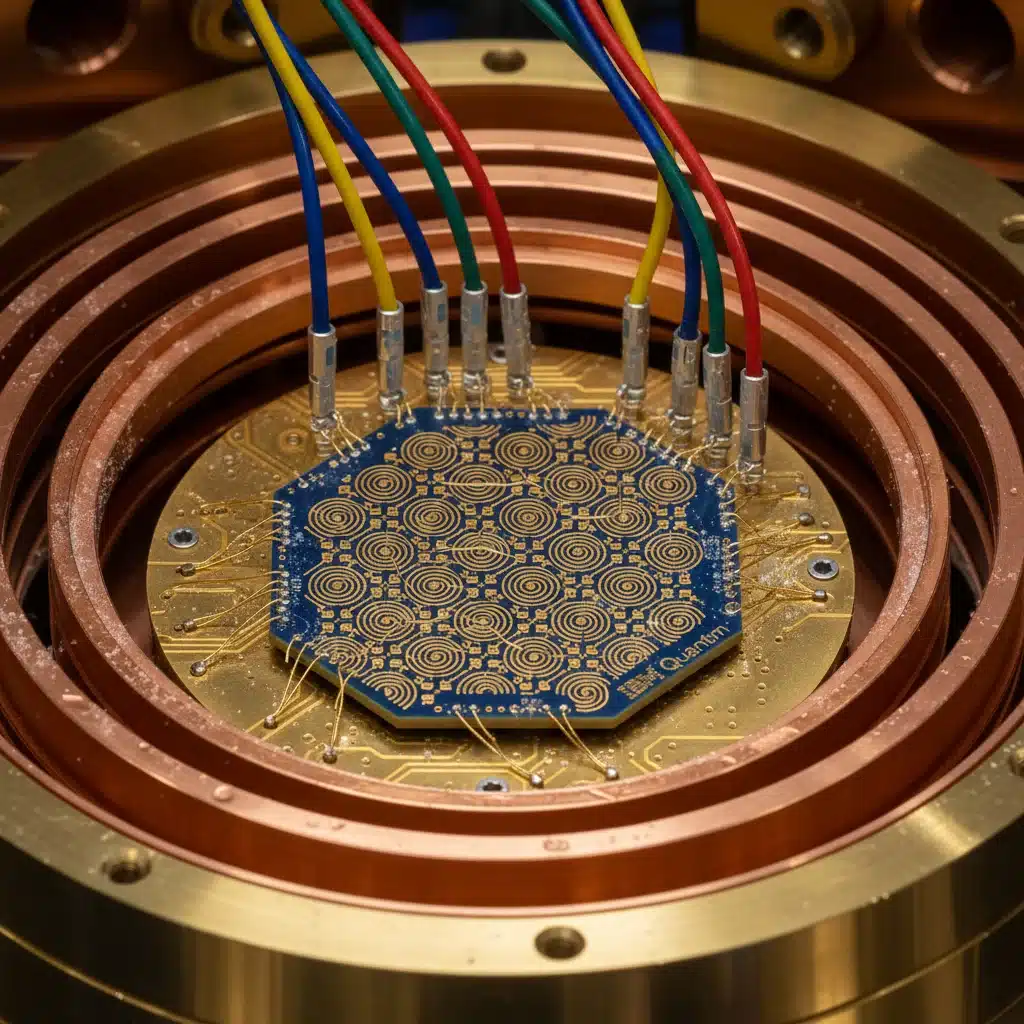
IBM’s quantum processors are based on superconducting transmon qubits. By 2026, IBM is expected to have rolled out several generations of their ‘Osprey’ and ‘Condor’ processors, pushing qubit counts into the thousands, along with enhanced connectivity and reduced error rates. Their modular architecture allows for scaling and the potential for quantum communication links between processors.
- Qubit Count: Anticipated to be in the thousands, offering significant computational capacity.
- Error Rates: Continual improvements in gate fidelity and coherence times, crucial for running deeper quantum circuits.
- Connectivity: Highly connected architectures, enabling a wider range of quantum algorithms.
Software and Ecosystem
The cornerstone of IBM Quantum’s software stack is Qiskit, an open-source SDK for working with quantum computers at the level of pulses, circuits, and application modules. Qiskit supports a broad range of quantum algorithms and is widely adopted within the research community. By 2026, Qiskit has matured further, offering more advanced tools for error mitigation, optimization, and quantum machine learning.
- Qiskit: A comprehensive, open-source SDK with strong community support.
- Qiskit Runtime: An execution environment that optimizes classical computation required to run quantum programs, significantly speeding up execution times.
- Cloud Access: Seamless integration with the IBM Cloud, providing researchers with on-demand access to various quantum systems.
- Community and Education: Extensive documentation, tutorials, and a vibrant community forum, making it an excellent platform for both beginners and experienced researchers.
Advantages for US Researchers
IBM Quantum offers US researchers a robust, well-established platform with continuous innovation in hardware and a highly supportive software ecosystem. Its cloud-based access democratizes quantum research, allowing institutions without their own quantum hardware to experiment and develop. The large user base and open-source nature of Qiskit also foster collaboration and knowledge sharing.
Google Quantum AI: Pushing the Boundaries of Quantum Supremacy
Google Quantum AI made headlines with its ‘quantum supremacy’ demonstration in 2019, showcasing a quantum computer performing a task beyond the reach of classical supercomputers. By 2026, Google continues its aggressive pursuit of fault-tolerant quantum computing, focusing on achieving higher fidelity and more stable superconducting qubits.
Hardware and Architecture
Google’s quantum processors, like ‘Sycamore’ and its successors, are also based on superconducting transmon qubits. Their architectural design emphasizes high connectivity between qubits to facilitate complex entanglements. By 2026, Google is expected to have unveiled processors with increased qubit counts and significantly improved error rates, moving closer to error-corrected quantum computation.
- Sycamore Processors: Advanced superconducting qubits with a focus on high fidelity and connectivity.
- Error Correction Roadmaps: Significant investment in developing quantum error correction techniques to build more robust quantum computers.
- Scalability: Research into modular architectures for scaling to larger qubit numbers.
Software and Ecosystem
Google’s primary quantum programming framework is Cirq, an open-source Python library for writing, manipulating, and optimizing quantum circuits. Cirq is designed for near-term quantum algorithms and provides fine-grained control over quantum operations. TensorFlow Quantum further integrates quantum machine learning capabilities with Google’s popular TensorFlow ecosystem.
- Cirq: A powerful, open-source SDK for quantum programming, emphasizing flexibility and control.
- TensorFlow Quantum: Enables the integration of quantum computing with machine learning workflows.
- Google Cloud Quantum AI: Provides cloud access to Google’s quantum processors and simulators, along with a suite of quantum development tools.
- Research Focus: Strong emphasis on fundamental quantum research and the development of quantum algorithms for scientific discovery.
Advantages for US Researchers
US researchers looking to push the boundaries of quantum algorithms and explore applications requiring high-fidelity operations will find Google Quantum AI highly appealing. Their commitment to fundamental research and the development of advanced error correction techniques positions them as a leader in long-term quantum innovation. The integration with TensorFlow also presents unique opportunities for quantum machine learning research.
Azure Quantum: A Diverse Ecosystem for Quantum Innovation
Microsoft’s Azure Quantum takes a different approach, acting as a unified, open cloud ecosystem that brings together diverse quantum hardware from various providers, alongside Microsoft’s own quantum software and development tools. This ‘agnostic’ approach provides researchers with unparalleled flexibility and choice in hardware.
Hardware and Architecture
Unlike IBM and Google, Azure Quantum doesn’t exclusively rely on a single hardware technology. Instead, it offers access to a variety of quantum systems from partners such as IonQ (trapped ions), Quantinuum (trapped ions), and Pasqal (neutral atoms). Microsoft is also actively developing its own topological qubits, which promise inherent error resistance, though these are still in the research phase.
- Hardware Diversity: Access to superconducting, trapped ion, and neutral atom quantum computers from multiple vendors.
- Topological Qubits: Microsoft’s long-term bet on inherently error-resistant qubits, offering a potentially revolutionary path to fault-tolerant quantum computing.
- Flexible Access: Researchers can experiment with different qubit technologies to find the best fit for their specific problems.
Software and Ecosystem
The core of Azure Quantum’s software stack is the Quantum Development Kit (QDK), which includes the Q# quantum programming language and a robust set of libraries. Q# is specifically designed for quantum algorithm development and offers strong type checking and debugging capabilities. Azure Quantum also integrates with classical Azure services, enabling hybrid quantum-classical workflows.
- Q#: A powerful, high-level quantum programming language with integrated development tools.
- Quantum Development Kit (QDK): Comprehensive SDK with simulators, libraries, and samples for various quantum algorithms.
- Azure Cloud Integration: Seamless access to quantum hardware and classical computing resources within the Azure ecosystem.
- Partner Hardware Access: A unified portal to connect with and run jobs on quantum computers from multiple vendors.
Advantages for US Researchers
For US researchers, Azure Quantum’s primary advantage is its hardware agnosticism. This allows for direct comparison and experimentation across different quantum computing modalities without needing to learn multiple proprietary interfaces. The QDK and Q# provide a structured and powerful environment for quantum algorithm development, especially for those interested in exploring various hardware backends or Microsoft’s long-term vision for topological qubits.
AWS Braket: Democratizing Quantum Computing
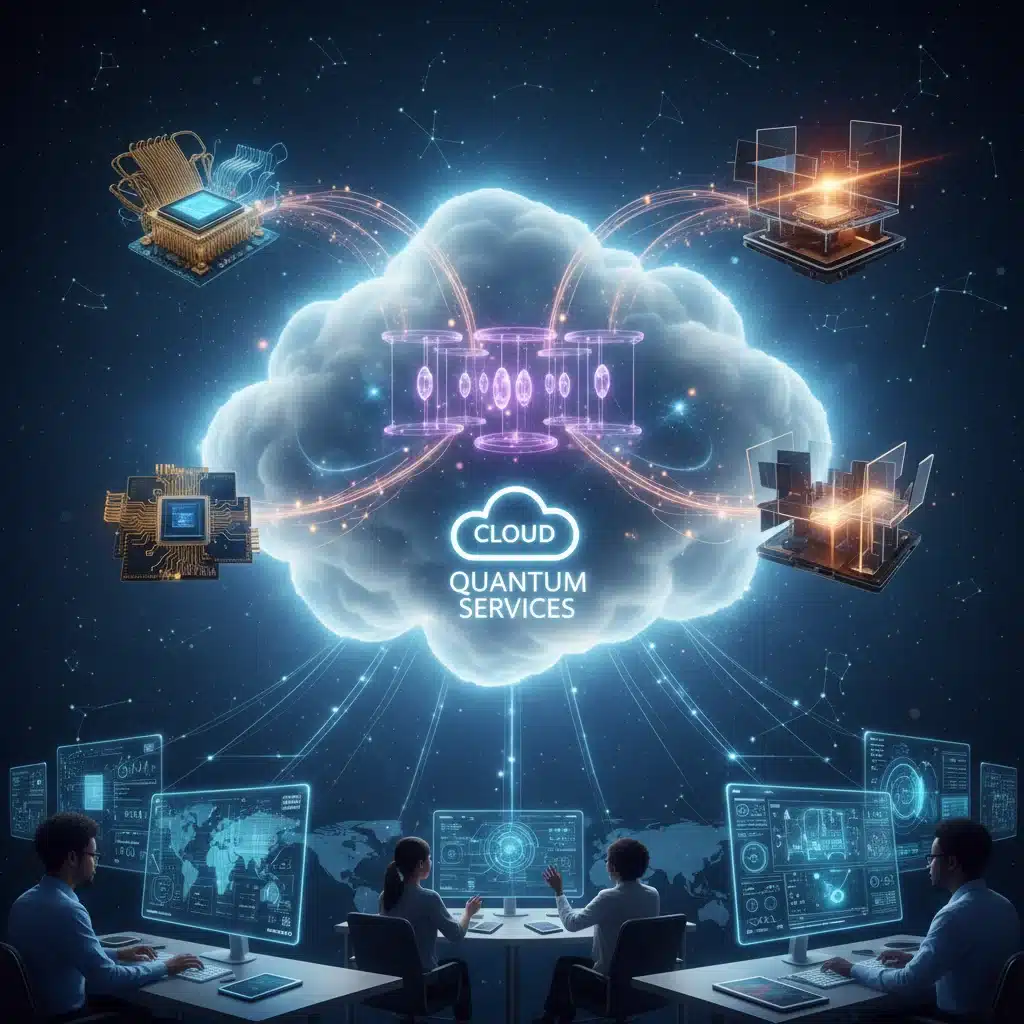
Amazon Web Services (AWS) entered the quantum computing arena with AWS Braket, a fully managed quantum computing service that provides a single point of access to various quantum hardware providers and quantum software tools. Braket aims to make quantum computing more accessible and easier to use for a broader range of researchers and developers.
Hardware and Architecture
Similar to Azure Quantum, AWS Braket acts as an aggregator, providing access to quantum hardware from leading providers. This includes D-Wave (quantum annealers), IonQ (trapped ions), and Rigetti (superconducting qubits). This diverse offering allows researchers to choose the best quantum processing unit (QPU) for their specific computational needs, whether it’s optimization problems suited for annealers or gate-model algorithms for universal quantum computers.
- Multi-Vendor Access: Integration with D-Wave, IonQ, and Rigetti, offering a choice of quantum hardware technologies.
- Quantum Annealing: Access to D-Wave’s quantum annealers, which are particularly strong for certain optimization problems.
- Flexible Resource Allocation: On-demand access to QPUs, allowing researchers to pay for what they use.
Software and Ecosystem
AWS Braket provides its own SDK, which allows researchers to build quantum algorithms, test them on simulators, and run them on various quantum hardware. It also supports popular quantum programming frameworks like Cirq and Qiskit, offering flexibility in development. Integration with other AWS services, such as Amazon Sagemaker for machine learning, further enhances its capabilities for hybrid workflows.
- Braket SDK: A Python-based SDK for building and executing quantum circuits.
- Managed Notebooks: Integrated development environment for seamless quantum programming.
- Simulators: High-performance simulators for testing quantum circuits before running them on actual hardware.
- AWS Integration: Leverage the vast array of AWS services for classical pre- and post-processing, data storage, and analytics.
Advantages for US Researchers
AWS Braket’s strength lies in its ease of use and seamless integration with the broader AWS ecosystem. For US researchers already leveraging AWS for their classical computing needs, Braket offers a natural extension into quantum computing. The ability to easily switch between different hardware providers and utilize a familiar cloud environment makes it an attractive option for rapid prototyping and diverse experimentation.
Comparative Analysis for US Researchers in 2026
Choosing the right Quantum Computing Platforms in 2026 will depend heavily on a researcher’s specific needs, project goals, and existing infrastructure. Here’s a comparative overview to guide US researchers:
Hardware Focus and Trajectory
- IBM Quantum: Strong focus on superconducting transmon qubits, aiming for high qubit counts and improved coherence. Consistent roadmap for scaling.
- Google Quantum AI: Also superconducting transmon qubits, with an aggressive focus on high fidelity and research into fault tolerance. Pushing the boundaries of quantum supremacy.
- Azure Quantum: Hardware-agnostic, offering access to various partner hardware (trapped ion, neutral atom, superconducting). Long-term bet on topological qubits.
- AWS Braket: Hardware aggregator, providing access to D-Wave (annealing), IonQ (trapped ion), and Rigetti (superconducting), offering diverse options.
Software Ecosystem and Ease of Use
- IBM Quantum: Qiskit is mature, open-source, and widely adopted. Excellent for both beginners and advanced users, with extensive documentation and community.
- Google Quantum AI: Cirq offers fine-grained control and is ideal for researchers focused on algorithm development. TensorFlow Quantum for quantum machine learning.
- Azure Quantum: Q# and QDK provide a structured and powerful environment, especially for those interested in exploring different hardware backends.
- AWS Braket: User-friendly SDK, supports multiple frameworks (Cirq, Qiskit), and integrates seamlessly with AWS services, making it easy to get started.
Specific Use Cases and Strengths
- IBM Quantum: Ideal for researchers seeking a stable, continuously evolving superconducting platform with strong community support and a full-stack approach. Good for general-purpose quantum algorithm development.
- Google Quantum AI: Best for researchers pushing the limits of quantum algorithms, exploring quantum supremacy, and those interested in high-fidelity superconducting systems and quantum machine learning.
- Azure Quantum: Perfect for researchers who need flexibility and want to experiment with different quantum hardware technologies without vendor lock-in. Strong for exploring the potential of topological qubits.
- AWS Braket: Excellent for researchers already in the AWS ecosystem, looking for easy, on-demand access to diverse quantum hardware, including quantum annealers for optimization problems.
Accessibility and Support for US Researchers
All four platforms offer cloud-based access, which is a significant advantage for US researchers, enabling them to run experiments remotely. They also provide various levels of support, from extensive documentation and online forums to dedicated customer support for enterprise clients.
- IBM Quantum: Strong academic programs, partnerships with universities, and a very active Qiskit community.
- Google Quantum AI: Often engages in academic collaborations and offers resources for research groups.
- Azure Quantum: Provides grants, academic programs, and integrates with existing academic cloud credits for Azure.
- AWS Braket: Leverages existing AWS educational and research credits, making it accessible for institutions already using AWS.
Challenges and Future Outlook for Quantum Computing Platforms in 2026
Despite rapid advancements, quantum computing still faces significant challenges by 2026. Error rates, even with mitigation techniques, remain a hurdle for running very deep and complex algorithms. The scarcity of highly skilled quantum programmers and researchers is another bottleneck. Furthermore, defining clear quantum advantage for a wider range of practical problems beyond niche applications is an ongoing effort.
However, the future for Quantum Computing Platforms is incredibly promising. We can expect:
- Increased Fault Tolerance: Significant progress in error correction, leading to more reliable quantum computers.
- Application Specialization: More tailored quantum processors and algorithms for specific industry problems.
- Hybrid System Optimization: Further integration and optimization of quantum and classical computing resources.
- Quantum Software Development Tools: More intuitive and powerful SDKs, compilers, and debugging tools.
- Standardization: A move towards greater interoperability and standardization across different platforms.
For US researchers, staying abreast of these developments is crucial. The choice of Quantum Computing Platforms today will influence the direction and success of their research for years to come. Participating in the communities surrounding these platforms, engaging with their development roadmaps, and contributing to the open-source ecosystems will be vital for shaping the future of quantum computing.
Conclusion: Strategic Choices for US Quantum Researchers
The landscape of Quantum Computing Platforms in 2026 presents US researchers with a rich array of choices, each with distinct advantages. IBM Quantum offers a mature, full-stack superconducting platform with a vibrant open-source community. Google Quantum AI continues to push the boundaries of superconducting qubit performance and quantum supremacy, ideal for cutting-edge algorithm development. Azure Quantum provides unparalleled hardware diversity and a powerful quantum programming language in Q#, catering to those who prefer flexibility and exploring different modalities. AWS Braket delivers ease of use and seamless integration with the vast AWS ecosystem, making quantum computing accessible to a broad user base, including those interested in quantum annealing.
Ultimately, the ‘best’ platform is subjective and depends on the specific research question. Researchers focusing on superconducting qubits and a strong community might lean towards IBM. Those aiming for high-fidelity experiments and quantum machine learning could find Google’s offerings more suitable. If exploring different hardware types is key, Azure Quantum provides the necessary flexibility. And for researchers already embedded in the AWS cloud and needing diverse hardware options, AWS Braket is an excellent choice.
As quantum computing moves from theoretical curiosity to practical application, the decisions made by US researchers today regarding their choice of Quantum Computing Platforms will undoubtedly shape the future of scientific discovery and technological innovation. By carefully considering the hardware, software, ecosystem, and strategic vision of each platform, researchers can position themselves to unlock the transformative potential of quantum computing.