Social Audio Platforms 2026: Top 4 Dominating US Conversations
Anúncios
The digital world is a kaleidoscope of innovation, constantly shifting and evolving, and few sectors exemplify this dynamism as profoundly as social media. Within this ever-changing landscape, social audio has carved out a unique and surprisingly resilient niche. What began as a novel concept, offering ephemeral, real-time voice-based interactions, has matured into a significant force, reshaping how we connect, learn, and entertain ourselves online. As we peer into 2026, the enduring appeal of social audio is undeniable, with specific platforms not just surviving, but thriving and dominating conversations across the United States. This comprehensive analysis will delve into the reasons behind this sustained growth, compare the top 4 social audio platforms, and offer insights into their future trajectory.
The Resurgence and Evolution of Social Audio Platforms
Remember the initial hype around social audio? It was a whirlwind, with new platforms emerging almost daily. While some faded into obscurity, the core concept – the power of the human voice for authentic, spontaneous connection – proved to be remarkably sticky. In 2026, social audio isn’t just a trend; it’s an established mode of communication, integral to many digital routines.
Why Social Audio Continues to Captivate Users
Several factors underpin the continued success of social audio platforms:
Anúncios
- Authenticity and Intimacy: Unlike text-based or video interactions, audio fosters a unique sense of intimacy and authenticity. The nuances of tone, inflection, and pacing convey emotions and intentions that are often lost in other mediums. This creates a more genuine connection between speakers and listeners.
- Reduced Screen Fatigue: In an increasingly screen-saturated world, audio-only experiences offer a welcome respite. Users can engage with content and communities while multitasking, whether commuting, exercising, or doing household chores, reducing the cognitive load associated with constant visual input.
- Accessibility: Social audio is inherently more accessible for individuals with visual impairments or those who prefer auditory learning. It also lowers the barrier to entry for content creation, as it doesn’t require elaborate setups or on-screen appearances.
- Real-Time Engagement: The live, ephemeral nature of many social audio interactions creates a sense of urgency and shared experience. Participants feel a part of a moment, fostering stronger community bonds and encouraging active participation rather than passive consumption.
- Niche Communities and Expert Access: Social audio platforms excel at bringing together highly specific interest groups. From niche hobbies to professional development, users can find communities tailored to their passions and gain direct access to experts and thought leaders in a way that feels less formal and more approachable.
- Monetization Opportunities: As the platforms mature, so do the opportunities for creators to monetize their content through subscriptions, direct donations, sponsored rooms, and exclusive access, further incentivizing high-quality engagement.
The landscape of social audio platforms in 2026 is a testament to this enduring appeal, showcasing platforms that have innovated and adapted to user needs, solidifying their positions in the digital ecosystem.
The Top 4 Social Audio Platforms Dominating US Conversations in 2026
While numerous social audio platforms exist, four have consistently demonstrated their dominance and influence across the United States. Each offers a distinct approach, catering to different user preferences and community dynamics. Let’s explore these titans of social audio.
Anúncios
1. Discord: The Community Powerhouse
Once primarily known as a haven for gamers, Discord has undergone a remarkable transformation, evolving into a versatile and indispensable platform for communities of all types. In 2026, it stands as a formidable social audio player, thanks to its robust server architecture and unparalleled customization options.
Key Features and Strengths:
- Voice Channels: Discord’s core strength lies in its persistent voice channels, allowing users to drop in and out of conversations seamlessly. These aren’t just live streams; they are digital common rooms where ongoing discussions thrive.
- Server Ecosystem: Each Discord server is a self-contained ecosystem, complete with multiple text and voice channels, roles, permissions, and bots. This allows communities to be highly organized and tailored to specific interests, from study groups and fan clubs to professional networks and creative collectives.
- Hybrid Communication: Discord masterfully blends text, voice, and video, allowing for flexible communication. A voice conversation can easily transition into a screen-share or a text-based discussion, catering to diverse interaction styles.
- Bots and Integrations: The extensive bot ecosystem allows for automation, moderation, entertainment, and integration with other services, enhancing the user experience and functionality of servers.
- Demographics: While still popular with younger demographics, Discord has successfully diversified its user base, attracting professionals, educators, and hobbyists seeking structured, dedicated community spaces.
Why it Dominates:
Discord’s dominance stems from its ability to foster deep, long-term community engagement. It’s not just about ephemeral live events; it’s about building enduring digital homes where people can consistently connect around shared passions. Its flexibility makes it suitable for both synchronous and asynchronous audio interactions, a key differentiator among social audio platforms.
2. Twitter Spaces: The Public Square’s Audio Extension
Leveraging Twitter’s massive existing user base and its reputation as a real-time information network, Twitter Spaces has solidified its position as the go-to platform for public, large-scale audio conversations. It’s the digital town hall, where breaking news, trending topics, and celebrity Q&As unfold in real-time audio.
Key Features and Strengths:
- Seamless Integration: Spaces are deeply integrated into the Twitter feed, making discovery and participation incredibly easy for existing Twitter users. A Space can be started with a few taps, and notifications ensure followers are aware of live events.
- Discoverability: The ‘Spaces’ tab and prominent display within the Twitter timeline make it highly discoverable, allowing users to stumble upon relevant conversations effortlessly.
- Public Discourse: Twitter Spaces excels at hosting public discussions, debates, and interviews with public figures, journalists, and experts. It’s a platform where diverse voices can convene on trending topics.
- Recording and Playback: The ability to record and share Spaces post-event significantly extends their reach, allowing those who missed the live session to catch up later.
- Monetization for Creators: Features like Ticketed Spaces and Super Follows allow hosts to generate revenue from their audio content, incentivizing high-quality programming.
Why it Dominates:
Twitter Spaces thrives on its immediacy and its connection to the pulse of current events. It offers a powerful avenue for real-time public discourse and celebrity engagement, making it a critical tool for journalists, creators, and public figures to connect directly with their audiences. Its integration with Twitter’s existing network provides a significant advantage in user acquisition and content amplification, solidifying its role among social audio platforms.
3. Spotify Live (formerly Greenroom): The Audio Entertainment Hub
Spotify, a giant in the audio streaming world, entered the social audio arena with Spotify Live, a platform designed to complement its vast music and podcast ecosystem. By 2026, it has become a key player, particularly for music-related content, artist-fan interactions, and live podcast extensions.
Key Features and Strengths:
- Artist and Creator Focus: Spotify Live heavily leverages Spotify’s existing relationships with artists, podcasters, and other audio creators, providing them with a direct channel for live interaction with their fan bases.
- Music Integration: The platform allows for seamless integration of music, enabling DJs to host live sets, artists to preview new tracks, and fans to discuss their favorite albums in real-time.
- Podcast Extensions: Many popular podcasters use Spotify Live for Q&A sessions, bonus content, or live discussions immediately following a new episode release, creating a deeper engagement layer.
- Discovery within Spotify: While not as deeply integrated as Twitter Spaces, Spotify Live benefits from cross-promotion within the main Spotify app, making it discoverable to a massive, audio-centric audience.
- Focus on Entertainment: The platform leans heavily into entertainment and cultural discussions, distinguishing itself from more news-focused or niche community platforms.
Why it Dominates:
Spotify Live’s strength lies in its synergy with Spotify’s core business. It provides a natural extension for existing audio creators and consumers to engage in live, interactive experiences. Its focus on music, entertainment, and creator-fan interaction fills a specific niche, making it an essential platform for anyone in the audio entertainment space. It represents a powerful evolution of social audio platforms toward integrated media experiences.
4. Clubhouse: The Reinvention of the Original
Clubhouse, the platform that ignited the social audio craze, might have experienced a dip after its initial explosive growth, but in 2026, it has successfully reinvented itself, solidifying its position as a premium, curated audio experience. It has shed some of its early exclusivity while maintaining a focus on high-quality conversations and intimate community building.
Key Features and Strengths:
- Refined User Experience: Clubhouse has continuously iterated on its user interface and experience, focusing on stability, discovery, and ease of use.
- Curated Content and Communities: While no longer invite-only, Clubhouse emphasizes quality over quantity. It has fostered a reputation for hosting thoughtful, in-depth discussions with influential speakers across various fields.
- Small Group Dynamics: While capable of hosting large rooms, Clubhouse often shines in smaller, more intimate settings where every participant has a chance to speak and engage meaningfully.
- Replay and Clips: The introduction of replay functionality and the ability to share short audio clips has extended the life of conversations and improved discoverability.
- Creator Tools: Enhanced tools for event scheduling, audience management, and direct monetization (e.g., payments, subscriptions) empower creators to build sustainable communities.
Why it Dominates:
Clubhouse’s continued relevance in 2026 is a testament to its commitment to fostering genuine, high-quality audio interactions. It has successfully pivoted from a novelty to a platform valued for its depth of discussion and the caliber of its participants. It maintains an air of intellectual curiosity and professional networking that appeals to a specific demographic seeking meaningful audio engagement, making it a unique player among social audio platforms.
Comparative Analysis: Strengths and Target Audiences
While all these platforms operate within the social audio sphere, their distinct features and target audiences highlight their unique positions:
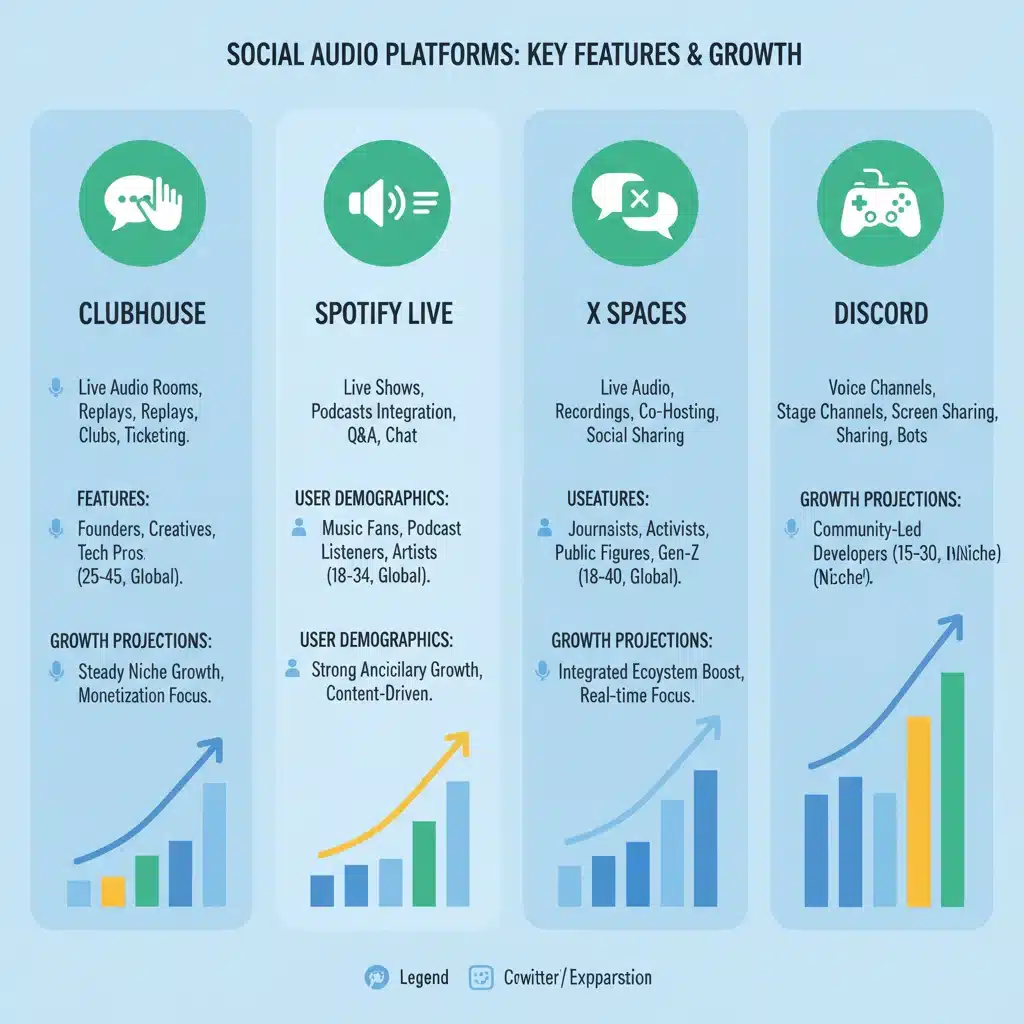
| Platform | Primary Strength | Target Audience | Key Differentiator |
|---|---|---|---|
| Discord | Deep, persistent community building; flexible communication. | Niche communities, gamers, hobbyists, professional groups, educators. | Robust server ecosystem; hybrid communication (text, voice, video). |
| Twitter Spaces | Real-time public discourse; trending topics; broad reach. | Journalists, public figures, news junkies, large event audiences, general Twitter users. | Seamless integration with Twitter’s public feed; immediate discoverability. |
| Spotify Live | Live audio entertainment; artist-fan interaction; podcast extensions. | Music lovers, podcast listeners, artists, creators in entertainment. | Synergy with Spotify’s music/podcast library; entertainment focus. |
| Clubhouse | Curated, high-quality discussions; intimate networking. | Thought leaders, professionals, industry experts, those seeking in-depth conversations. | Emphasis on quality content and speaker caliber; refined audio experience. |
The Future of Social Audio Platforms: Trends and Predictions for 2026 and Beyond
The social audio landscape is far from static. Several key trends are shaping its future, influencing how these dominant platforms will continue to evolve and innovate.
1. Enhanced Monetization for Creators
As the creator economy continues to flourish, social audio platforms will increasingly focus on providing robust and diverse monetization tools. Expect more sophisticated subscription models, direct tipping mechanisms, integrated brand sponsorships, and even NFT-based access passes for exclusive audio content or communities. This will attract more professional creators and elevate the quality of content.
2. AI-Powered Moderation and Content Curation
Managing live audio at scale presents unique challenges. Artificial intelligence will play an even greater role in 2026, assisting with real-time moderation to filter out abuse, identify trending topics, and even generate summaries or highlights of long conversations. AI will also enhance content discovery, personalizing recommendations for users based on their listening habits and interests.
3. Deeper Integration with Other Media Formats
The lines between social audio, video, and text are blurring. Platforms will continue to integrate these formats more seamlessly. Imagine a live audio discussion where participants can instantly share relevant articles, short video clips, or even collaboratively edit documents in real-time, all within the same environment. Discord already excels at this, and others will follow suit.
4. Spatial Audio and Immersive Experiences
With advancements in audio technology, spatial audio is becoming more prevalent. This creates a more immersive listening experience, mimicking how sound travels in the real world. Social audio platforms will increasingly leverage spatial audio to make conversations feel more natural, allowing users to perceive where different speakers are positioned in a virtual room, enhancing the sense of presence and engagement.
5. Hyper-Personalization and Niche Expansion
While the top platforms serve broad audiences, the trend toward hyper-personalization will intensify. Users will expect more granular control over the content they consume and the communities they join. This will lead to an explosion of even more niche-specific audio rooms and servers, catering to highly specialized interests and fostering stronger, more dedicated micro-communities.
6. Cross-Platform Interoperability (Limited)
While full interoperability between competing platforms remains a distant dream, we might see limited forms of cross-platform functionality. This could involve easier sharing of audio content from one platform to another, or even the ability to link profiles across different social audio services, allowing creators to consolidate their audience reach without fully abandoning their preferred platform.
Challenges and Considerations
Despite their dominance, social audio platforms face ongoing challenges:
- Content Moderation: Ensuring safe and inclusive environments remains paramount. As platforms scale, effective moderation strategies that balance free speech with preventing harassment and misinformation are crucial.
- Audience Fatigue: The sheer volume of content across all social media can lead to audience fatigue. Platforms must continuously innovate to keep users engaged and prevent burnout.
- Discoverability: As more rooms and communities emerge, helping users discover relevant content and connect with new voices is a persistent challenge that requires sophisticated algorithms and curation.
- Monetization Sustainability: While monetization opportunities are growing, ensuring they are sustainable and fair for creators of all sizes is vital for the long-term health of the ecosystem.
Conclusion: The Enduring Voice of Connection
In 2026, social audio platforms are no longer a fleeting novelty but a fundamental aspect of our digital lives. Discord, Twitter Spaces, Spotify Live, and Clubhouse have each carved out distinct identities, catering to a diverse array of needs and preferences. Their continued innovation, coupled with the inherent human desire for authentic voice-based connection, ensures their enduring appeal.
As technology advances and user expectations evolve, these platforms will undoubtedly continue to adapt, offering more immersive, personalized, and integrated experiences. The future of social audio promises richer interactions, more vibrant communities, and an even greater amplification of the human voice in the digital sphere. Whether for deep community engagement, real-time public discourse, entertainment, or curated intellectual discussions, social audio platforms are set to remain at the forefront of how we connect and communicate in the years to come.
The sustained growth and diversification of these leading platforms underscore a fundamental truth: the human voice, in its rawest and most immediate form, holds an irreplaceable power to connect, inform, and inspire. As we move further into the 21st century, social audio will continue to be a vital conduit for these essential human experiences, shaping the very fabric of our online interactions.