Digital Activism 2026: Online Movements Shaping America

Anúncios
From Online Communities to Real-World Movements: 5 Case Studies of Digital Activism in 2026 America (INSIDER KNOWLEDGE)
In the rapidly evolving socio-political landscape of 2026, the lines between digital engagement and tangible real-world impact have blurred more than ever. Digital activism 2026 is not just about signing online petitions or sharing viral content; it’s about sophisticated, organized, and often decentralized movements that leverage the power of the internet to catalyze profound societal change. From grassroots campaigns challenging corporate giants to nationwide protests demanding policy reform, the digital realm has become the primary incubator for collective action. This article delves into five compelling case studies from America in 2026, offering an insider’s look into how online communities are successfully transitioning into powerful, real-world movements.
Anúncios
The concept of digital activism has matured significantly. What began as rudimentary online forums and email chains has blossomed into a complex ecosystem of encrypted messaging apps, AI-driven sentiment analysis, blockchain-verified fundraising, and hyper-targeted social media campaigns. These tools, when wielded by passionate and organized online communities, possess an unprecedented ability to mobilize resources, disseminate information, and exert pressure on institutions. Understanding these dynamics is crucial for anyone seeking to comprehend the future of social and political engagement. Our focus on digital activism 2026 offers a unique perspective on these cutting-edge strategies and their tangible outcomes.
The Evolution of Digital Activism: A 2026 Perspective
Before diving into specific case studies, it’s essential to grasp the fundamental shifts that define digital activism 2026. The most notable change is the emphasis on immediate, verifiable impact. Online communities are no longer content with mere awareness; they demand measurable results. This has led to the development of more sophisticated metrics for tracking engagement, fundraising, and legislative progress directly linked to digital campaigns. Furthermore, the rise of decentralized autonomous organizations (DAOs) within activist spaces has introduced new models of governance and resource allocation, allowing for more agile and resilient movements that are less susceptible to traditional forms of suppression.
Anúncios
Another critical aspect is the nuanced understanding of algorithmic bias and platform manipulation. Activists in 2026 are highly adept at navigating the complexities of social media algorithms, employing strategies to amplify their messages while simultaneously guarding against misinformation and coordinated counter-campaigns. This involves a deep understanding of SEO for activism, strategic hashtag usage, and the ethical deployment of AI tools for content creation and audience engagement. The success of digital activism 2026 often hinges on a movement’s ability to not only create compelling narratives but also to ensure those narratives reach the right audiences at the right time, circumventing digital gatekeepers where necessary.
Moreover, the integration of virtual reality (VR) and augmented reality (AR) has opened new avenues for immersive activism. Virtual protests, digital sit-ins, and AR overlays on physical spaces allow for broader participation and innovative forms of expression, transcending geographical limitations and offering a safe space for those who might face risks in real-world demonstrations. These technological advancements underscore the dynamic nature of digital activism 2026, constantly pushing the boundaries of what’s possible in the pursuit of social justice.
Case Study 1: The ‘Clean Water Now’ Movement – Local Impact, National Resonance
Origins and Digital Strategy
The ‘Clean Water Now’ movement began in a small, economically disadvantaged community in rural Ohio, plagued by severe water contamination. Initial attempts to gain attention through traditional local channels failed. In early 2026, a group of concerned residents launched a coordinated digital campaign, leveraging a bespoke decentralized social media platform (D-SMP) focused on environmental justice. This platform, built on blockchain technology, ensured message integrity and resisted censorship, a common challenge in traditional social media.
Their digital activism 2026 strategy involved hyper-local content creation – residents sharing personal stories, videos of contaminated water, and citizen science data. They used AI-powered translation tools to reach diverse linguistic groups within the community and beyond, fostering a sense of shared urgency. Crucially, they employed geo-fencing technology to target local politicians and environmental agencies with direct calls to action, bypassing traditional lobbying efforts.
Transition to Real-World Action
The D-SMP quickly gained traction, not just locally but nationally, as environmental groups and sympathetic individuals discovered their cause. The online community organized a ‘Digital Day of Action,’ where participants simultaneously flooded the inboxes and social media feeds of state and federal representatives with pre-written, personalized messages generated by an AI assistant based on user input. This digital deluge was followed by a series of ‘Virtual Town Halls’ using advanced VR platforms, allowing affected residents to directly confront policymakers in a simulated environment, garnering significant media attention.
The real-world manifestation of the ‘Clean Water Now’ movement culminated in a coordinated series of peaceful demonstrations outside state capitols and EPA offices across several states, all synchronized through the D-SMP. The online fundraising mechanisms, utilizing crypto micro-donations, provided the necessary funds for travel, supplies, and legal support. The movement successfully pressured state authorities to allocate emergency funds for water infrastructure upgrades and initiated a federal investigation, demonstrating the potent synergy of digital activism 2026 and traditional protest.
Case Study 2: ‘Tech for Good’ – Ethical AI and Data Privacy Advocacy
Origins and Digital Strategy
The ‘Tech for Good’ movement emerged from a global coalition of data scientists, ethicists, and privacy advocates in late 2025, concerned about the unchecked development of AI and its implications for human rights. By 2026, their digital activism had solidified into a powerful force. They primarily operated through encrypted forums and a secure, open-source collaborative platform where members developed policy proposals, drafted legislative language, and coordinated research efforts. Their strategy for digital activism 2026 was highly sophisticated, focusing on intellectual lobbying and public education.
They created compelling data visualizations and interactive explainers, making complex AI ethics accessible to the general public. These resources were disseminated through a network of influencers and academic institutions, bypassing mainstream media filters. They also developed an ‘AI Ethics Scorecard’ that publicly rated technology companies on their adherence to ethical AI principles, creating market pressure for change. This scorecard, updated in real-time by community members, became a trusted resource for consumers and investors alike.
Transition to Real-World Action
The ‘Tech for Good’ movement’s real-world impact was felt primarily in legislative chambers and corporate boardrooms. They organized a series of ‘Digital Deliberations’ where experts from various fields engaged in structured debates on AI policy, broadcast live to a global audience. These deliberations informed their legislative recommendations, which were then formally submitted to congressional committees.
Their most significant real-world action involved a coordinated ‘Digital Divestment Day,’ where millions of individuals and institutional investors, influenced by the AI Ethics Scorecard, collectively shifted their investments away from companies with poor ethical AI ratings. This financial pressure, combined with targeted shareholder activism campaigns coordinated online, forced several major tech corporations to revise their AI development guidelines and appoint independent ethics boards. This case exemplifies how digital activism 2026 can wield economic power to drive ethical reform.
Case Study 3: ‘The People’s Pantry’ – Combating Food Insecurity with Decentralized Networks
Origins and Digital Strategy
‘The People’s Pantry’ emerged in early 2026 as a direct response to rising food insecurity in urban areas, exacerbated by economic shifts. This movement was entirely built on the principles of decentralized digital activism. It started as a network of local online groups, primarily using secure, peer-to-peer communication apps and a custom-built blockchain-based resource-sharing platform. The platform allowed individuals and businesses to list surplus food items, volunteer their time for distribution, or request assistance anonymously.
Their digital strategy for digital activism 2026 was ingeniously simple yet effective: connect those with abundance to those in need, bypassing traditional bureaucratic hurdles. The platform used AI-powered logistics algorithms to optimize food collection routes and distribution points, minimizing waste and maximizing efficiency. Users could earn ‘community tokens’ for volunteering or donating, which could then be redeemed for services or goods within the network, fostering a self-sustaining ecosystem of mutual aid.
Transition to Real-World Action
The real-world impact of ‘The People’s Pantry’ was immediate and profound. What began as a few local exchanges quickly scaled into a nationwide network of community-run food hubs. The online platform facilitated the coordination of thousands of volunteers, who physically collected, sorted, and distributed food to millions. They organized ‘pop-up pantries’ in underserved neighborhoods, publicized through hyper-local digital campaigns and influencer partnerships with community leaders.
Beyond direct food distribution, the movement also engaged in advocacy. They used aggregated, anonymized data from their platform to generate reports on food deserts and systemic issues contributing to insecurity. These reports, backed by compelling real-world evidence, were presented to local governments and food policy organizations, leading to several successful pilot programs aimed at improving food access. ‘The People’s Pantry’ showcases how digital activism 2026 can directly address humanitarian crises through decentralized, community-driven solutions.
Case Study 4: ‘Vote Secure’ – Protecting Democratic Integrity Through Cybersecurity Activism
Origins and Digital Strategy
Following concerns about election integrity, the ‘Vote Secure’ movement was formed in mid-2025 by a collective of cybersecurity experts, legal scholars, and citizen journalists. By 2026, their digital activism focused on safeguarding democratic processes through transparency and education. Their primary digital tools included encrypted communication channels, open-source election auditing software, and a fact-checking platform that utilized advanced AI to detect and flag election-related misinformation in real-time.
Their digital activism 2026 strategy involved training citizen observers in digital forensics, teaching them how to identify irregularities in voter rolls, ballot counting, and digital election infrastructure. They created a publicly accessible database of verified election information, debunking myths and providing reliable data. They also ran extensive digital campaigns to educate voters on their rights and the security measures in place, fostering trust in the electoral system.
Transition to Real-World Action
The ‘Vote Secure’ movement’s real-world impact was evident during the 2026 midterm elections. Thousands of digitally trained citizen observers, coordinated through their online platform, were deployed to polling stations and election offices across the country. They used secure apps to report observations, which were then cross-referenced with official data and publicly available information.
When instances of potential irregularities arose, the movement swiftly mobilized its legal and media teams, using the verified data to demand accountability. They successfully pressured several county election boards to conduct independent audits and implement stronger cybersecurity protocols. Their proactive digital activism 2026, combined with on-the-ground presence, significantly enhanced public confidence in the election results and demonstrated the power of collective vigilance in protecting democratic institutions.
Case Study 5: ‘The Climate Collective’ – Global Action, Local Adaptation
Origins and Digital Strategy
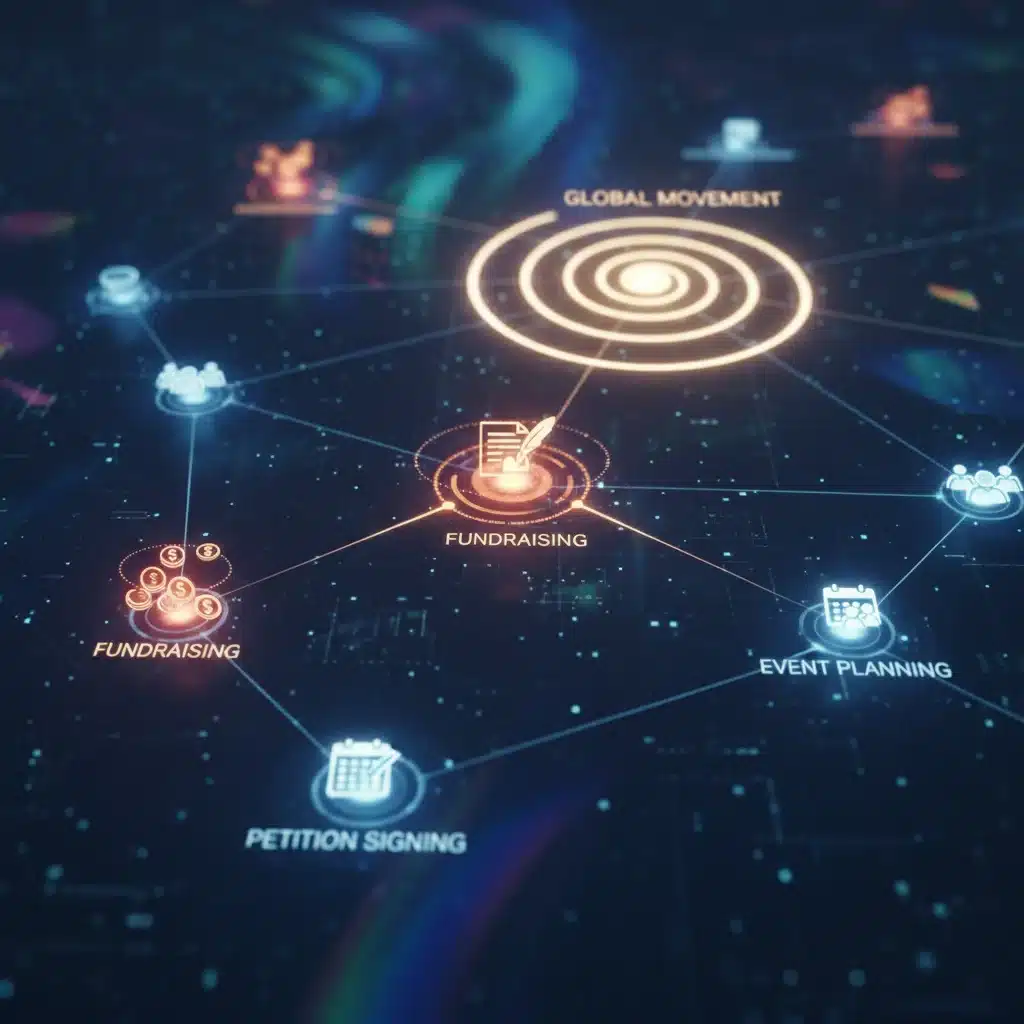
‘The Climate Collective’ is a global network of environmental activists, scientists, and indigenous communities that, by 2026, had perfected a model of digital activism that balances global advocacy with hyper-local action. Their digital strategy for digital activism 2026 is multifaceted, utilizing a federated network of local online hubs connected by a central, AI-powered data analytics platform. This platform aggregates climate data, tracks policy changes, and identifies vulnerable communities and ecosystems.
Each local hub uses a combination of social media, encrypted messaging, and custom AR applications to document environmental changes in their immediate surroundings. For instance, AR apps allow users to visualize projected sea-level rise or deforestation directly in their physical environment, making the abstract threat of climate change tangible. They also leverage gamified educational content to engage younger audiences and foster a sense of collective responsibility.
Transition to Real-World Action
The real-world impact of ‘The Climate Collective’ is both broad and deep. Globally, they coordinate massive ‘Digital Climate Strikes,’ where millions participate in online protests, simultaneously flooding social media with climate-related content and calls to action. These digital strikes are often synchronized with physical demonstrations in major cities, amplifying their message to an unprecedented degree.
Locally, the online hubs translate global climate goals into specific, actionable projects. For example, the platform identifies areas prone to flooding and connects local volunteers with resources to build sustainable infrastructure. They also facilitate ‘citizen science’ projects, where community members collect data using digital tools, contributing to larger scientific databases and informing local adaptation strategies. Through their digital activism 2026, ‘The Climate Collective’ demonstrates how a globally coordinated online effort can empower local communities to take meaningful, effective action against climate change, proving that the digital sphere is a powerful catalyst for environmental stewardship.
The Future of Digital Activism: Key Takeaways for 2026 and Beyond
These five case studies offer a compelling glimpse into the power and potential of digital activism 2026. Several key themes emerge that are crucial for understanding the future trajectory of online communities transforming into real-world movements:
- Decentralization and Resilience: Many successful movements operate on decentralized platforms, making them more resistant to censorship and single points of failure. This model fosters greater autonomy and agility.
- Data-Driven Advocacy: The effective use of data – from citizen science to social media analytics – is paramount. Movements leverage data to inform strategies, measure impact, and build credible arguments for change.
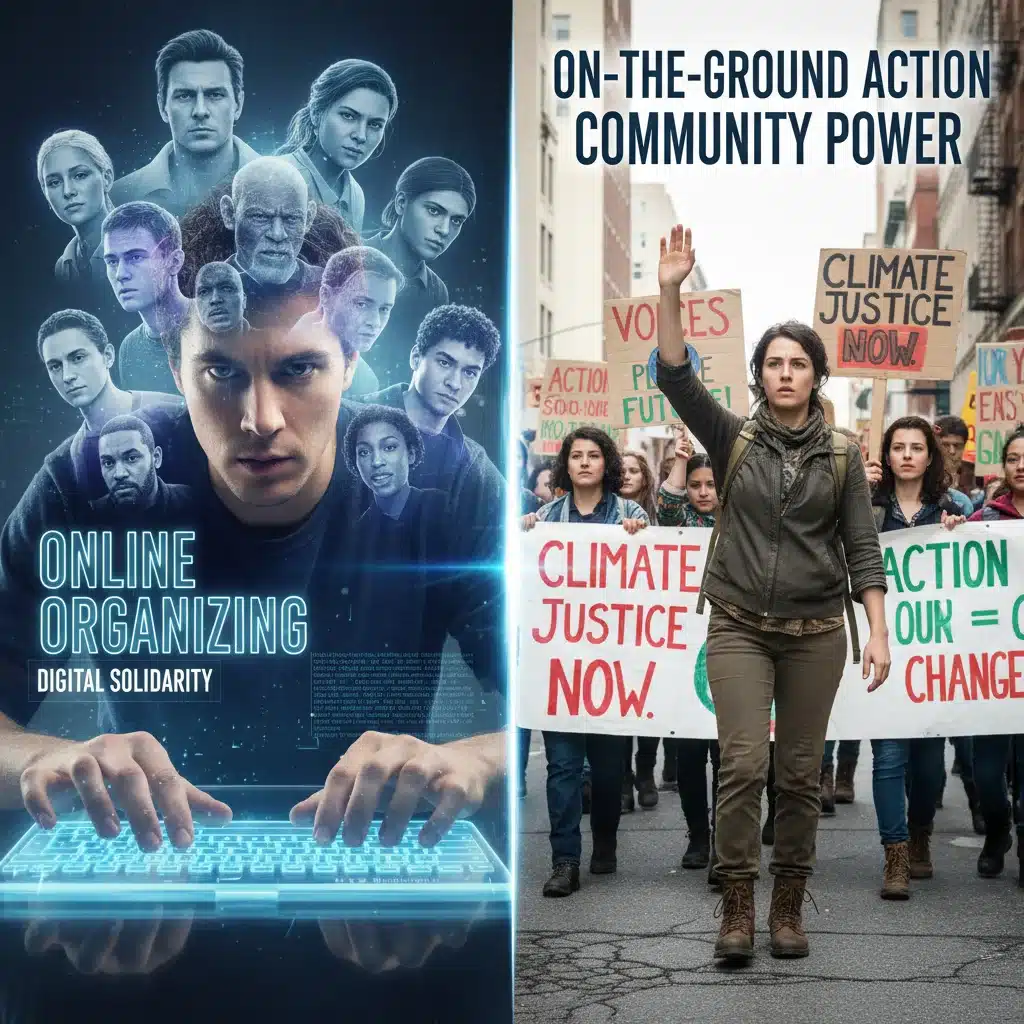
- Hybrid Engagement: The most impactful digital activism 2026 seamlessly blends online organizing with tangible, real-world actions. The digital realm serves as a powerful incubator and coordinator for physical protests, legislative efforts, and direct aid.
- Technological Sophistication: Advanced tools like AI, blockchain, VR/AR, and secure messaging are no longer niche but integral to modern digital activism. Mastery of these technologies provides a significant advantage.
- Community Empowerment: Digital platforms empower individuals and local communities to take ownership of issues, bypassing traditional gatekeepers and fostering a sense of collective agency.
- Ethical Considerations: As digital activism evolves, so too does the need for ethical frameworks around data privacy, algorithmic fairness, and the prevention of misinformation. Successful movements are often those that proactively address these concerns.
The landscape of digital activism 2026 is dynamic and ever-changing. The ability to harness emerging technologies, build resilient online communities, and translate digital momentum into real-world change will continue to define the success of future movements. As we move further into the decade, expect to see even more innovative approaches to collective action, challenging existing power structures and driving the narrative for a more just and equitable society. The lessons learned from these 2026 case studies provide invaluable insights for activists, policymakers, and citizens alike who wish to understand and participate in this transformative era.
The power of digital activism 2026 lies not just in its reach, but in its capacity to foster genuine connection and collective resolve. It’s a testament to human ingenuity and our enduring desire to shape the world around us, one click, one shared story, and one organized action at a time. The future of activism is undoubtedly digital, but its impact will always be profoundly real.