The Future of Work: 4 Digital Tools Transforming US Remote Operations by Early 2026
Anúncios
The Future of Work: 4 Digital Tools Transforming US Remote Operations by Early 2026
The global pandemic irrevocably altered the fabric of professional life, pushing remote work from a niche benefit to a mainstream operational model. As we approach early 2026, the evolution of remote work is not just about adapting; it’s about innovating. The United States, a hub of technological advancement, is at the forefront of this transformation, with businesses rapidly adopting cutting-edge digital tools to enhance productivity, foster collaboration, and ensure security in distributed environments. This article will explore four pivotal digital tools that are set to redefine the future remote work tools landscape in US operations, offering a glimpse into how companies will thrive in an increasingly virtual world.
Anúncios
The shift to remote work has been a catalyst for unprecedented technological development. Companies are no longer asking if they should embrace remote work, but rather how they can optimize it. This optimization hinges on leveraging the right digital tools. These aren’t just incremental improvements; they are foundational shifts in how we interact, manage tasks, and secure information. Understanding these transformations is crucial for any US business aiming to remain competitive and efficient in the coming years. The future remote work tools will not only support existing remote structures but will actively shape new paradigms of employment and organizational design.
1. AI-Powered Assistants and Automation: The Intelligent Co-worker
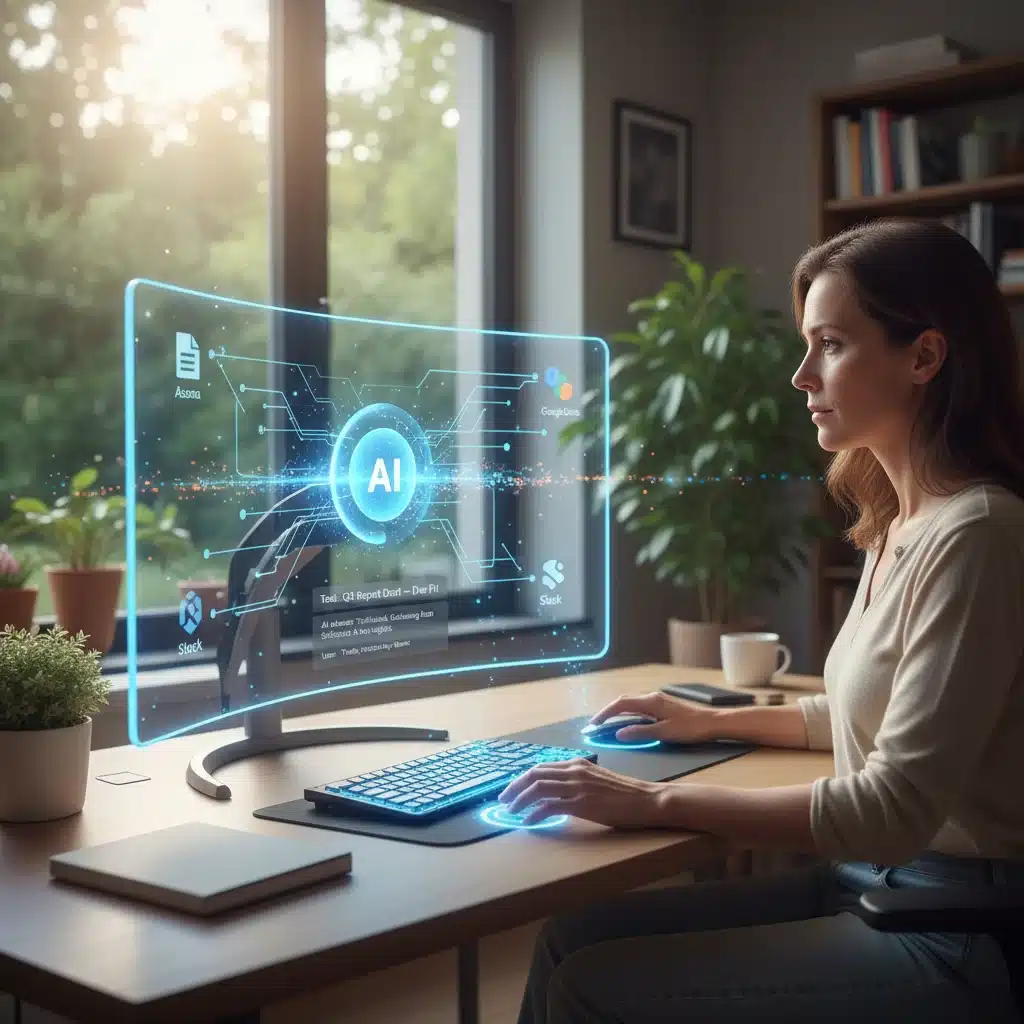
One of the most significant advancements set to transform US remote operations by early 2026 is the widespread adoption of AI-powered assistants and automation tools. These intelligent co-workers are moving beyond simple chatbots, evolving into sophisticated platforms capable of handling complex administrative tasks, data analysis, and even proactive problem-solving. Imagine an AI assistant scheduling all your meetings, summarizing lengthy reports, drafting initial email responses, and even identifying potential bottlenecks in project timelines before they occur. This is the reality that is rapidly approaching.
For remote teams, the benefits of AI-powered assistants are manifold. Firstly, they significantly reduce the burden of mundane, repetitive tasks, freeing up human employees to focus on strategic, creative, and high-value work. This boosts overall productivity and job satisfaction. Secondly, AI can provide personalized support, learning individual preferences and workflows to offer tailored assistance. This level of customization is invaluable in a remote setting where direct, immediate supervision might be less frequent.
Anúncios
Consider the impact on data analysis. AI can sift through vast datasets far more quickly and accurately than any human, identifying trends, anomalies, and insights that might otherwise be missed. For sales teams, AI can analyze customer interactions to suggest optimal outreach strategies. For HR, it can streamline recruitment processes by identifying the most suitable candidates from a large pool. The integration of these future remote work tools will lead to more data-driven decisions and more efficient operations across all departments.
Furthermore, AI is enhancing communication in remote environments. Tools capable of transcribing meetings, identifying key discussion points, and even suggesting follow-up actions ensure that no important information is lost. Language translation in real-time breaks down geographical barriers, making global remote collaboration more seamless than ever before. The sophistication of these AI solutions means they are not just tools, but integral partners in the daily workflow of remote professionals.
The growth of AI in the workplace also necessitates a focus on ethical AI development and deployment. Companies must ensure that these tools are used responsibly, with transparency and fairness. Training employees to effectively collaborate with AI is also key to maximizing their potential. As these future remote work tools become more pervasive, the skill of ‘AI whispering’ – understanding how to best leverage and direct AI – will become a highly sought-after capability in the US job market.
2. Immersive Virtual Reality (VR) and Augmented Reality (AR) Collaboration Spaces
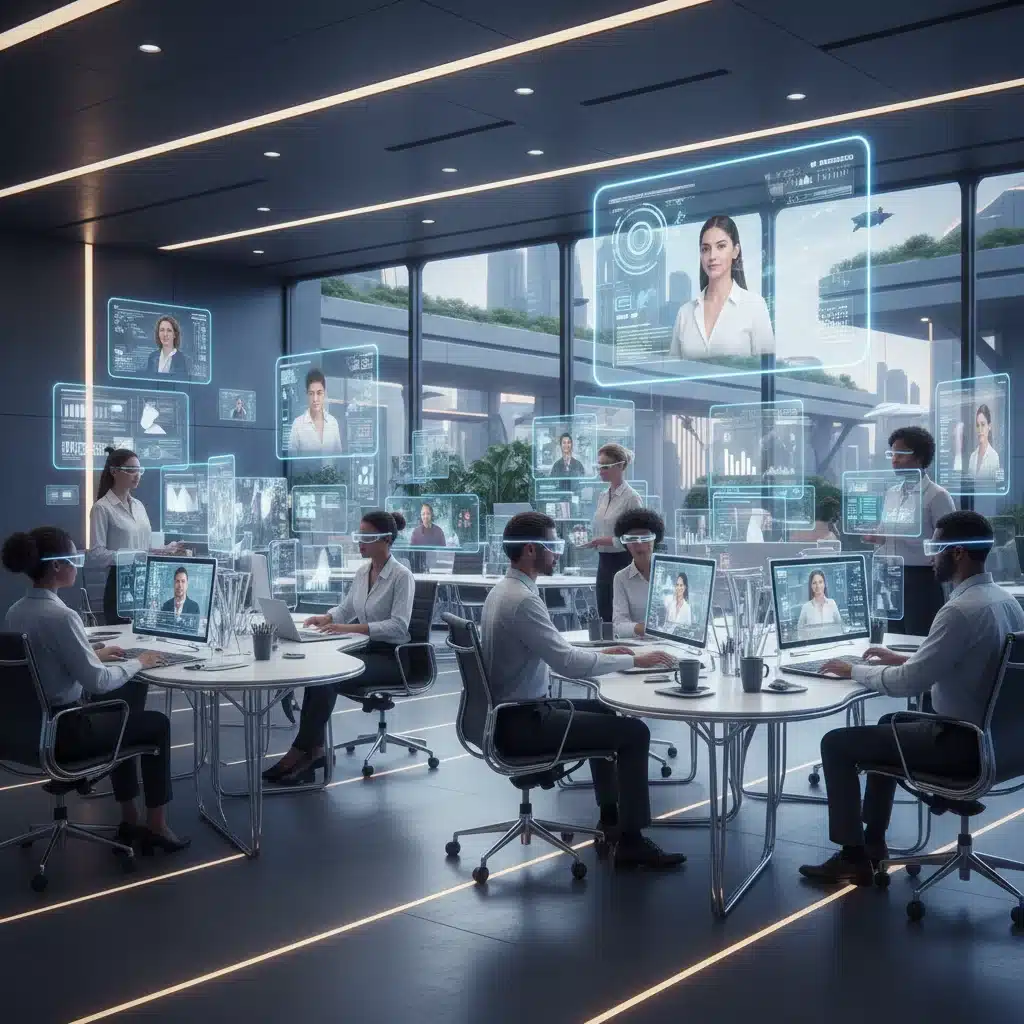
While video conferencing has been the cornerstone of remote collaboration, it often lacks the spontaneity and presence of in-person interactions. This is where immersive VR and AR collaboration spaces are stepping in as game-changers for future remote work tools. By early 2026, we anticipate a significant surge in US businesses adopting these technologies to create more engaging and effective virtual meeting environments.
Imagine conducting a team meeting not as a grid of faces on a screen, but as avatars gathered around a virtual conference table, sharing digital whiteboards, and interacting with 3D models of products. VR collaboration platforms offer exactly this, providing a sense of shared space and presence that traditional video calls cannot replicate. This is particularly beneficial for brainstorming sessions, design reviews, and training simulations where visual and spatial understanding is critical.
AR, on the other hand, overlays digital information onto the real world. For remote field workers, AR glasses can provide real-time instructions, diagnostic information, or expert guidance without needing to physically be present. For architects or engineers, AR allows them to visualize and manipulate 3D designs in their physical space, facilitating better collaboration and problem-solving without needing to be in the same room. These future remote work tools are bridging the gap between the digital and physical, enhancing practical applications for remote teams.
The adoption of VR/AR is driven by several factors. Firstly, the technology itself is becoming more accessible and affordable, with standalone VR headsets improving rapidly in quality and comfort. Secondly, the demand for more engaging remote interactions is high. Companies are realizing that sustained remote work requires more than just functional communication; it requires fostering a sense of connection and shared experience.
Beyond meetings, VR/AR offers unparalleled opportunities for remote training and development. Employees can undergo realistic simulations for complex procedures, practice customer service scenarios, or explore new environments without any physical constraints or risks. This experiential learning is far more effective than traditional e-learning modules, preparing remote workforces with practical skills in a safe and scalable manner.
Challenges remain, including the initial investment, the need for robust internet connectivity, and ensuring comfort for prolonged use. However, as these technologies mature and become more integrated into enterprise solutions, their potential to revolutionize how US remote teams collaborate and learn is undeniable. The future remote work tools will undoubtedly include a strong immersive component, pushing the boundaries of what virtual presence truly means.
3. Hyper-Integrated Collaboration Platforms: The Unified Digital Workspace
The proliferation of remote work has led to a sprawl of digital tools – communication apps, project management software, file-sharing services, and more. This fragmentation often creates inefficiencies, context-switching fatigue, and security vulnerabilities. By early 2026, the trend will strongly lean towards hyper-integrated collaboration platforms that unify these disparate functionalities into a single, seamless digital workspace. These future remote work tools are designed to be the central nervous system of any remote organization.
These platforms go beyond simply connecting existing tools; they deeply integrate them, allowing for fluid workflows and information exchange. Imagine a single interface where you can communicate with colleagues via chat or video, manage project tasks, share and co-edit documents, track progress, and access relevant company resources, all without ever leaving the application. This level of integration minimizes friction and maximizes efficiency for remote teams.
Key features of these next-generation platforms include:
- Unified Communication: Integrating chat, voice, video, and email into one interface.
- Project Management: Seamlessly linking tasks, deadlines, and team assignments with communication channels.
- Document Management: Real-time co-authoring, version control, and secure sharing of files.
- Automated Workflows: Triggering actions based on events (e.g., automatically notifying a team when a document is approved).
- Customizable Dashboards: Providing personalized views of projects, tasks, and communications relevant to each user.
- Third-Party Integrations: Open APIs that allow for easy connection with specialized tools that might not be core to the platform but are essential for specific teams (e.g., CRM, HRIS).
The goal is to create a ‘single pane of glass’ experience for remote employees, reducing the cognitive load associated with navigating multiple applications. This leads to improved focus, reduced errors, and a more streamlined workflow. For managers, these platforms offer comprehensive oversight of team activities and project progress, crucial for maintaining accountability and productivity in a distributed workforce.
Security is also a paramount concern for these integrated platforms. By consolidating operations, it becomes easier to implement consistent security protocols and monitor access. Data governance and compliance are simplified when all relevant activities occur within a controlled environment. The future remote work tools in this category will prioritize robust security features as much as they do functionality.
The competitive landscape among providers of these platforms is driving rapid innovation, leading to more intelligent features, better user experiences, and stronger integration capabilities. US businesses that embrace these hyper-integrated solutions will benefit from increased operational efficiency, better team cohesion, and a more secure digital environment for their remote workforce.
4. Advanced Cybersecurity Solutions for Distributed Environments
As remote work becomes the norm, the attack surface for cyber threats expands dramatically. Employees working from home often use personal networks and devices, making them more vulnerable. Therefore, advanced cybersecurity solutions are not just important; they are absolutely critical for the success and sustainability of US remote operations by early 2026. These future remote work tools will be proactive, adaptive, and comprehensive.
Traditional perimeter-based security models are insufficient for distributed workforces. The focus is shifting towards ‘Zero Trust‘ architectures, where no user or device is inherently trusted, regardless of their location. Every access request is verified based on multiple factors, including user identity, device health, and context. This significantly reduces the risk of unauthorized access and data breaches.
Key cybersecurity advancements for remote workforces include:
- Zero Trust Network Access (ZTNA): Replacing traditional VPNs, ZTNA provides secure, granular access to specific applications rather than the entire network, limiting potential lateral movement for attackers.
- Endpoint Detection and Response (EDR) & Extended Detection and Response (XDR): These solutions monitor endpoints (laptops, mobile devices) and across the entire IT ecosystem (email, cloud, network) for suspicious activity, using AI and machine learning to detect and respond to threats in real-time.
- Cloud Access Security Brokers (CASB): As more data moves to the cloud, CASBs enforce security policies for cloud services, ensuring compliance, data protection, and threat prevention.
- Security Awareness Training with Phishing Simulations: Human error remains a leading cause of breaches. Continuous, engaging, and personalized security awareness training, often incorporating realistic phishing simulations, is vital to educate remote employees about evolving threats.
- Identity and Access Management (IAM) with Multi-Factor Authentication (MFA): Robust IAM systems, coupled with mandatory MFA for all access points, are fundamental to verifying user identities and preventing unauthorized logins.
The sophistication of cyber threats, including ransomware and advanced persistent threats, demands a multi-layered defense strategy. Companies will increasingly invest in security orchestration, automation, and response (SOAR) platforms to automate threat detection and response, minimizing human intervention and reaction time. Proactive threat hunting and vulnerability management will also become standard practices.

Furthermore, data privacy regulations (like CCPA and emerging state-level laws) add another layer of complexity. Cybersecurity solutions must not only protect data but also ensure compliance with these regulations, especially when data is accessed and processed from various remote locations. The future remote work tools in cybersecurity will be designed with privacy-by-design principles.
For US businesses, investing in these advanced cybersecurity measures is not just about protection; it’s about maintaining trust, ensuring business continuity, and complying with regulatory requirements. A strong security posture is a competitive advantage in the remote-first era. Ignoring it is an invitation to disaster. The integration of these robust security frameworks will be non-negotiable for successful remote operations by early 2026.
The Broader Impact of Future Remote Work Tools on US Businesses
The adoption of these four categories of future remote work tools – AI-powered assistants, immersive VR/AR collaboration, hyper-integrated platforms, and advanced cybersecurity – will have a profound and far-reaching impact on US businesses. This isn’t just about making remote work feasible; it’s about making it superior in many aspects to traditional office-based operations.
Enhanced Productivity and Efficiency
By automating repetitive tasks, streamlining workflows, and improving communication, these tools will unlock new levels of productivity. Employees will spend less time on administrative overhead and more time on strategic initiatives, leading to higher output and innovation. The ability to access and utilize data more effectively, driven by AI, will also contribute to smarter, faster decision-making across all levels of an organization.
Improved Employee Experience and Engagement
Remote work, when supported by the right tools, can offer employees greater flexibility, better work-life balance, and reduced commute times. Immersive collaboration tools will combat feelings of isolation, fostering a stronger sense of team cohesion and belonging, even across geographical distances. When employees feel connected and supported by efficient tools, their engagement and satisfaction naturally increase, leading to lower turnover rates.
Greater Access to Talent
With location becoming less of a barrier, US businesses can tap into a global talent pool. These future remote work tools facilitate seamless collaboration with individuals regardless of their physical location, allowing companies to recruit the best candidates, not just the closest ones. This expanded talent reach can lead to more diverse teams, bringing fresh perspectives and skills that drive innovation.
Increased Business Resilience and Agility
The ability to operate effectively regardless of external disruptions (like pandemics, natural disasters, or other unforeseen events) becomes a core competency. Companies equipped with these robust remote work tools are inherently more resilient and agile, able to pivot operations quickly and maintain continuity. This strategic advantage is invaluable in an increasingly unpredictable world.
Cost Optimization
While there is an initial investment in technology, the long-term cost savings associated with reduced office space, lower utility bills, and potentially optimized travel expenses can be substantial. Furthermore, increased efficiency and productivity directly translate to better financial performance. The future remote work tools will enable businesses to operate leaner and smarter.
Challenges and Considerations
Despite the immense benefits, the journey to fully leveraging these future remote work tools is not without its challenges. Companies must address issues such as:
- Digital Divide: Ensuring all employees have equitable access to necessary technology and reliable internet.
- Skill Gaps: Training the workforce to effectively use new, complex tools and adapt to evolving work paradigms.
- Change Management: Overcoming resistance to new technologies and processes, fostering a culture of innovation and adaptability.
- Data Overload and Privacy: Managing the vast amounts of data generated by these tools and ensuring compliance with privacy regulations.
- Employee Well-being: Preventing digital fatigue and ensuring a healthy work-life balance in a perpetually connected environment.
Proactive strategies to address these challenges will be crucial for successful implementation and adoption of these transformative technologies. Investing not only in the tools themselves but also in the people who use them will be paramount.
Conclusion: Embracing the Digital Horizon
By early 2026, the landscape of US remote operations will be dramatically reshaped by the proliferation and integration of advanced digital tools. AI-powered assistants will act as intelligent co-workers, automating tasks and providing insights. Immersive VR and AR will revolutionize collaboration, making virtual interactions more engaging and productive. Hyper-integrated platforms will unify disparate tools into seamless digital workspaces, enhancing efficiency and reducing friction. And robust, adaptive cybersecurity solutions will form the bedrock of trust and security in distributed environments. These future remote work tools are not mere accessories; they are fundamental drivers of organizational success.
For US businesses, the message is clear: embracing these technological advancements is not optional but essential for staying competitive, attracting top talent, and fostering a resilient and innovative workforce. The future of work is undeniably remote-first, digitally empowered, and intelligently secured. Companies that proactively invest in and strategically implement these transformative tools will be best positioned to thrive in the evolving digital economy, leading the charge into a new era of productivity and collaboration.