AI Content Creation: Boost US Marketing Efficiency by 30% Today
Anúncios
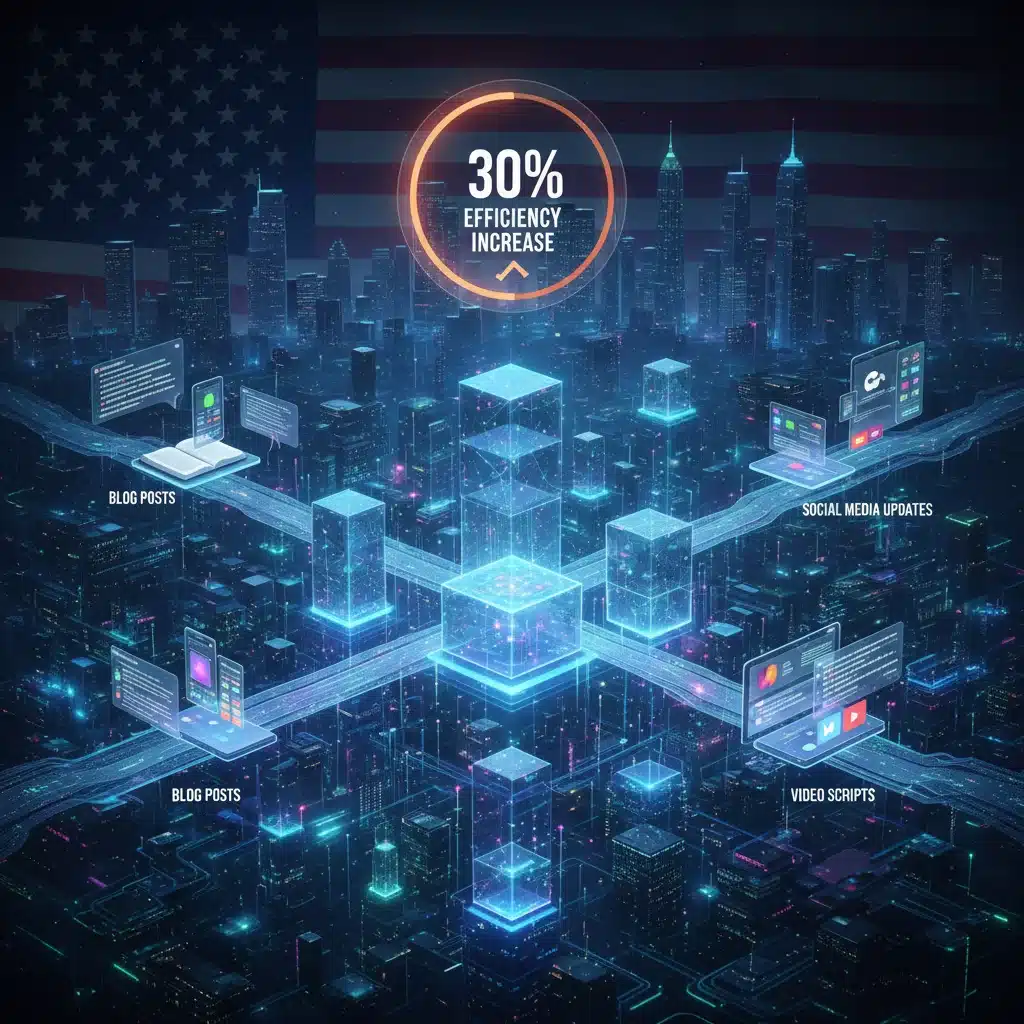
In the dynamic and ever-evolving landscape of digital marketing, staying ahead means embracing innovation. For businesses in the United States, the quest for enhanced efficiency, improved ROI, and sustained growth is relentless. This pursuit has led to a groundbreaking solution: AI-powered content creation. Far from being a futuristic fantasy, artificial intelligence is now a tangible, powerful tool capable of revolutionizing how US companies approach their marketing efforts. Reports and industry analyses consistently point towards significant gains, with many experts suggesting that integrating AI into content workflows can boost marketing efficiency by as much as 30% or even more in the current year.
The promise of such a substantial increase in efficiency is not merely about saving time; it’s about unlocking new levels of creativity, personalization, and strategic depth that were once unattainable. From generating compelling ad copy and engaging social media posts to crafting comprehensive blog articles and optimizing SEO, AI is transforming every facet of the content lifecycle. This comprehensive guide will delve into the intricacies of leveraging AI content marketing to achieve this remarkable efficiency boost, providing actionable insights, practical strategies, and a glimpse into the future of marketing for US businesses.
Anúncios
The digital realm is saturated with content, making it increasingly challenging for businesses to capture and retain audience attention. Traditional content creation methods, while valuable, often struggle to keep pace with the sheer volume and velocity required to maintain a competitive edge. This is where AI steps in, offering a scalable, intelligent, and cost-effective alternative that complements human creativity. By automating repetitive tasks, analyzing vast datasets for audience insights, and even drafting original content, AI empowers marketing teams to focus on higher-level strategy and innovation, ultimately driving that crucial 30% efficiency improvement.
Understanding the full potential of AI content marketing requires a deep dive into its applications, benefits, and the strategic considerations necessary for successful implementation. This article aims to equip US marketers with the knowledge and tools to navigate this new frontier, ensuring they can harness AI’s power to not only meet but exceed their marketing objectives.
Anúncios
The Dawn of AI-Powered Content Creation: A Paradigm Shift for US Marketing
The landscape of content creation has undergone a seismic shift with the advent of AI. What was once the exclusive domain of human writers, designers, and strategists is now being augmented and, in some cases, transformed by intelligent algorithms. For US businesses, this isn’t just a technological upgrade; it’s a fundamental change in how marketing campaigns are conceived, executed, and optimized. The core benefit lies in the ability of AI to process, analyze, and generate content at a scale and speed that is simply impossible for human teams alone.
What Exactly is AI-Powered Content Creation?
At its heart, AI-powered content creation involves using artificial intelligence technologies, such as natural language processing (NLP), machine learning (ML), and generative AI models (like GPT-4), to assist in or fully automate the creation of various forms of content. This includes, but is not limited to:
- Text Generation: From blog posts, articles, and product descriptions to email newsletters, ad copy, and social media updates.
- Image and Video Generation: AI can create unique visuals, edit existing media, and even generate short video clips based on text prompts.
- Content Optimization: Analyzing existing content for SEO effectiveness, readability, and audience engagement, then suggesting improvements.
- Personalization: Tailoring content to individual user preferences and behaviors at scale, enhancing relevance and impact.
The sophistication of these tools is constantly evolving. Early AI content generators were often criticized for producing robotic or uninspired text. However, modern AI models are capable of generating highly nuanced, engaging, and contextually relevant content that is often indistinguishable from human-written material. This leap in quality is what makes AI content marketing a game-changer for businesses seeking a 30% efficiency boost.
Why Now? The Urgency for US Businesses
Several factors contribute to the pressing need for US businesses to adopt AI in their content strategies:
- Increased Content Demand: Consumers expect a constant stream of fresh, relevant content across multiple platforms. Meeting this demand with traditional methods is resource-intensive and often unsustainable.
- Competitive Landscape: The US market is fiercely competitive. Businesses that can produce more high-quality content faster and more efficiently gain a significant advantage.
- Data Overload: Marketers are inundated with data. AI can sift through this data to extract actionable insights, informing content strategy and personalization efforts.
- Cost Efficiency: While there’s an initial investment in tools and training, the long-term cost savings in content production can be substantial, directly contributing to that 30% efficiency gain.
- Scalability: AI allows businesses to scale their content operations without proportionally increasing human resources, making it ideal for growth-oriented companies.
The integration of AI is no longer a luxury but a strategic imperative for US businesses aiming to optimize their marketing spend and achieve superior results in the current economic climate.
Strategies for Achieving a 30% Marketing Efficiency Boost with AI
Attaining a 30% boost in marketing efficiency through AI content creation isn’t a passive process; it requires a strategic, deliberate approach. Here are key strategies that US businesses can implement:
1. Automating Content Ideation and Research
One of the most time-consuming aspects of content creation is brainstorming ideas and conducting research. AI tools can significantly streamline this process:
- Topic Generation: AI can analyze trending topics, competitor content, and audience queries to suggest relevant and high-performing content ideas.
- Keyword Research: Advanced AI platforms integrate with SEO tools to identify high-value keywords and content gaps, informing your AI content marketing strategy.
- Audience Insight: AI can analyze customer data, social media conversations, and search patterns to uncover deep audience insights, enabling the creation of highly targeted content.
By automating these initial steps, marketing teams can save countless hours, allowing them to focus on refining ideas and developing unique angles that resonate with their target demographic.
2. Accelerating Content Generation Across Channels
This is where AI truly shines in boosting efficiency. AI writing assistants can generate drafts for a wide array of content types:
- Blog Posts and Articles: AI can produce outlines, paragraphs, or even full first drafts, significantly reducing the time spent on writing. Human editors can then refine and add their unique voice.
- Social Media Copy: AI can generate multiple variations of social media posts for different platforms, optimizing for character limits, hashtags, and engagement.
- Email Marketing: From subject lines to full email campaigns, AI can craft compelling copy that improves open rates and click-through rates.
- Product Descriptions: For e-commerce businesses, AI can generate unique, SEO-friendly product descriptions at scale, saving immense time and ensuring consistency.
- Ad Copy: AI can create various ad headlines and body copy, often testing different versions to identify the most effective ones for campaigns.
The speed at which AI can generate content means businesses can maintain a more consistent publishing schedule, keeping their audience engaged and their SEO fresh.
3. Enhancing Personalization and Localization
Generic content rarely performs well. AI enables hyper-personalization and localization, which are critical for US businesses targeting diverse audiences:
- Individualized Content: AI can analyze user behavior data to deliver personalized content recommendations, email campaigns, and website experiences.
- Geographic and Cultural Nuances: For a country as diverse as the US, AI can help tailor content to specific regions, demographics, and cultural contexts, making it more relevant and impactful.
- Dynamic Content: AI can dynamically adjust website content, offers, and calls to action based on a visitor’s profile and past interactions.
This level of personalization not only improves engagement but also significantly boosts conversion rates, contributing directly to marketing efficiency.
4. Optimizing for SEO and Performance
AI is an invaluable asset for SEO, ensuring that the content created is discoverable and performs well:
- On-Page SEO: AI tools can analyze content for keyword density, readability, internal linking opportunities, and meta descriptions, providing real-time suggestions for optimization.
- Content Audits: AI can quickly audit existing content, identifying underperforming pieces, duplicate content, and opportunities for updates or repurposing.
- Predictive Analytics: Some AI platforms can predict content performance based on historical data, helping marketers make data-driven decisions about what to create next.
By integrating AI into the SEO workflow, businesses can ensure their content not only gets created efficiently but also ranks higher and drives more organic traffic.
5. Streamlining Content Distribution and Promotion
Beyond creation, AI can also optimize how content is distributed and promoted:
- Automated Scheduling: AI can analyze audience activity patterns to recommend the best times to post content on social media and other platforms.
- Targeted Distribution: AI can identify the most relevant channels and audiences for specific content pieces, ensuring maximum reach and impact.
- Performance Monitoring: AI-powered analytics tools can track content performance in real-time, providing insights into what’s working and what’s not, allowing for rapid adjustments to promotion strategies.
This holistic approach, from ideation to distribution, is what truly maximizes the efficiency gains from AI content marketing.
Key AI Tools and Technologies for US Marketers
The market for AI content creation tools is booming, offering a wide array of solutions for US businesses. Choosing the right tools is crucial for maximizing the 30% efficiency boost.
Generative AI Platforms
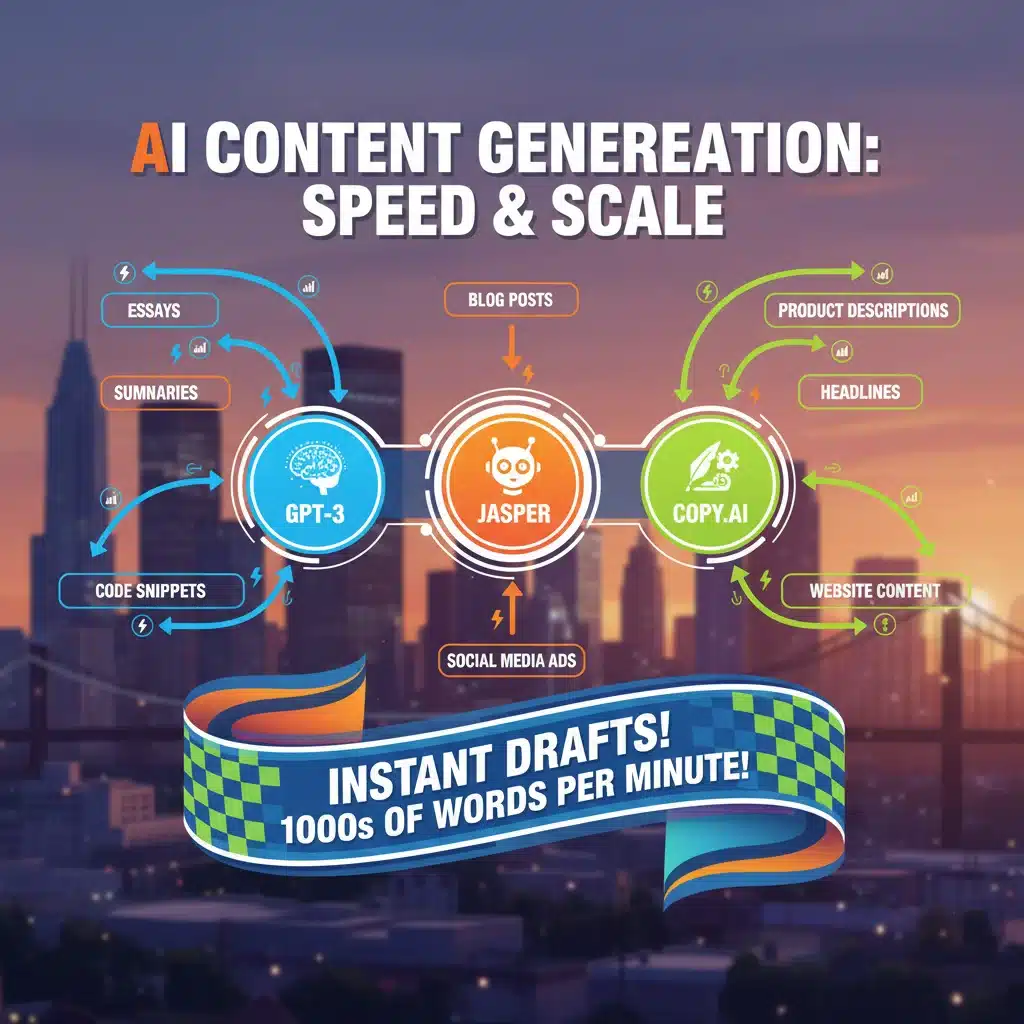
- GPT-3/GPT-4 and Variants: These large language models (LLMs) are the backbone of many AI writing assistants. They can generate human-like text across various styles and topics.
- Jasper (formerly Jarvis): A popular AI writing assistant specifically designed for marketers, capable of generating blog posts, ad copy, product descriptions, and more.
- Copy.ai: Offers a suite of tools for generating marketing copy, including social media content, email subject lines, and sales copy.
- Surfer SEO AI: Integrates AI writing with SEO optimization, helping users create content that ranks well.
AI-Powered Optimization and Analytics Tools
- MarketMuse: Uses AI to analyze content performance, identify content gaps, and provide recommendations for content strategy and optimization.
- Clearscope: Helps optimize content for search engines by providing keyword suggestions and readability scores.
- Grammarly Business: While primarily a grammar checker, its AI-powered suggestions extend to tone, clarity, and engagement, enhancing content quality.
Visual and Multimodal AI Tools
- Midjourney/DALL-E 2/Stable Diffusion: AI art generators that can create unique images from text prompts, useful for blog graphics, social media visuals, and ad creatives.
- Synthesia/Descript: AI tools for video creation and editing, allowing users to generate realistic AI avatars for presentations or transcribe and edit video content with ease.
The key is to select tools that align with your specific marketing goals and integrate seamlessly into your existing workflows. A combination of these tools can create a powerful ecosystem for AI content marketing.
Best Practices for Implementing AI Content Marketing in the US
Simply adopting AI tools isn’t enough; successful implementation requires adherence to best practices to truly unlock that 30% efficiency gain and maintain content quality.
1. Human Oversight is Non-Negotiable
While AI can generate content, human oversight remains critical. AI-generated content should always be reviewed, edited, and refined by human marketers. This ensures accuracy, maintains brand voice, and adds the nuanced, emotional touch that only humans can provide. AI is a co-pilot, not an autonomous driver.
2. Define Clear Objectives and Metrics
Before integrating AI, clearly define what you aim to achieve (e.g., increase blog post production by X%, improve SEO rankings for Y keywords, boost social media engagement by Z%). Establish measurable KPIs to track the impact of AI on your marketing efficiency and adjust your strategy as needed.
3. Start Small, Scale Gradually
Don’t try to overhaul your entire content strategy overnight. Begin by implementing AI in specific areas, such as generating social media captions or drafting product descriptions. As your team becomes comfortable and you see positive results, gradually expand AI’s role into more complex content types.
4. Train Your AI (Where Applicable)
Many advanced AI models can be trained on your brand’s existing content, style guides, and messaging. Investing time in training the AI will result in outputs that are more aligned with your brand voice and less likely to require extensive editing, further boosting efficiency.
5. Embrace a Hybrid Approach
The most effective AI content marketing strategies combine the strengths of AI with human creativity. Use AI for repetitive tasks, data analysis, and generating first drafts. Empower your human team to focus on strategic thinking, creative storytelling, emotional resonance, and high-level editing.
6. Stay Updated with AI Developments
The field of AI is evolving rapidly. Regularly research new tools, features, and best practices to ensure your business is leveraging the latest advancements to maintain its competitive edge and continue improving efficiency.

Overcoming Challenges in AI Content Marketing Adoption
While the benefits are clear, adopting AI content marketing isn’t without its challenges. US businesses need to be prepared to address these head-on.
1. Maintaining Brand Voice and Consistency
One of the primary concerns is ensuring that AI-generated content aligns with a brand’s unique voice and tone. This requires rigorous human review and, where possible, training the AI on extensive brand guidelines and existing high-quality content.
2. Ensuring Factual Accuracy and Originality
AI models can sometimes generate inaccurate information or inadvertently reproduce existing content. A robust fact-checking process and originality checks (e.g., plagiarism detection) are essential before publishing any AI-generated material.
3. Data Privacy and Security Concerns
When using AI tools, especially those that process proprietary data or customer information, US businesses must be vigilant about data privacy and security. Choosing reputable vendors with strong data protection policies is crucial.
4. Integration with Existing Workflows
Seamless integration of new AI tools into existing marketing workflows can be complex. Planning, pilot programs, and proper training for marketing teams are necessary to avoid disruption and ensure smooth adoption.
5. The Learning Curve for Teams
Marketing professionals may need to develop new skills to effectively prompt, manage, and edit AI-generated content. Investing in training and upskilling your team is vital for successful implementation and maximizing the efficiency gains from AI content marketing.
The Future of Content Creation: Beyond the 30% Boost
The current 30% efficiency boost in marketing through AI content creation is just the beginning. As AI technology continues to advance, its capabilities will expand exponentially, leading to even more profound transformations in the marketing landscape for US businesses.
Hyper-Personalization at Scale
Future AI models will likely enable even more sophisticated hyper-personalization, delivering truly unique content experiences for each individual user, not just based on segments but on real-time behavior and predictive analytics. Imagine an AI that can dynamically generate an entire landing page, complete with custom visuals and copy, tailored precisely to a visitor’s immediate needs and preferences upon arrival.
Multimodal Content Generation
The current focus is often on text, but AI is rapidly progressing in generating high-quality images, video, and audio. The future will see AI creating entire multimedia campaigns from a single prompt, orchestrating text, visuals, and sound to tell a cohesive brand story across all channels. This will further reduce production times and costs, pushing efficiency gains beyond the initial 30%.
Proactive Content Strategy and Optimization
AI will move beyond reactive analysis to proactive strategy formulation. It will not only identify content gaps but also predict future trends, audience shifts, and competitive moves, then automatically generate and optimize content to capitalize on these insights before human marketers even identify them. This predictive power will be invaluable for maintaining a competitive edge in the fast-paced US market.
Enhanced Human-AI Collaboration
The relationship between human marketers and AI will become even more symbiotic. AI will handle the heavy lifting of data analysis, content generation, and optimization, freeing human creativity to focus on high-level strategic thinking, emotional connection, and brand storytelling. This collaboration will lead to unprecedented levels of innovation and effectiveness in AI content marketing.
Ethical AI and Content Governance
As AI becomes more integrated, ethical considerations, bias detection, and content governance will become paramount. Future AI systems will likely incorporate more robust mechanisms for ensuring fairness, transparency, and compliance with regulations, addressing concerns around AI-generated misinformation or harmful content.
Conclusion: Embrace AI to Propel Your US Marketing Forward
The opportunity for US businesses to significantly boost their marketing efficiency, potentially by 30% or more, through AI-powered content creation is not just a possibility—it’s a present-day reality. By strategically integrating AI tools for ideation, generation, personalization, and optimization, companies can streamline their workflows, scale their content output, and achieve unprecedented levels of engagement and ROI.
The journey into AI content marketing requires a commitment to innovation, a willingness to adapt, and a strategic vision for human-AI collaboration. While challenges exist, they are surmountable with careful planning, robust oversight, and continuous learning. The businesses that embrace this technological revolution today will be the ones that define the future of marketing in the United States, securing a competitive advantage and driving sustainable growth in the years to come.
Don’t let your business be left behind. Explore the vast potential of AI content creation, invest in the right tools and training, and prepare to witness a transformative increase in your marketing efficiency and overall business success.