The Great Tech Resignation: Why 30% of U.S. Tech Workers Plan to Switch Jobs by Mid-2026

Anúncios
The Great Tech Resignation: Why 30% of U.S. Tech Workers Plan to Switch Jobs by Mid-2026
The landscape of the U.S. tech industry is on the brink of a monumental shift. Recent data and insider insights suggest that an astonishing 30% of U.S. tech workers are actively planning to switch jobs by mid-2026. This isn’t just a ripple; it’s a tidal wave, signaling what many are calling ‘The Great Tech Resignation.’ Understanding the multifaceted reasons behind this impending exodus is crucial for employers, policymakers, and indeed, every individual navigating the dynamic world of technology.
This article delves deep into the core drivers of this significant trend, exploring the economic, cultural, and personal factors compelling tech professionals to seek new horizons. We’ll examine recent updates, draw upon insider knowledge, and provide a comprehensive analysis of what this means for the future of the tech sector, talent acquisition, and employee retention strategies.
Anúncios
The Unsettling Statistics: A Third of the Workforce on the Move
The statistic itself is jarring: 30% of U.S. tech workers. To put that into perspective, imagine nearly one in three engineers, developers, data scientists, project managers, and cybersecurity experts in your organization or network contemplating a departure within the next two years. This isn’t a speculative figure; it’s based on extensive surveys and market analysis reflecting current sentiment and future intentions within the tech workforce. The implications are profound, ranging from potential talent shortages and increased recruitment costs to a significant loss of institutional knowledge and project continuity.
This anticipated wave of departures isn’t uniform across all segments of the tech industry. Certain specializations, demographic groups, and company cultures are experiencing higher levels of dissatisfaction and intent to leave. For instance, younger professionals, those in highly competitive niches like AI and machine learning, and employees in companies with rigid work policies often report a greater propensity to seek new roles. Understanding these nuances is key to developing targeted retention strategies.
Root Causes of the Great Tech Resignation: Beyond Compensation
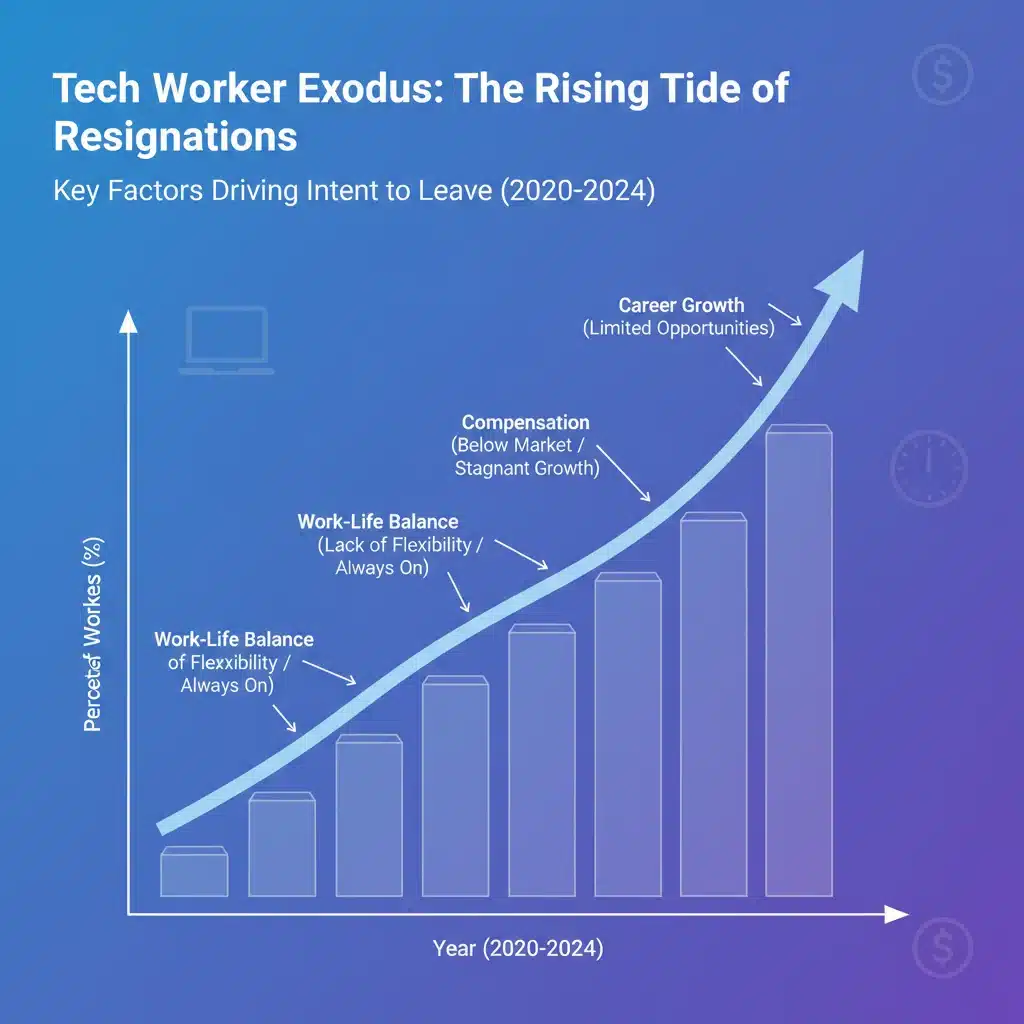
While compensation always plays a role in career decisions, the driving forces behind this impending tech worker resignation are far more complex and deeply rooted. Several key factors are converging to create this perfect storm:
Anúncios
1. Burnout and Work-Life Imbalance
The tech industry is notorious for its demanding pace, long hours, and pressure to innovate constantly. The pandemic exacerbated these issues, blurring the lines between work and home. Many tech professionals, particularly those in high-growth or startup environments, report experiencing significant burnout. The expectation of ‘always-on’ availability, coupled with intense project deadlines, has led to a widespread desire for better work-life balance. Employees are increasingly prioritizing their mental health and personal well-being over career advancement in overly demanding roles.
This isn’t merely anecdotal; studies consistently show high rates of stress and anxiety among tech workers. Companies that fail to address these concerns through flexible work arrangements, reasonable workloads, and mental health support are likely to see their top talent walk out the door. The pursuit of a sustainable career path is a major motivator for the tech worker resignation trend.
2. The Search for Meaning and Impact
Today’s tech professionals, especially the younger generations, are not just looking for a job; they’re looking for purpose. They want to contribute to projects that make a tangible impact, align with their values, and offer opportunities for personal and professional growth. When roles become monotonous, when innovation is stifled by bureaucracy, or when company values don’t resonate, dissatisfaction sets in. Many are seeking environments where their skills can be fully utilized to solve meaningful problems and where their contributions are visibly appreciated.
This desire for meaning extends to ethical considerations. Tech workers are increasingly scrutinizing their employers’ ethical practices, especially concerning data privacy, AI ethics, and environmental impact. Companies perceived as lacking in these areas may struggle to retain talent, as professionals seek organizations whose missions align with their personal moral compass.
3. Stagnant Career Growth and Skill Development
The tech industry evolves at a breathtaking pace. What was cutting-edge yesterday can be obsolete tomorrow. Tech workers are acutely aware of the need for continuous learning and skill development to remain relevant. However, many companies fall short in providing adequate opportunities for internal growth, training, and upskilling. When employees feel their career path is stagnant, or that their current role isn’t equipping them with the skills needed for future opportunities, they will naturally look elsewhere.
The allure of new technologies, challenging projects, and structured learning programs offered by other companies can be a powerful draw. Organizations that invest in their employees’ long-term development, offering clear pathways for advancement and access to cutting-edge tools and training, are better positioned to weather the impending tech worker resignation.
4. Remote and Hybrid Work Expectations
The pandemic irrevocably altered perceptions of work flexibility. Remote and hybrid work models, once niche, are now mainstream expectations for many tech professionals. While some companies have embraced these changes, others have attempted to enforce strict return-to-office mandates. This clash between employee expectations and corporate policies is a significant driver of discontent.
The ability to work from anywhere offers unparalleled flexibility, reduces commute times, and can improve work-life balance. Companies that fail to offer competitive flexible work options risk losing talent to organizations that do. The freedom to choose where and how one works has become a non-negotiable for a substantial portion of the tech workforce, directly contributing to the tech worker resignation phenomenon.
Insider Knowledge: What Tech Workers Are Really Saying
Beyond the statistics, conversations with tech professionals reveal a deeper narrative. Many feel undervalued, overworked, and disconnected from leadership. There’s a growing sentiment that while tech companies often boast about their innovative cultures, the reality on the ground can be one of intense pressure, limited autonomy, and a lack of genuine support.
One common complaint is the perceived lack of transparency from management, particularly concerning company direction, performance metrics, and career progression. When employees feel they are not privy to crucial information, trust erodes, and a sense of disenfranchisement grows. This often leads to employees seeking environments where communication is more open and where they feel truly part of the decision-making process.
Furthermore, the allure of competitive offers from smaller, more agile startups or even established companies in different sectors is a constant temptation. The perception that ‘the grass is greener’ is often fueled by recruiters actively headhunting top talent with promises of better pay, more exciting projects, and improved work conditions. This aggressive recruitment landscape further accelerates the tech worker resignation trend.
The Economic Impact: A Looming Talent Crisis
The departure of 30% of tech workers is not merely an HR challenge; it’s an economic one. The U.S. tech sector is a cornerstone of the national economy, driving innovation, creating jobs, and contributing significantly to GDP. A mass exodus of talent could lead to several detrimental outcomes:
- Increased Recruitment Costs: Replacing experienced tech professionals is expensive. Recruitment fees, onboarding processes, and the lost productivity during the hiring period can amount to significant financial outlays.
- Innovation Stagnation: A constant churn of talent can disrupt project continuity and hinder innovation. New teams take time to gel, and the loss of experienced individuals can mean losing critical institutional knowledge and expertise.
- Reduced Competitiveness: Companies struggling with talent retention may find themselves at a disadvantage against competitors who manage to build and maintain stable, high-performing tech teams.
- Wage Inflation: As the demand for skilled tech workers outstrips supply, wages are likely to continue to rise, putting pressure on company budgets and potentially leading to a hiring freeze in some areas.
The cumulative effect of these factors could slow down technological advancement and economic growth within the sector. Addressing the tech worker resignation is therefore not just about employee satisfaction, but about safeguarding the future of the industry.
Strategies for Retention: Rebuilding Trust and Value
For companies looking to mitigate the impact of the tech worker resignation, a proactive and holistic approach is essential. Simply offering higher salaries might provide a temporary fix but won’t address the underlying issues. Here are key strategies:
1. Prioritize Employee Well-being and Mental Health
Implement robust programs that support mental health, reduce burnout, and promote work-life balance. This includes offering flexible work schedules, encouraging paid time off, providing access to mental health resources, and ensuring reasonable workloads. Leaders should model healthy work habits and foster a culture where well-being is genuinely valued, not just talked about.
2. Invest in Career Development and Upskilling
Create clear career progression paths and invest heavily in learning and development opportunities. Offer access to advanced training, certifications, mentorship programs, and opportunities to work on diverse projects. Empower employees to acquire new skills and stay ahead of technological curves. This demonstrates a commitment to their long-term growth and makes them feel valued.
3. Foster a Culture of Transparency and Communication
Promote open and honest communication from leadership. Share company goals, challenges, and successes. Provide regular, constructive feedback and create channels for employees to voice their concerns and ideas without fear of retribution. A transparent culture builds trust and makes employees feel like integral parts of the organization.
4. Embrace Flexible Work Models
Unless absolutely critical for specific roles, embrace remote or hybrid work models. Understand that flexibility is a powerful retention tool. Develop clear policies and provide the necessary tools and support to ensure remote teams remain productive and connected. This acknowledges the evolving expectations of the modern tech workforce and directly addresses a major driver of the tech worker resignation.
5. Cultivate a Sense of Purpose and Impact
Regularly communicate the impact of employees’ work on the company’s mission and on the wider world. Connect individual contributions to the larger organizational goals. Involve employees in projects that align with their values and provide opportunities for them to contribute to social good initiatives. When employees feel their work matters, they are more likely to stay.

The Role of Leadership in Navigating the Tech Worker Resignation
Effective leadership is paramount in navigating this challenging period. Leaders must be empathetic, adaptable, and forward-thinking. They need to actively listen to their teams, understand their concerns, and be willing to implement significant changes. This isn’t a time for maintaining the status quo; it’s a time for reinvention.
Leaders should focus on building resilient teams, fostering psychological safety, and empowering employees with autonomy. They must recognize that the traditional command-and-control leadership style is increasingly ineffective in attracting and retaining top tech talent. Instead, a coaching and supportive approach that champions growth and well-being will be far more successful in mitigating the tech worker resignation.
Looking Ahead: The Future of Tech Employment
The anticipated tech worker resignation by mid-2026 is not just a temporary blip; it represents a fundamental shift in the employer-employee dynamic within the tech industry. It underscores a growing demand for workplaces that offer more than just competitive salaries – workplaces that prioritize well-being, provide meaningful work, foster growth, and embrace flexibility.
Companies that proactively adapt to these evolving expectations will not only retain their valuable talent but also attract the next generation of tech innovators. Those that fail to heed these warnings risk facing severe talent shortages, diminished innovation, and a significant competitive disadvantage. The future of tech employment hinges on creating environments where professionals feel valued, respected, and empowered to thrive.
This period of significant change also presents opportunities. For tech workers, it’s a chance to find roles that truly align with their aspirations and values. For companies, it’s an impetus to re-evaluate and improve their organizational cultures, talent strategies, and overall employee experience. The Great Tech Resignation, while challenging, could ultimately lead to a more sustainable, human-centric, and innovative tech industry for everyone involved.
Conclusion: A Call to Action for the Tech Industry
The projected departure of 30% of U.S. tech workers by mid-2026 is a stark warning and a clear call to action. The factors driving this mass movement – burnout, a quest for meaning, stagnant growth, and evolving work preferences – are deeply embedded and require systemic solutions. Companies that choose to ignore these trends do so at their peril.
To navigate this impending ‘Great Tech Resignation’ successfully, organizations must pivot towards employee-centric strategies that prioritize well-being, foster continuous learning, ensure transparent communication, and embrace flexible work models. Leaders must step up to create cultures where tech professionals feel valued, empowered, and genuinely connected to their work and their organization’s mission.
The tech industry has always been at the forefront of innovation, and now is the time for it to innovate in how it treats its most valuable asset: its people. By addressing the root causes of dissatisfaction and creating truly supportive and engaging work environments, the tech sector can not only mitigate the impact of this resignation wave but also emerge stronger, more resilient, and more attractive to the talent that will drive its future success. The time for change is now, to ensure that the future of tech remains vibrant and sustainable for all.