Facebook Reels vs. YouTube Shorts: Maximizing US Marketing ROI in 2026

Anúncios
Facebook Reels vs. YouTube Shorts: Which Platform Offers Better ROI for US Marketers in Early 2026?
In the dynamic landscape of digital marketing, short-form video content has emerged as an undisputed powerhouse. As we approach early 2026, US marketers are increasingly scrutinizing where to best allocate their resources to maximize return on investment (ROI). The two titans vying for attention in this space are Facebook Reels and YouTube Shorts. Both platforms offer immense potential, but their nuances, audience demographics, and evolving features demand a meticulous comparative analysis. This comprehensive guide aims to dissect the strengths and weaknesses of each, helping marketers make informed decisions for their short-form video marketing strategies.
Anúncios
The Rise of Short-Form Video: A Marketing Imperative
The human attention span continues to shrink, making concise, engaging content more valuable than ever. Short-form video, typically under 60 seconds, capitalizes on this trend by delivering impactful messages quickly. Its snackable nature makes it highly shareable, fostering viral potential and broad reach. For US marketers, this format is no longer an optional add-on but a critical component of a successful digital strategy. It allows for quick brand storytelling, product demonstrations, behind-the-scenes glimpses, and direct engagement with audiences in an authentic, relatable manner.
The competitive advantage of mastering short-form video marketing lies in its ability to capture fleeting attention and convert it into meaningful engagement. Brands that effectively utilize these platforms can build communities, drive traffic, and ultimately boost sales. The question, therefore, is not whether to engage with short-form video, but rather where to focus that engagement for optimal ROI.
Understanding Facebook Reels: Meta’s Short-Form Contender
Facebook Reels, Meta’s answer to the short-form video phenomenon, is deeply integrated into the Facebook and Instagram ecosystems. This integration is a significant advantage, allowing content to reach a vast and diverse audience across both platforms. Reels offers a suite of creative tools, including audio libraries, AR effects, timers, and speed controls, empowering creators to produce engaging content directly within the app.
Anúncios
Audience and Demographics on Facebook Reels
Facebook’s colossal user base, which spans various age groups, remains a primary draw. While often perceived as an older demographic compared to platforms like TikTok, Facebook’s sheer volume means that virtually every demographic is represented. For US marketers, this translates to an opportunity to reach a wide array of consumer segments, from Gen Z to Baby Boomers, depending on their targeting strategy. Instagram’s integration further amplifies this reach, tapping into a younger, more visually-driven audience. Understanding the specific interests and behaviors of these segmented audiences is crucial for tailoring content that resonates and drives engagement.
The platform’s algorithms are continuously evolving to prioritize relevant content, meaning that well-crafted Reels have a strong chance of being discovered by new audiences beyond a marketer’s immediate followers. This organic reach potential is a key factor when considering short-form video marketing ROI.
Key Features and Creative Tools
- Extensive Audio Library: Access to a vast collection of music and original audio.
- AR Effects: A wide range of augmented reality filters and effects to enhance creativity.
- Timers and Speed Controls: Tools for precise recording and dynamic video effects.
- Remix Feature: Ability to create Reels using existing public Reels, fostering collaboration and trend participation.
- Templates: Pre-designed structures to simplify content creation.
These features enable marketers to produce high-quality, engaging content without requiring extensive video editing expertise. The ease of creation lowers the barrier to entry, allowing brands of all sizes to participate in short-form video marketing.
Monetization Opportunities on Facebook Reels
For US marketers, monetization is a critical aspect of ROI. Facebook Reels offers several avenues:
- Reels Play Bonus Program: Direct payments to creators based on the performance of their Reels.
- Stars: A virtual tipping mechanism where viewers can purchase and send Stars to creators.
- Branded Content: Opportunities for creators to partner with brands for sponsored Reels.
- In-Stream Ads: While less common directly within Reels, Meta’s broader ad network can leverage Reels’ engagement for overall campaign performance.
- Shopping Features: Integration with Facebook and Instagram Shops, allowing direct product tagging and sales from Reels.
The direct shopping integration is particularly attractive for e-commerce businesses, turning engaging content into direct sales channels. This direct conversion potential significantly impacts the ROI calculation for short-form video marketing efforts.
Exploring YouTube Shorts: Google’s Entry into the Vertical Video Arena
YouTube Shorts leverages the immense power of the YouTube ecosystem, a platform synonymous with video content. Launched globally, Shorts quickly integrated into YouTube’s existing infrastructure, allowing creators to tap into a massive, already engaged audience. Its primary distinction is its seamless integration with the long-form video experience, allowing for cross-promotion and audience migration between formats.
Audience and Demographics on YouTube Shorts
YouTube boasts over 2 billion monthly logged-in users, making it a colossal platform for reaching diverse audiences. While YouTube’s core audience tends to be younger, its universal appeal means it attracts users of all ages interested in a wide range of content, from educational videos to entertainment. For US marketers, YouTube Shorts provides access to a highly active and often highly intentional audience, many of whom are already accustomed to consuming video content regularly.
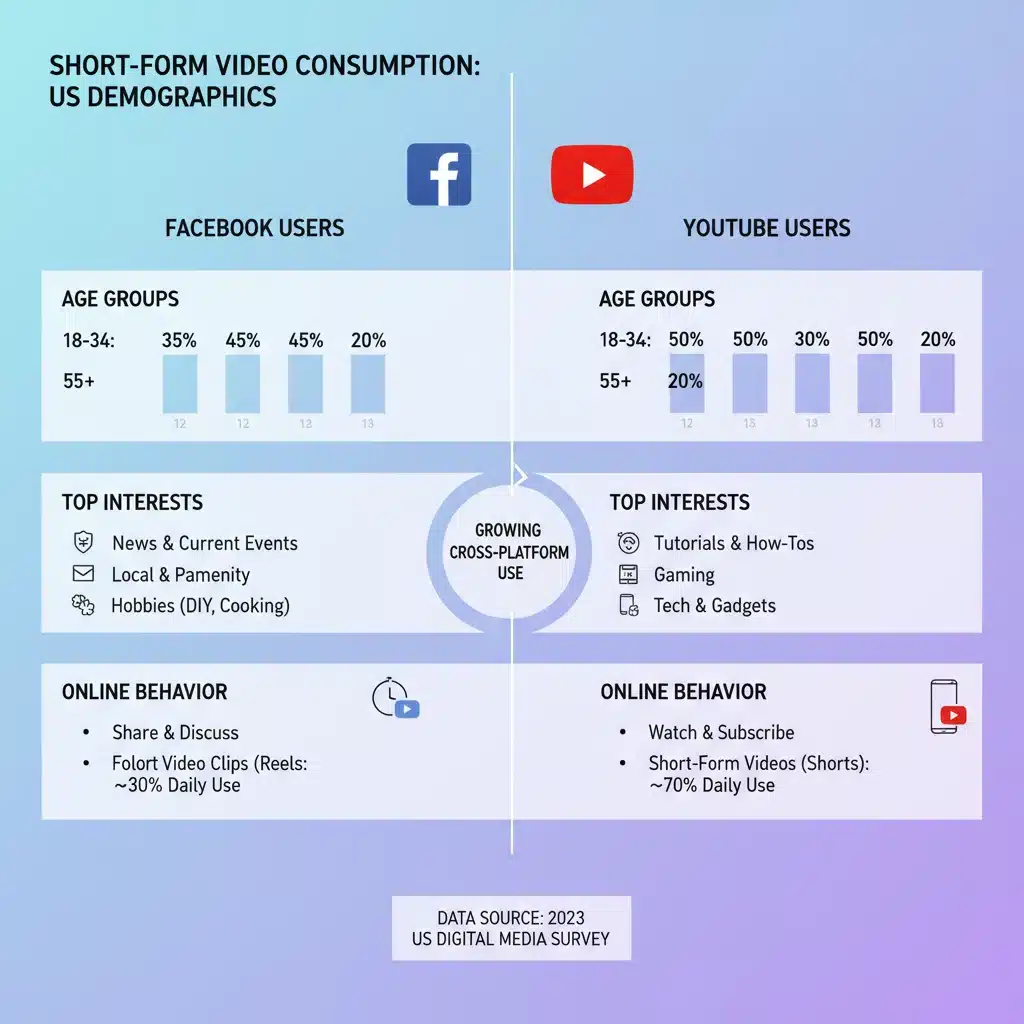
The platform’s strength lies in its ability to surface content based on user watch history and preferences, meaning relevant Shorts can quickly find their target audience. This intelligent recommendation system is a significant asset for marketers aiming to maximize the reach and impact of the short-form video marketing.
Key Features and Creative Tools
- Multi-Segment Camera: Combine multiple video clips into one Short.
- Speed Controls: Adjust the speed of recorded segments.
- Timer: Hands-free recording.
- Add Music: Access to a library of licensed music.
- Text Overlay: Add text to specific points in the video.
- Sampling Audio from Other Videos: A powerful feature allowing creators to use audio snippets from any public YouTube video, including long-form content, fostering trends and remixes.
The ability to sample audio from existing YouTube videos is a game-changer, connecting Shorts directly to the vast library of long-form content. This creates unique opportunities for content recycling, trend participation, and cross-promotion, enhancing the value proposition for short-form video marketing.
Monetization Opportunities on YouTube Shorts
YouTube’s robust creator ecosystem extends to Shorts, offering various monetization paths:
- YouTube Partner Program (YPP): Eligible creators can earn a share of ad revenue from ads played between Shorts in the Shorts Feed. This is a significant direct monetization path.
- Super Chat & Super Stickers: Viewers can pay to highlight their messages or send animated stickers during live streams or premieres.
- Channel Memberships: Offer exclusive perks to paying subscribers.
- Shopping: Direct product linking and shoppable content features are increasingly being integrated, allowing creators to tag products in their Shorts.
- Affiliate Marketing & Brand Deals: Creators can partner with brands for sponsored content or promote products through affiliate links.
The direct ad revenue sharing through the YPP makes YouTube Shorts a potentially more predictable and scalable monetization option for many creators and marketers compared to bonus programs, which can be more variable. This stability is a crucial factor when evaluating ROI for short-form video marketing.
Comparative Analysis for US Marketers in Early 2026
When comparing Facebook Reels and YouTube Shorts for US marketers in early 2026, several critical factors come into play:
Audience Reach and Engagement
Facebook Reels: Offers unparalleled reach across Facebook and Instagram. Ideal for broad campaigns targeting diverse demographics. Engagement can be highly viral due to sharing mechanisms within Meta’s ecosystem. Marketers can leverage existing Facebook/Instagram ad targeting capabilities for paid promotion of Reels, reaching highly specific segments.
YouTube Shorts: Taps into a highly engaged video-centric audience. Strong potential for discoverability through YouTube’s powerful recommendation engine. Benefits from the existing subscriber base of long-form creators. Excellent for reaching audiences actively seeking video content, often with higher intent. Cross-promotion with long-form content creates a unique funnel for audience engagement and conversion.
Content Creation and Trends
Facebook Reels: Trends often emerge from popular audio and AR effects. The remix feature encourages user-generated content and participation in viral challenges. Content creation tools are intuitive, favoring quick, creative output.
YouTube Shorts: Trends are heavily influenced by popular audio samples from existing YouTube videos, allowing for creative reinterpretation of popular content. The ability to sample audio from any public YouTube video provides a unique creative wellspring. This often leads to more context-rich or narrative-driven short-form content that can complement longer videos.
Monetization and ROI Potential
Facebook Reels: Primarily relies on bonus programs, Stars, and strong integration with shopping features. ROI can be high for e-commerce brands leveraging direct sales. Brand partnerships are also a significant revenue stream. The challenge lies in the variability of bonus payouts.
YouTube Shorts: Offers a more structured ad revenue sharing model through the YPP, providing a potentially more consistent income stream. Strong for creators already in the YPP. Integrates well with other YouTube monetization features like Super Chat and Memberships. Shopping features are evolving rapidly, promising increased direct conversion opportunities. The ability to funnel viewers from Shorts to longer, monetized videos on YouTube is a distinct advantage for overall channel ROI.

Advertising and Promotion
Both platforms offer robust advertising solutions. Meta’s Ad Manager allows for precise targeting of Reels ads across its network. YouTube’s advertising platform enables marketers to run ads within the Shorts feed, leveraging Google’s vast data for targeting. The choice often comes down to the specific targeting needs and the existing ad spend allocation of the marketer.
Strategic Considerations for US Marketers in Early 2026
Choosing between Facebook Reels and YouTube Shorts isn’t necessarily an either/or situation. Many marketers will find success by leveraging both. However, understanding their unique strengths will help optimize strategy and maximize ROI.
Define Your Target Audience
If your primary audience is broad and diverse, or if you heavily rely on visual discovery and virality, Facebook Reels might offer a more direct path to reach them. If your audience is already accustomed to consuming video on YouTube, or if you aim for deeper engagement and potential migration to long-form content, YouTube Shorts could be your stronger play. Analyze your existing customer data and social media analytics to pinpoint where your ideal customers spend most of their time.
Content Strategy Alignment
Consider the type of content you plan to create. If your brand thrives on quick, entertaining, and trend-driven content, Facebook Reels’ creative tools and remix features are highly advantageous. If your content is more informative, educational, or benefits from being part of a larger content ecosystem (e.g., excerpts from longer videos, quick tutorials), YouTube Shorts’ integration with the main YouTube platform offers unique synergy. For example, a cooking channel might use Shorts for quick recipe highlights and drive traffic to full recipe videos on their main channel.
Monetization Goals
For direct sales and e-commerce, Facebook Reels’ robust shopping integrations might yield quicker ROI. For creators and brands focused on ad revenue sharing or building a long-term content library that generates consistent income, YouTube Shorts with its YPP integration could be more appealing. Consider your primary monetization objective when allocating resources.
Resource Allocation and Production
Assess your team’s capabilities and resources. Both platforms require consistent content creation. While many tools are similar, the nuances of each platform’s trends and audience expectations mean that content might need to be slightly adapted. Re-purposing content across both platforms is a common and effective strategy, but avoid simply cross-posting identical content without optimization for each platform’s unique environment.
Experimentation and Analytics
The digital landscape is constantly evolving. Marketers should continuously experiment with different content types, posting schedules, and engagement strategies on both platforms. Leverage the built-in analytics of Facebook and YouTube to track performance metrics such as reach, engagement rate, watch time, and conversion rates. A/B testing different approaches will provide invaluable insights into what resonates best with your specific audience on each platform.
The Verdict: A Dual Approach for Optimal Short-Form Video Marketing ROI
In early 2026, it’s clear that both Facebook Reels and YouTube Shorts present compelling opportunities for US marketers engaged in short-form video marketing. There isn’t a single definitive winner, as the ‘better’ platform largely depends on a marketer’s specific goals, target audience, and content strategy.
- Facebook Reels shines for broad reach, viral potential, strong e-commerce integration, and tapping into the vast Meta audience. It’s excellent for brands looking for quick, trend-driven engagement and direct sales.
- YouTube Shorts excels with its deeply engaged video-centric audience, powerful recommendation engine, structured ad revenue sharing, and seamless integration with long-form YouTube content. It’s ideal for brands building a comprehensive video content strategy and seeking sustainable monetization through ad revenue and channel growth.
For many US marketers, a diversified approach will likely yield the highest ROI. By strategically deploying content across both Facebook Reels and YouTube Shorts, optimizing for each platform’s unique characteristics, brands can maximize their reach, engagement, and conversion potential. The key is to understand the distinct advantages of each platform and tailor content and marketing efforts accordingly, continuously analyzing performance to refine strategies and capitalize on the ever-evolving world of short-form video marketing.
Early 2026 demands agility and data-driven decisions. By staying informed about platform updates, audience shifts, and evolving monetization models, US marketers can confidently navigate the short-form video landscape and achieve exceptional returns on their investment.